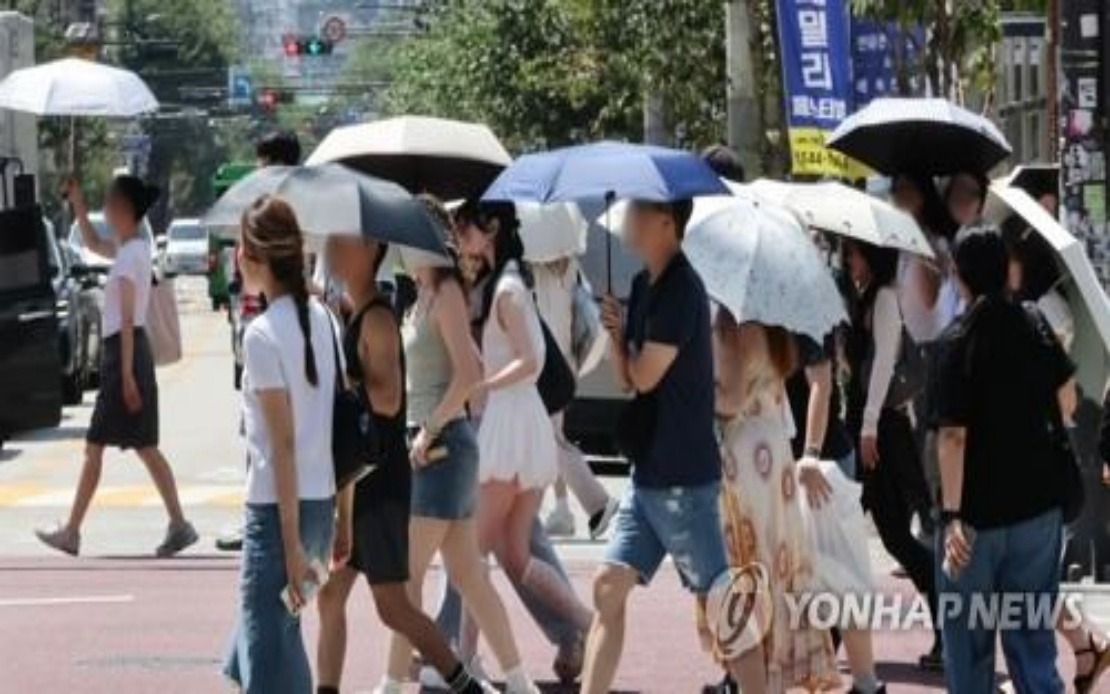
South Korea faced an exceptional weather crisis on Friday as temperatures soared above 40 degrees Celsius in Seoul and at least two other major population centres, prompting meteorological authorities to downgrade warning levels even as sweltering conditions persisted across the peninsula. The Korea Meteorological Administration recorded 40.2°C at an automatic weather station in Seoul's Nowon district in the north at 3.28 pm, breaching a six-year threshold that reflects the escalating intensity of the country's ongoing heat emergency.
This temperature reading represents a significant meteorological milestone for the capital. The last time Seoul experienced such extreme heat was on August 1, 2018, when the thermometer climbed to 41.8°C—a reminder that whilst current conditions are severe, they have not yet matched the absolute extremes recorded in recent memory. Nevertheless, the recurrence of 40-degree temperatures within such a relatively short timeframe underscores a troubling pattern of intensifying summer conditions across the peninsula.
Beyond Seoul, the heat wave demonstrated its breadth and potency across multiple regions. Hanam's Deokpung district, situated just southeast of the capital in Gyeonggi Province, registered the highest reading at 40.7°C at 2.32 pm, making it the most severely affected area under official observation. Further south, Gwangyang—a port city approximately 300 kilometres from Seoul—reached 40.2°C at 2.37 pm, indicating that extreme temperatures were not confined to the greater Seoul metropolitan area but had spread throughout the nation's population heartland.
Temperatures elsewhere approached or matched these peaks, reflecting the comprehensive nature of the atmospheric phenomenon gripping the country. Yeongweol county in Gangwon Province and Yeoju in Gyeonggi Province both recorded 39.8°C, suggesting that whilst official measurements of precisely 40 degrees were concentrated in three locations, a broader band of extreme heat affected vast swathes of the population.
The broader statistics reveal the unprecedented strain the heat wave has placed on the nation's climate system over recent weeks. From June 1 through Thursday, South Korea experienced an average of 14.8 heat wave days—defined as periods when daytime temperatures reach 33°C or higher—nationwide. This represented the fourth-highest count for this period since the Korea Meteorological Administration established its expanded nationwide observation network in 1973, indicating that whilst not unprecedented, current conditions rank among the most severe in half a century of systematic records.
Moreover, the nation has been gripped by an extraordinary number of tropical nights, the meteorological term for evenings when minimum temperatures fail to drop below 25°C. Such nights prevent the human body from recovering naturally through cooler rest periods and are associated with serious health risks, particularly for elderly populations and those with underlying conditions. The administration recorded 13 such consecutive nights—a new record that surpasses all previous measurements in the observation era.
The health and social implications of sustained extreme heat cannot be overstated for Malaysian and other Southeast Asian readers, particularly given the region's tropical climate. Whilst Southeast Asia routinely experiences high temperatures, the combination of humidity, urban heat island effects, and prolonged periods without temperature relief creates genuine public health emergencies. South Korea's experience demonstrates that even wealthy, highly developed nations with sophisticated infrastructure and public health systems face serious challenges in managing extreme heat events, particularly as climate patterns shift toward greater intensity and frequency.
Recognising the severity of conditions, the Korea Meteorological Administration implemented a tactical downgrade of its warning system on Friday evening at 6 pm, replacing serious heat wave warnings that had been in effect for Seoul and the eastern and southwestern regions with ordinary warnings. This decision reflected meteorological forecasts indicating a marginal easing of conditions over the weekend, though sweltering circumstances would persist. The capital had endured continuous serious heat warnings since Tuesday, signifying five days of top-tier alert status.
The weekend forecast offered only modest respite. Saturday morning lows were projected to range between 21°C and 26°C nationwide, whilst daytime highs would likely settle in the 26°C to 35°C range—still uncomfortably warm but substantially cooler than the 40-degree peaks recorded on Friday. This trajectory suggests that whilst the absolute worst of the current episode may have passed, genuinely cool conditions remain distant, and the population will continue facing health challenges and stress on cooling and energy infrastructure.
The Korea Meteorological Administration's warning protocols reveal the systematic approach sophisticated meteorological services employ in managing heat emergencies. Serious heat wave warnings are triggered when apparent temperatures—which account for humidity and wind chill effects—are projected to reach 38°C or higher, or when daily maximum temperatures reach 39°C or above, in areas where the highest perceived temperature is 35°C or greater for two or more consecutive days. This multi-factor approach acknowledges that raw temperature readings, whilst useful, do not capture the full physiological burden that extreme heat imposes on human bodies.
For regional observers, South Korea's heat crisis carries several important implications. As a densely urbanised nation with sophisticated climate control infrastructure, South Korea nonetheless faces genuine challenges in managing extreme heat—suggesting that less wealthy Southeast Asian nations may face even greater difficulties. The trend toward record-breaking temperatures and unprecedented tropical nights suggests that climate adaptation strategies must evolve rapidly across the region, encompassing urban planning modifications, cooling centre networks, public health preparedness, and electrical grid reinforcement to manage surging air-conditioning demand.

