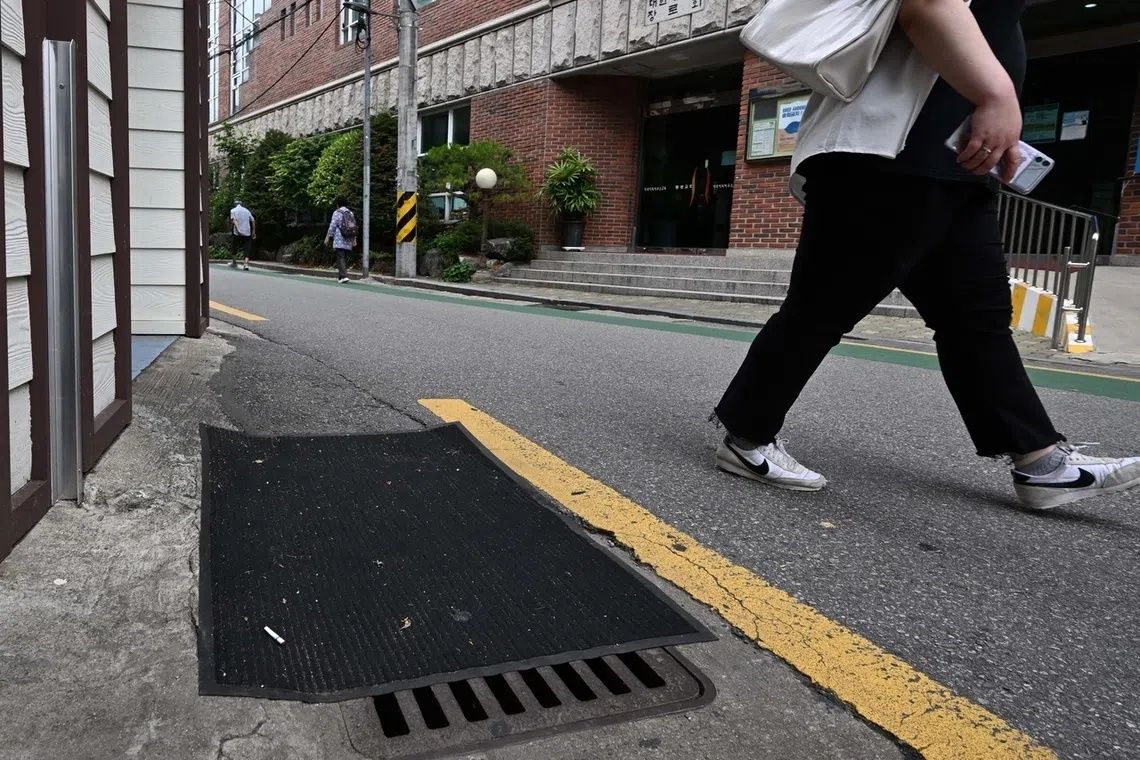
Pedestrians in Seoul frequently encounter an unmistakable stench as they navigate the city's streets or pause at transit stops, a phenomenon that has become emblematic of South Korea's capital struggling with an infrastructural legacy issue. The odour typically dissipates quickly, yet its recurring nature has generated consistent grievances from both residents and international visitors, with complaints proliferating across Korean-language forums and global social media platforms. What appears to be a minor inconvenience to casual observers represents a more systemic challenge facing a metropolis that has expanded far beyond the capacity of infrastructure designed for a much smaller population.
The Seoul Institute's 2025 research findings reveal that malodours stemming from the sewer network constitute approximately half of all municipal complaints related to atmospheric pollution, underscoring the scale of the problem within Seoul's broader environmental management framework. Initial success materialised after Seoul implemented comprehensive odour reduction initiatives beginning in 2015, when complaint figures declined noticeably over a five-year period. However, this improvement has proven transitory rather than durable; grievances have resumed their upward trajectory despite sustained municipal investment, indicating that surface-level interventions have failed to address underlying systemic deficiencies.
The root cause of Seoul's persistent odour originates from hydrogen sulfide, a chemical compound produced when organic substances within sewage undergo anaerobic decomposition—a process occurring in the oxygen-free environment of underground pipes. The city's rapid urbanisation has outpaced sewer network expansion, prompting widespread installation of septic tanks throughout residential and commercial buildings as temporary wastewater treatment solutions before eventual municipal system discharge. While these intermediate facilities successfully remove solid particulates, the dissolved organic components pass through into the broader sewer network, where they subsequently decompose and generate the characteristic rotten-egg smell that residents frequently encounter.
Weather patterns significantly influence odour intensity throughout the year. During periods of substantial precipitation, the increased volume of water moving through pipes effectively displaces accumulating hydrogen sulfide and prevents gaseous buildup at problematic concentrations. Conversely, prolonged dry seasons coupled with elevated temperatures create ideal conditions for stagnation and decomposition, allowing hydrogen sulfide to concentrate within the system and escape through storm drains, inspection chambers, and other access points that breach the otherwise sealed pipeline network.
Seoul officials acknowledge that addressing this multifaceted challenge demands individualised diagnostic approaches rather than standardised interventions. The city recognises that inadequate wastewater velocity combined with sediment accumulation creates localised zones of particular concern, prompting consideration of structural modifications and systematic dredging operations throughout the network. The municipality's combined sewer infrastructure—where both wastewater and street runoff traverse identical pipe networks—presents an additional complication that experts argue requires fundamental redesign rather than incremental adjustment.
The city has explored separating wastewater from stormwater streams since the early 1990s, recognising this approach as a comprehensive long-term solution practised in many developed economies. Implementation has proceeded at a glacial pace, however, given the extraordinary expense and logistical complexity of replacing underground infrastructure in a densely built urban environment with established property rights and competing infrastructure demands. As of 2025, only approximately one-fifth of Seoul's total sewer network has undergone conversion to this dual-system configuration, demonstrating the snail's pace at which fundamental infrastructure transformation occurs even in affluent nations with sophisticated engineering capacity.
The trajectory of complaint statistics reveals the limitations of Seoul's current policy framework. Initial improvements saw sewer odour complaints plummet from 3,095 in 2015 to 1,660 five years later, largely attributable to installation of odour suppression apparatus at major septic tank installations throughout the city. Yet by 2024, complaints had climbed back to 2,302 incidents, erasing much of the earlier progress and suggesting that reactive maintenance cannot substitute for proactive systemic redesign. The legal structure governing odour management remains largely complaint-responsive rather than preventative, placing the burden on residents to report problems rather than requiring municipal authorities to implement anticipatory measures.
Researchers at the Seoul Institute contend that Seoul's approach suffers from fundamental methodological shortcomings that prevent development of durable solutions. The absence of predictive models capable of mapping how sewer odours disperse into above-ground environments means that vulnerable areas remain inadequately identified or prioritised for targeted intervention. Parallel mapping initiatives examining sewer odour geography remain disconnected from quantifiable performance standards or benchmarking systems for evaluating mitigation facility effectiveness, essentially creating an incomplete information ecosystem incapable of driving evidence-based policy decisions.
Environmental engineering specialists propose alternative technical solutions that circumvent the infrastructure replacement challenge altogether. Introducing artificial water circulation through sewer pipes could prevent stagnation and the consequent decomposition that generates hydrogen sulfide, mimicking the natural scouring action that occurs during rainfall events. This approach would capitalise on existing municipal water infrastructure, such as hydrant systems, to maintain sufficient flow velocities throughout the network during dry periods, thereby preventing the chemical and biological conditions that enable odour formation at problem locations.
Parallel experience from Japan and other developed economies demonstrates that sophisticated management protocols can maintain acceptable performance within combined sewer systems despite their inherent design limitations. The distinction between Seoul's continuing struggles and the relative success of other major cities employing identical infrastructure configurations ultimately reflects differences in operational rigour and maintenance intensity rather than fundamental technical impossibility. This suggests that Seoul's path forward may require substantial increases in operational expenditure and management sophistication, rather than waiting for comprehensive capital-intensive infrastructure replacement to occur.
For Southeast Asian readers observing Seoul's predicament, the situation offers instructive lessons regarding rapid urban development and infrastructure planning. Many regional cities face similar pressures of expansion outpacing sewer system capacity, and Seoul's experience demonstrates both the importance of anticipatory infrastructure investment and the considerable difficulty of retrofitting remedial solutions into established urban landscapes. The political economy of allocating substantial resources to resolving chronic but non-emergency environmental problems—particularly when solutions require long-term funding commitments without immediate visible results—remains a persistent challenge across developed and developing urban centres throughout Asia and beyond.

