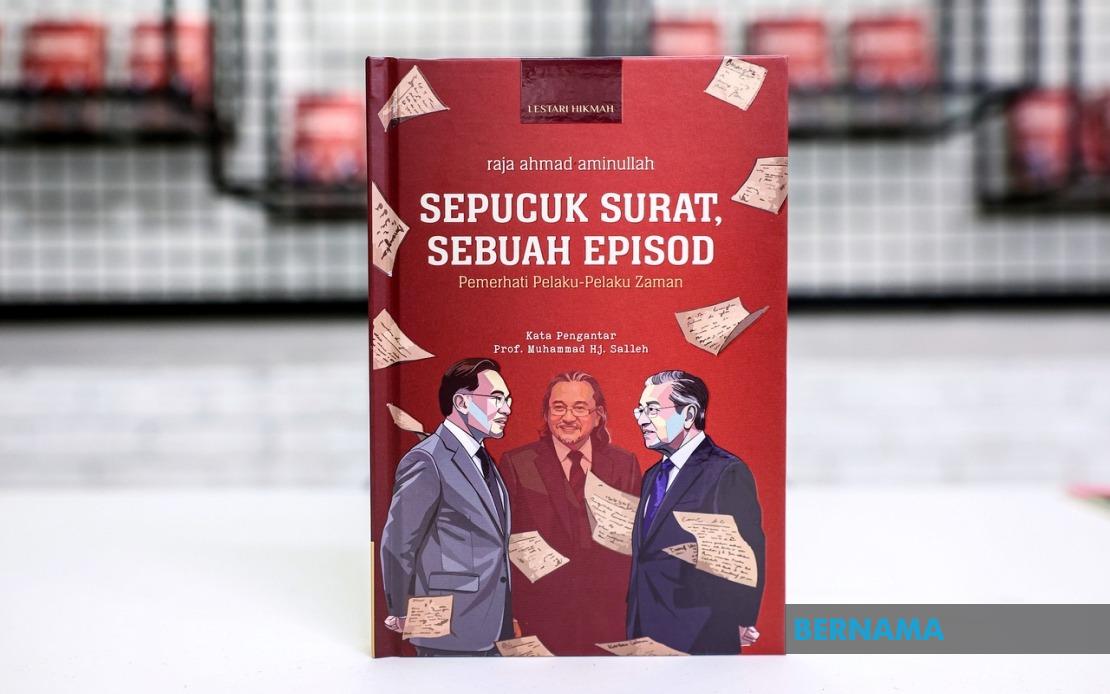
Cultural custodian Raja Ahmad Aminullah, affectionately known as Pak Engku, has unveiled a distinctive literary work that diverges sharply from conventional political memoirs. His latest publication, "Sepucuk Surat Sebuah Episod: Rakaman Pelaku-Pelaku Zaman," compiles personal letters exchanged with influential Malaysian figures across a quarter century, presenting an intimate record of the nation's formative interactions during a pivotal period in recent history. The launch, overseen by the National Book Council of Malaysia (MBKM) director Mohd Khair Ngadiron, attracted intellectuals, artists, literary scholars and longtime associates of the author, underscoring the cultural significance of the project.
Raja Ahmad deliberately positioned the work outside the realm of political discourse, characterising it instead as a socio-cultural archive documenting his observations of the communities and personalities that surrounded him. This distinction proves crucial for understanding the book's appeal and relevance. Rather than seeking to influence political narratives or cast particular figures in favourable or unfavourable light, the author presents himself as a sociological observer recording moments of genuine human interaction and institutional behaviour. His approach reflects a growing appetite among Malaysian readers for nuanced, contextual perspectives on public life that transcend partisan frameworks and instead illuminate the lived experiences of decision-makers and opinion-shapers.
In clarifying the book's scope and intent, Raja Ahmad explicitly rejected the notion that his work centres on any specific political personality or rivalry. He noted that the correspondence includes interactions with Tun Dr Mahathir Mohamad and Datuk Seri Anwar Ibrahim among others, yet the book remains fundamentally about none of them individually. Instead, the collection functions as a temporal snapshot, preserving observations and exchanges from approximately 25 years prior and inviting contemporary readers to extract lessons and contextual understanding applicable to present circumstances. This temporal distance provides a valuable perspective, allowing the author and his audience to evaluate historical interactions without the emotional intensity or factional pressures that characterised the original moments.
The author's characterisation of himself as "inconsequential" within his own narrative deserves particular attention. This rhetorical move reflects a sophisticated understanding of documentary integrity; by minimising his own presence and significance, Raja Ahmad positions the letters and interactions themselves as the primary subject matter. This stance proves especially relevant for Malaysian audiences navigating complex political histories where personal relationships between leaders have often shaped institutional outcomes and policy directions. The willingness to step back from ego-driven narratives distinguishes this work from conventional political autobiographies and suggests a genuine commitment to providing source material for future scholars and citizens seeking to understand how interpersonal dynamics influenced national governance.
People interested in Malaysian literature, contemporary history and social analysis will find the book valuable precisely because it offers the kind of personalised documentation often absent from official records. Government archives, formal histories and political speeches create one narrative layer, but private correspondence reveals the texture of decision-making, the concerns animating prominent figures, and the informal networks through which influence flows. Raja Ahmad's collection bridges this gap, offering researchers and general readers alike access to a more granular understanding of how Malaysia's institutions and personalities intersected during crucial periods. The author's commitment to preservation reflects broader concerns about ensuring that future generations inherit comprehensive records from which to construct their own interpretations.
The work also addresses a fundamental democratic imperative: the necessity for informed citizenry to understand their own recent history through multiple lenses. Malaysians educated during the period covered by these letters may possess only incomplete or officially-mediated accounts of significant moments. By publishing personal correspondence and his own observations, Raja Ahmad contributes to a more democratised historical record, allowing readers to encounter evidence and form judgments rather than relying exclusively on authoritative pronouncements. In regions like Malaysia where media landscapes have historically been shaped by political considerations, such primary source documentation assumes particular importance for media literacy and critical thinking.
The publication details reveal thoughtful production values befitting a scholarly and literary endeavour. Published by Lestari Hikmah, the 169-page volume offers accessibility across price points—RM30 for the softcover edition and RM80 for hardcover—making the work available to diverse segments of the reading public. The decision to distribute through conventional bookstore channels, targeted events and digital platforms reflects awareness that different communities access literature differently. For Malaysian readers, particularly in an era of digital publishing, the availability across multiple channels increases the likelihood that the book reaches academic institutions, public libraries, individual enthusiasts and casual browsers alike.
Raja Ahmad's broader philosophical approach to documentation and cultural stewardship emerges throughout his articulation of the project's aims. Rather than claiming prescriptive authority or offering definitive judgments about Malaysia's leaders and institutions, he positions himself as a custodian of evidence and observation, trusting readers to engage critically with the material. This epistemological humility contrasts with more didactic approaches to cultural commentary and suggests confidence in the Malaysian reading public's capacity for sophisticated interpretation. The author's explicit disavowal of interest in "politics of confrontation" signals that the book will not rehearse familiar factional disputes, instead offering content that invites reflection across ideological boundaries.
For Southeast Asian observers interested in Malaysia's political culture and institutional development, this collection offers windows into the interpersonal dimensions of governance that shape regional dynamics. Malaysian leaders' decisions ripple across the region, influencing ASEAN consensus-building, bilateral relationships and regional economic integration. Understanding how personal relationships, cultural orientations and observational frameworks inform individual decision-makers provides context for analysing broader Southeast Asian patterns. Raja Ahmad's position as a respected cultural figure means his observations carry particular weight; he has interacted with Malaysian leadership as someone concerned with cultural values and social cohesion rather than factional advantage, lending credibility to his accounts.
The project also reflects evolving attitudes toward historical documentation in Malaysia. Rather than waiting for official histories or formal memoirs written by the principals themselves, this alternative archive created by someone positioned at the cultural intersections of Malaysian society offers democratised memory-keeping. In an environment where digital technologies enable rapid information circulation but also facilitate historical distortion and selective narratives, the publication of documented personal correspondence serves archival functions critical for societal continuity and informed deliberation. The book essentially invites Malaysian readers to become historians of their own recent past, examining primary evidence and constructing meaning from documented interactions.

