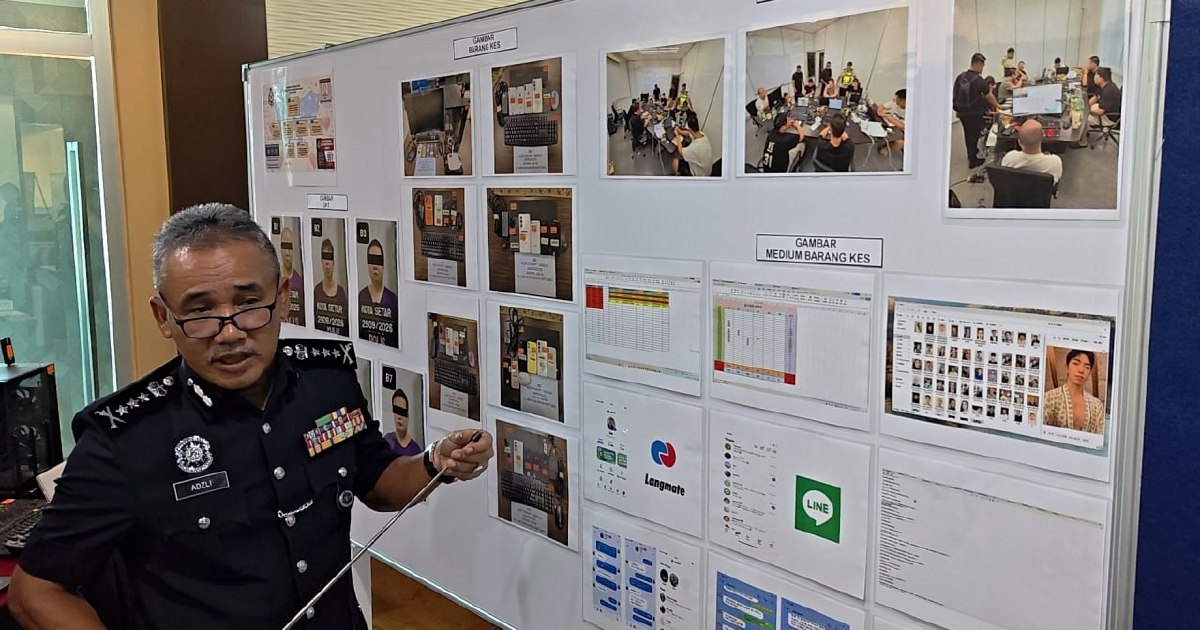
Police in Kedah have successfully dismantled a sophisticated online romance fraud operation that had been systematically targeting Japanese nationals. The breakthrough came after a targeted enforcement operation at a shop lot situated within the Kristal Light Industrial Park in Alor Star on Sunday, resulting in the arrest of seven individuals of Chinese nationality. The takedown marks a significant victory in combating transnational cybercrime networks that exploit emotional vulnerabilities to extract financial resources from unsuspecting victims across international borders.
Online romance scams, colloquially known as "love fraud" or "catfishing" schemes, represent one of the fastest-growing categories of financial crime in Southeast Asia. Perpetrators typically establish fictitious profiles on dating platforms and social media, constructing elaborate false identities to build romantic relationships with targets. Over weeks or months, they cultivate emotional bonds before introducing fabricated financial emergencies—medical crises, business failures, or travel complications—designed to solicit urgent fund transfers. The psychological manipulation involved makes victims reluctant to report incidents, as acknowledging their victimisation requires confronting both financial loss and emotional betrayal.
The selection of Japanese nationals as primary targets reflects a deliberate targeting strategy by organised cybercriminal groups. Japan's ageing demographic profile, combined with substantial disposable incomes among middle-aged and elderly populations, makes Japanese citizens particularly vulnerable to such schemes. Additionally, language barriers and cultural differences in approaching authority about personal matters may discourage reporting, allowing perpetrators to operate with reduced risk of detection. The targeting of specific nationalities demonstrates how modern criminal syndicates employ data analytics and market research to identify and exploit demographic vulnerabilities.
The fact that this operation was based in Malaysia highlights the region's unfortunate emergence as a regional hub for various transnational fraud activities. Industrial parks and commercial spaces across Malaysia's urban centres have increasingly become operational bases for organised cybercrime groups. These locations provide legitimate-appearing business fronts that enable criminals to relocate rapidly when law enforcement pressure increases, while the commercial environment allows them to maintain the infrastructure necessary for large-scale scam operations—multiple computers, internet connections, and communication systems. The accessibility of such premises, combined with Malaysia's strategic geographic position and relatively developed technological infrastructure, creates conditions conducive to cross-border criminal enterprise.
The operational scale of this particular syndicate remains under investigation by Kedah police, but such networks typically involve division of labour across multiple roles. Some participants serve as "catfishers" who establish and maintain false online identities, developing relationships with victims. Others function as "money handlers" who coordinate the receipt and transfer of fraudulent funds through various banking channels, cryptocurrency exchanges, and money remittance services. Still others provide administrative support, managing databases of potential victims, monitoring payment receipts, and supervising overall operations. This structural organisation enables the group to process multiple scams simultaneously while maintaining operational security.
The money trail generated by romance fraud schemes poses particular challenges for law enforcement. Victims typically transfer funds through a combination of channels including international bank transfers, wire services like Western Union, cryptocurrency transactions, and gift card purchases. Perpetrators employ sophisticated layering techniques to obscure transaction origins, routing funds through multiple intermediaries and jurisdictions before converting proceeds to cash or reinvesting in business operations. The cross-border nature of payment flows means that effective investigation requires coordination between multiple law enforcement agencies across different countries, a coordination challenge that often frustrates prosecution efforts.
For Malaysian law enforcement, this operation represents growing capacity to identify and disrupt transnational cybercrime networks. The Kedah police's ability to locate the physical operational base and execute a coordinated raid suggests improved intelligence gathering on cybercriminal activities. Coordination with federal authorities and possibly international partners likely facilitated tracking the syndicate's operational patterns. The emphasis on dismantling the actual physical infrastructure—seizing computers, communication equipment, and financial records—goes beyond arresting individual perpetrators, instead targeting the institutional capacity that enables ongoing fraud.
The arrest comes amid rising regional concern about cybercriminal activities centred in Southeast Asia. Japanese authorities have increasingly escalated diplomatic engagement with ASEAN nations to enhance enforcement cooperation against fraud syndicates. The targeting of Japanese citizens particularly affects Japanese expatriates living throughout Asia, as well as elderly Japanese populations within Japan seeking companionship. Several cases have documented victims losing life savings accumulated over decades, with some incidents resulting in family estrangement and psychological trauma.
Investigations into this particular syndicate will likely reveal the scope of victimisation, with authorities determining how many Japanese nationals fell victim to the operation and the aggregate financial losses incurred. Forensic analysis of seized computing equipment, communication records, and financial documentation will provide crucial evidence for prosecution. Cooperation with Japanese law enforcement will assist in identifying and notifying victims, many of whom may be unaware that authorities have been investigating their circumstances.
Moving forward, this operation underscores the necessity for enhanced public awareness campaigns targeting vulnerable populations about romance fraud methodologies. Malaysian authorities continue emphasising that citizens should report suspected cybercrime to the Cybercrime Investigation Division. The successful bust also validates intelligence-led policing approaches that focus resources on identifying physical infrastructure supporting online fraud operations, rather than attempting to chase perpetrators through purely digital investigative channels. Regional cooperation mechanisms will remain essential as criminal networks become increasingly sophisticated in exploiting technological capabilities for cross-border financial crime.

