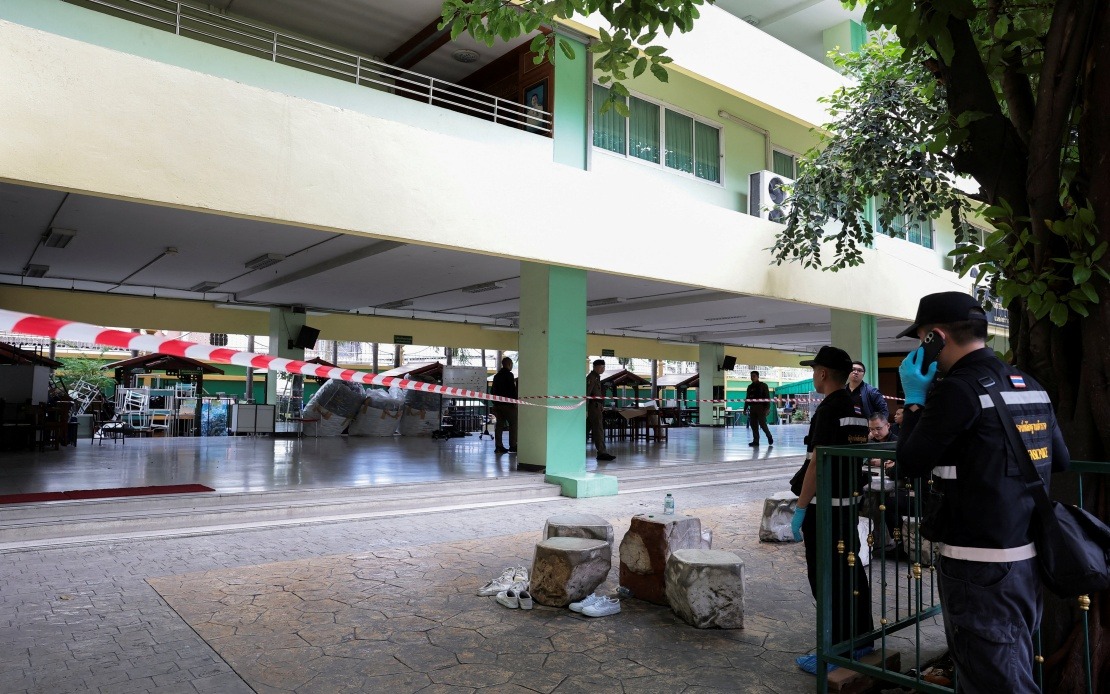
A shooting at a school in Nonthaburi province northwest of Bangkok has left seven dead and at least 15 injured, marking another tragedy in Thailand's recurring struggles with gun violence. The incident occurred on Friday morning at Debsirin Nonthaburi School in Bang Kruai district when a student opened fire on the campus at approximately 10 am local time. The deceased included three teachers, three fellow students, and the shooter himself, according to Lieutenant General Trairong Piwpan, deputy inspector-general and spokesperson for the Royal Thai Police.
Those wounded in the attack have been transported to nearby medical facilities, with two victims reported in critical condition requiring urgent medical intervention. The rapid response by emergency services helped prevent the casualty toll from rising further, though the scale of the tragedy underscores the vulnerability of educational institutions in the region. Teachers and students were swiftly evacuated to the adjacent Chanrat Wittaya School, while parents and guardians began collecting their children as word of the shooting spread through the community.
Investigations by Thai police revealed that the firearm used in the assault was a 9mm handgun accompanied by 34 rounds of ammunition. Significantly, law enforcement determined that the weapon belonged not to the student shooter, but to his grandfather, raising serious questions about firearm storage protocols and family supervision. This detail has added another dimension to the tragedy, implicating negligent oversight in how weapons are kept within households where young people have access.
Prime Minister Anutin Charnvirakul, who simultaneously holds the interior ministry portfolio, responded swiftly to the incident by expressing profound sorrow and ordering authorities to provide immediate assistance to the wounded. He dispatched relevant officials to the scene and instructed the Police General Hospital to deploy psychologists to offer trauma support and counseling to survivors and affected communities. Anutin's statements reflected the gravity with which the government views the incident and the psychological toll such violence inflicts on victims, families, and entire school communities.
The prime minister used the tragedy to reinforce the government's stance on firearm regulation, explicitly linking the shooting to Thailand's restrictive policies on gun permits. He emphasized that the administration's refusal to renew permits for carrying and possessing firearms is precisely designed to prevent such catastrophic incidents. This rhetorical connection, while politically significant, underscores a broader regional conversation about how Southeast Asian governments balance individual liberties with public safety imperatives.
For Malaysian observers, the incident provides a sobering reminder of Thailand's ongoing struggles with gun-related violence, particularly in educational settings where children should feel secure. While Malaysia maintains considerably stricter firearms legislation than Thailand, the porous borders and transnational nature of arms trafficking across Southeast Asia mean that spillover effects from neighboring countries' violence warrant attention. The incident also highlights how even culturally similar nations within the region experience vastly different outcomes depending on the robustness of their regulatory frameworks.
This shooting is not an isolated occurrence in Thailand's recent history. Merely six months prior, in February of this year, another school shooting devastated the Hat Yai area in Songkhla province when an 18-year-old opened fire, killing the school director and wounding additional victims before apprehension. The frequency of such incidents within such a short timeframe suggests systemic vulnerabilities that regulatory measures alone may struggle to address without complementary initiatives around mental health, gun safety education, and family oversight.
The psychological and social ramifications of repeated school shootings extend far beyond immediate casualties. Successive incidents create sustained trauma within school communities, alter parental confidence in educational institutions, and potentially drive broader anxieties about personal security. Thailand's educational sector, already navigating complex challenges related to curriculum development and resource distribution, now faces the additional burden of implementing enhanced security protocols while maintaining environments conducive to learning.
The involvement of the suspect's grandfather's firearm underscores a critical vulnerability in household firearm storage practices. Across Southeast Asia, where multigenerational households remain common, inadequate secure storage of weapons poses particular risks when adolescents with access to firearms experience psychological crises or momentary impulses. This case demonstrates how ownership responsibility extends beyond the permit holder to encompass all family members who might encounter the weapon.
For regional policymakers, the incident serves as a cautionary example of how inadequate firearm regulation and enforcement can result in preventable tragedies. Thailand's relatively permissive historical approach to civilian gun ownership, despite recent tightening measures, continues creating conditions where dangerous intersections of weapon availability and individual crises produce mass casualty events. Countries throughout Southeast Asia might examine both Thailand's failures and successes in attempting to restrict access while managing enforcement challenges.
The immediate response by Thai authorities, including psychological support deployment and investigation prioritization, demonstrates institutional capacity to manage crisis situations effectively. However, preventing such tragedies demands sustained attention to regulatory consistency, family education about firearm safety, mental health infrastructure development, and school security enhancement. The challenge for Thailand and the broader region involves implementing multifaceted approaches that address root causes rather than merely responding to symptoms after tragedies occur.

