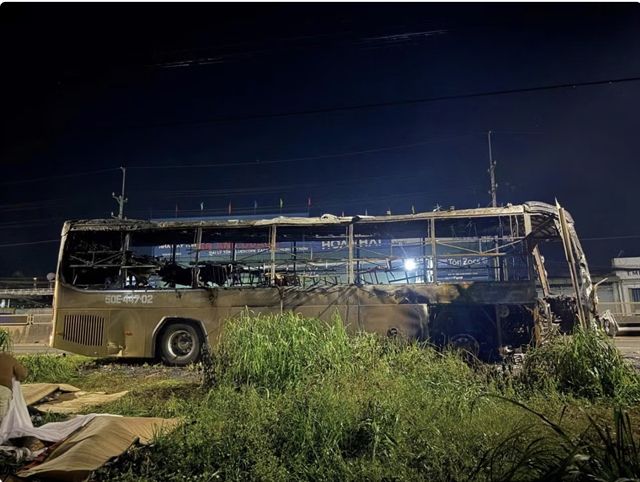
A catastrophic fire aboard a sleeper bus travelling through southern Vietnam's Dong Nai Province claimed seven lives early on the morning of the incident, reigniting concerns about safety standards on the country's long-distance coach routes. The bus, operating between Dong Nai and Ho Chi Minh City, struck a roadside embankment along National Highway 1 in Hung Thinh Commune at approximately 2.30am before flames engulfed the vehicle, trapping multiple passengers inside the stricken coach.
The bus was piloted by 41-year-old Tran Thanh Hai, a driver from Khanh Hoa Province, when the initial collision occurred. After striking the first embankment, the vehicle made contact with another earthwork before the driver managed to bring the bus under control and halt its forward motion. The sequence of impacts appears to have triggered the catastrophic fire that followed, though investigations into the precise cause remain ongoing. With 33 occupants aboard at the time, including the driver, the crowded conditions likely contributed to the difficulty evacuating passengers once flames erupted.
Eyewitness accounts describe how fire broke out in the front section of the bus and spread with alarming speed through the passenger compartment, consuming the interior of the vehicle in minutes. While some travellers managed to exit the coach during those critical early moments, others became trapped as the blaze intensified. Local residents who lived near the accident site responded immediately, deploying hand-held fire extinguishers and improvised equipment in desperate attempts to control the spreading flames, but the intensity of the fire overwhelmed their efforts and consumed the entire structure.
Emergency response crews arrived following distress calls and worked systematically to extinguish the inferno and conduct rescue operations amid heavy traffic management in the area. By the time firefighters brought the blaze under control, the bus had been almost entirely destroyed, leaving investigators with significant challenges in determining the exact sequence of events and identifying the deceased. The severity of the fire's intensity and the rapid consumption of the vehicle suggested either accelerant involvement or a pre-existing mechanical fault that triggered the initial ignition.
The Hung Thinh Commune People's Committee formally confirmed that seven individuals had perished in the incident. Those injured in the disaster received treatment at Thong Nhat General Hospital, with one individual sustaining only minor injuries subsequently discharged. The remaining injured passengers remain under medical care as authorities work to assess the full extent of injuries sustained. The psychological trauma experienced by survivors who witnessed the tragedy and those who lost family members represents an often-overlooked consequence of such disasters.
Police and local authorities established a cordon around the devastated bus to preserve the accident scene for forensic examination. Investigators have begun the complex process of identifying victims, examining physical evidence from the wreckage, and reconstructing the circumstances that led to the collision and subsequent fire. These inquiries will examine whether driver fatigue, mechanical failure, road conditions, or a combination of factors contributed to the accident, information crucial for preventing future tragedies.
This tragedy represents the second major sleeper bus disaster in Vietnam within a seven-day period, signalling potential systemic issues within the nation's long-distance coach transportation sector. On July 17, another sleeper bus returning from Thien Cam Beach in Ha Tinh Province en route to Thai Nguyen in the north left an expressway while navigating through Ha Noi and overturned, killing five people and injuring numerous others. The clustering of serious incidents within such a brief timeframe suggests that comprehensive safety reviews may be warranted across Vietnam's intercity bus industry.
For Malaysian travellers and transport operators, these successive incidents carry important implications. Regional bus services frequently traverse similar routes across Southeast Asia, and the safety protocols, vehicle maintenance standards, and driver regulation frameworks in neighbouring countries directly affect the security of cross-border passengers. Malaysian authorities and bus operators should monitor investigations into these Vietnamese accidents to identify any relevant lessons applicable to domestic long-distance coach services, particularly regarding overnight travel where fatigue and reduced visibility compound accident risks.
The recurrence of serious sleeper bus incidents within Vietnam raises broader questions about enforcement of safety regulations, adequacy of vehicle maintenance inspections, driver training standards, and whether speed restrictions on national highways are sufficiently stringent for heavily-loaded passenger vehicles navigating night-time conditions. Industry observers suggest that enhanced regulatory oversight, mandatory safety equipment upgrades, stricter driver fatigue protocols, and improved emergency response coordination could substantially reduce accident frequency and severity on Vietnam's busiest transport corridors.

