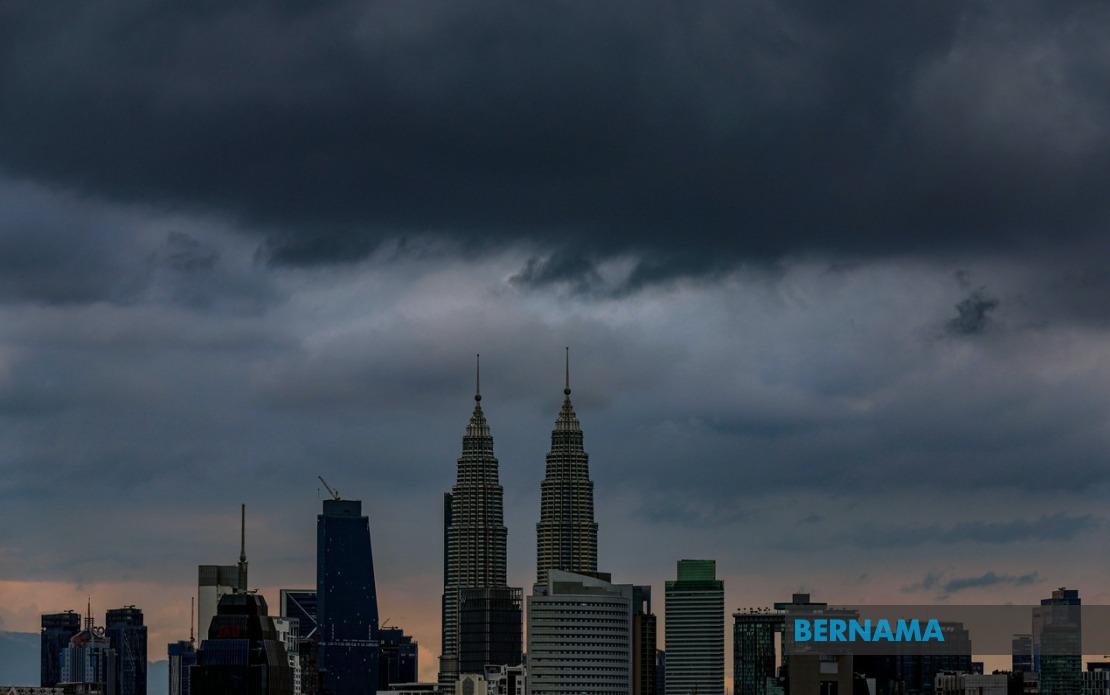
The Malaysian Meteorological Department (MetMalaysia) has issued a significant weather alert covering a broad swathe of the country, with Kuala Lumpur and Putrajaya among the areas expected to experience thunderstorms, heavy rain and strong winds through the evening hours. The advisory, released on June 28, forecasts potentially hazardous conditions lasting until 7 pm, affecting the federal territories alongside multiple states across Peninsular Malaysia, Sabah and Sarawak.
In the northern region, the warning encompasses Perlis and Penang in their entirety, whilst only specific districts within Kedah and Perak face the advisory. Within Kedah, the meteorological alert applies to Langkawi, Kubang Pasu, Padang Terap, Kuala Muda and Kulim, suggesting that the adverse weather pattern, whilst widespread, exhibits geographical variation in intensity and distribution. Perak residents in Hulu Perak, Kuala Kangsar, Manjung, Kinta, Perak Tengah, Kampar and Bagan Datuk should prepare for deteriorating conditions, with the combination of heavy precipitation and gusty winds presenting potential challenges for transport and outdoor activities throughout the afternoon.
The eastern coast of Peninsular Malaysia also features prominently in MetMalaysia's advisory. Gua Musang in Kelantan is identified as vulnerable, whilst the Terengganu alert covers a band of districts spanning the coast and interior: Besut, Setiu, Kuala Nerus, Hulu Terengganu and Dungun. These areas, already familiar with monsoon-related weather systems, may experience intensified rainfall and wind speeds that warrant caution. Similarly, Pahang's highland and lower-lying districts—Cameron Highlands, Raub, Bentong and Rompin—face the combined threat of thunderstorms and heavy downpours that could affect both tourism activities and farming operations across the region.
The Klang Valley and surrounding Selangor districts represent another focal point of concern, given the region's dense population and critical infrastructure. MetMalaysia's warning extends to Hulu Selangor, Gombak, Petaling, Kuala Langat, Hulu Langat and Sepang, meaning residents across Greater Kuala Lumpur should anticipate disruptions to their evening commute and outdoor plans. The concentration of warning zones in and around Malaysia's economic heartland underscores the potential impact on business operations and daily routines for millions of people.
Beyond Peninsular Malaysia, the advisory reaches across the South China Sea to encompass significant portions of Sarawak. The affected areas span multiple divisions: Bau and Kuching in Kuching Division, Serian, Samarahan, Sri Aman, Betong and Sarikei across central and southern Sarawak, plus Selangau in Sibu Division, Mukah, Song and Kapit in Kapit Division, Tatau in Bintulu Division, and Subis and Miri in Miri Division. The sheer geographic spread of the Sarawak alert—stretching from coastal zones to interior regions—indicates a substantial weather system affecting the state's diverse terrain and communities.
Sabah likewise faces the meteorological threat across multiple divisions. Interior Division districts of Keningau and Tambunan, Ranau in the West Coast Division, and a cluster of divisions in the Sandakan area—Telupid, Kinabatangan, Beluran and Sandakan—have been flagged for thunderstorms and heavy rainfall. For Sabahans, particularly those in agricultural or maritime sectors, such warnings carry practical significance for work scheduling and safety planning.
The simultaneous nature of this weather advisory across such vast geographical distances—from the northern states of Peninsular Malaysia to the interior of Borneo—reflects the substantial atmospheric system driving these conditions. Thunderstorms of this magnitude typically develop when warm, moist air encounters cooler upper atmosphere layers, creating instability that generates towering cumulonimbus clouds capable of producing intense precipitation within short timeframes. The strong winds accompanying such systems often result from the downdraughts within these storm cells, which can reach dangerous velocities.
For residents and businesses across the affected regions, the practical implications centre on preparation and caution. Heavy rainfall concentrated over short periods can lead to localized flooding, particularly in low-lying areas and urban zones where drainage infrastructure becomes overwhelmed. Strong winds may down tree branches or cause minor structural damage, whilst lightning associated with thunderstorms presents an electrocution hazard that demands appropriate shelter. Commuters should anticipate extended travel times and potential congestion as visibility reduces and road surfaces become slick with water.
The afternoon and early evening timeframe specified in MetMalaysia's advisory—until 7 pm—aligns with the period when many Malaysians are either returning from work or engaging in leisure activities. Schools and offices in the warning zones should consider whether to dismiss or release staff early, whilst parents and guardians should monitor weather updates to ensure safe travel arrangements. Those planning evening social gatherings or outdoor events would be wise to establish contingency plans.
MetMalaysia's role in providing such timely alerts reflects Malaysia's sophisticated meteorological infrastructure and the importance placed on public safety and operational continuity. The specificity of the geographic coverage, identifying individual districts rather than simply naming states, allows residents to assess personal risk with greater precision. However, the breadth of the advisory underscores the scale of the weather system at play, suggesting that significant atmospheric disturbance will affect large populations across multiple time zones and ecosystems simultaneously.
Citizens across all warned areas are advised to monitor official meteorological updates closely, as weather predictions can shift based on real-time atmospheric observations. The 7 pm deadline represents a forecast endpoint rather than a guarantee, meaning conditions could either improve more quickly or persist longer depending on how the system evolves. Staying informed through reliable channels—MetMalaysia's official communications, broadcast media and emergency service alerts—remains the prudent approach for all residents within the specified regions.

