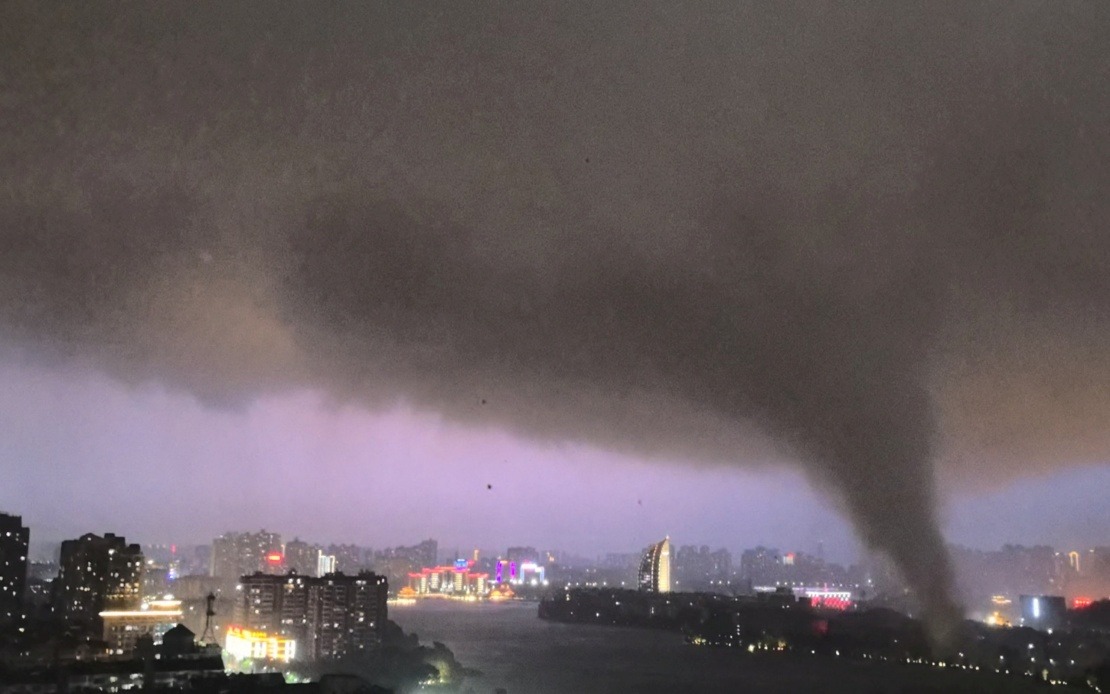
Eleven fatalities and one person unaccounted for have been confirmed following a devastating episode of severe convective weather that ravaged the eastern districts of Hubei Province in central China on Monday evening. Between 7 pm and 11 pm local time, the tempestuous conditions brought intense thunderstorms and powerful winds that affected multiple cities including Huangshi, Huanggang, Ezhou, and Xianning, with provincial authorities confirming that some localities experienced wind speeds equivalent to level 13 gales—among the most dangerous classifications on meteorological scales.
The meteorological event manifested in multiple destructive forms across the affected regions. In addition to the severe gales and electrical storms, local authorities documented the occurrence of tornadoes in certain areas, intensifying the destructive capacity of the weather system. This combination of hazards—rotating vortices alongside straight-line wind damage—created compounded challenges for communities caught in the path of the system, rendering response and recovery efforts more complex and resource-intensive than typical storm events.
The physical devastation wrought by the weather proved substantial in scale. Official reports indicate that 22 buildings were completely destroyed by the violent winds and storms, while an additional 4,855 structures sustained varying degrees of damage ranging from minor roof and structural harm to more severe compromise of building integrity. Beyond property destruction, the human toll extended beyond fatalities: 331 local residents were injured during the event, many requiring immediate medical attention and ongoing care for storm-related trauma and wounds.
The rapid mobilization of disaster response mechanisms underscores the severity with which provincial authorities treated the emergency. Hubei authorities launched comprehensive rescue and relief operations immediately following the weather system's passage, deploying personnel to affected townships and cities to locate missing persons, provide emergency medical care to the injured, and address immediate humanitarian needs. These coordinated efforts reflected the province's disaster management protocols designed to respond swiftly to extreme weather events that periodically impact the region.
Crucially, provincial authorities have emphasized preventative measures aimed at mitigating secondary disasters that frequently compound the initial damage from severe weather. The threat of flooding from accumulated rainfall, structural collapses of damaged buildings, electrical hazards from downed power lines, and disease outbreaks in crowded temporary shelters represent cascading risks that demand careful management and sustained vigilance during the recovery period. The provincial administration's focus on preventing such compounding effects demonstrates an understanding of disaster management's extended timeline and multi-faceted nature.
For regional observers in Southeast Asia, this incident illustrates the persistent vulnerability of densely populated areas in East and Central China to extreme weather phenomena driven by monsoonal and convective systems. Malaysia and neighbouring nations experience comparable severe weather events during specific seasons, making the Chinese experience relevant to disaster preparedness frameworks across the region. The intensity of the Hubei storms—particularly the confirmed tornadoes and level 13 gales—reflects the increasingly variable and occasionally extreme manifestations of atmospheric conditions in continental Asia.
The incident also highlights the relationship between rapid urbanization and weather vulnerability. The four affected cities—Huangshi, Huanggang, Ezhou, and Xianning—represent important industrial and commercial centres in central China with substantial populations. The concentration of structures, infrastructure, and residents in these urban zones magnified both the potential for damage and the complexity of emergency response. This pattern parallels urbanization trends throughout Southeast Asia, where growing metropolitan areas face amplified risks from severe weather events due to infrastructure density and reduced natural water absorption from impervious urban surfaces.
China's weather forecasting and early warning systems typically provide advance notification of severe convective weather systems, yet the localized intensity and rapid development of Monday's storms may have limited the window for public preparation and evacuation in particularly vulnerable townships. The concentrated four-hour timeframe of the most intense activity—7 pm to 11 pm—suggests a rapidly intensifying atmospheric phenomenon that challenged real-time response capabilities despite China's sophisticated meteorological infrastructure.
The reconstruction phase following such events carries significant economic implications for affected provinces. Beyond immediate humanitarian concerns, the damage to 4,877 structures requires substantial financial resources for repair and rebuilding, placing temporary strain on local government budgets and potentially redirecting funds from development projects. For Malaysian observers, such incidents serve as reminders of the economic dimensions of natural disasters and the importance of robust disaster insurance frameworks and government contingency reserves.

