A Shanghai court has sentenced a 10-year prison term to a man who orchestrated an elaborate property fraud scheme against a married couple he had known for nearly three decades, swindling them of more than 700,000 yuan (US$103,000) through a fake apartment sale involving an illegally changed lock.
Sun, a former shop owner whose retail businesses had collapsed, had served prison time previously for fraud offences. Upon his release in 2017, the couple—both migrant workers struggling to make ends meet in the city—took him under their wing, providing him with regular meals, financial assistance, and emotional support despite their own constrained circumstances. Sun expressed gratitude for their kindness and promised to repay their generosity eventually.
Leveraging the trust they had placed in him, Sun cultivated an image of financial success and urban connections. He claimed to be a Shanghai native with property holdings and boasted of having a relative who served on a village committee with considerable influence. When the couple approached him for help locating an affordable home where they could finally settle, Sun recognised an opportunity to exploit their aspirations and their faith in him.
Beginning in 2023, Sun systematically extracted funds from the couple under the guise of securing them a property at a discount. He collected over 700,000 yuan, claiming the payments were necessary deposits and loan arrangements that would be offset against the eventual purchase price. The couple, believing they were investing in their family's future, continued to transfer money as he requested.
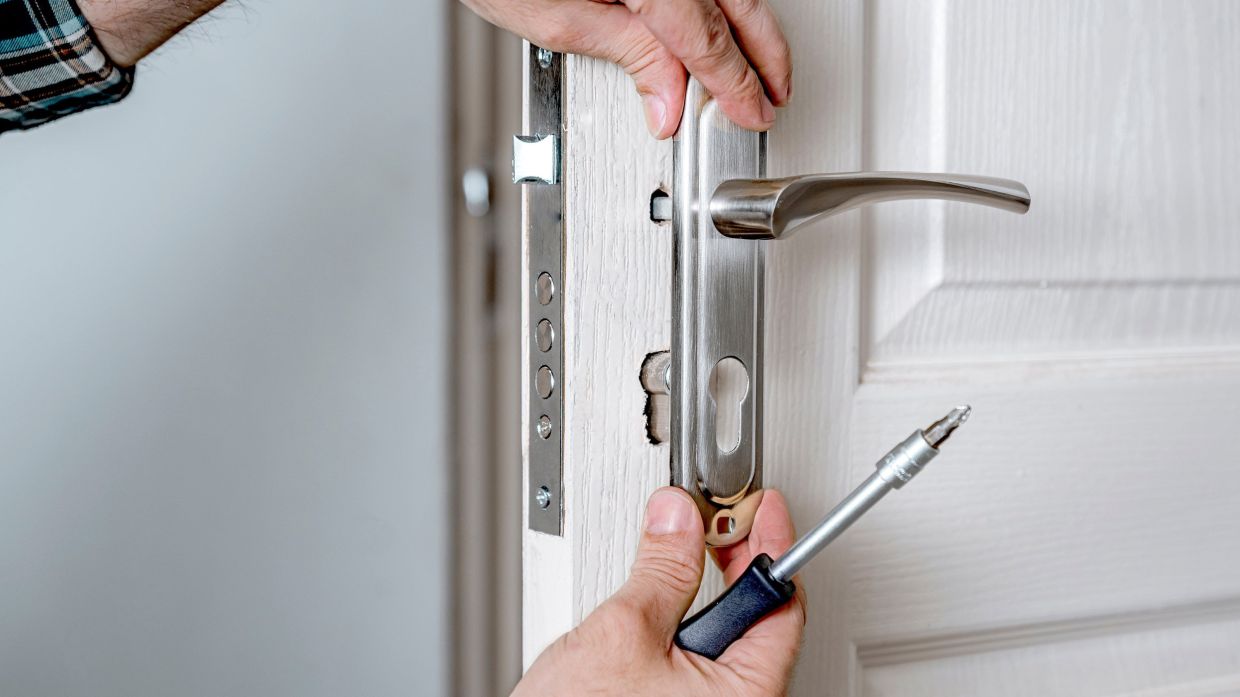
Two years into the arrangement, Sun announced he had located a suitable unit in a resettlement housing estate and demanded an additional 400,000 yuan (US$59,000) to complete the transaction. To substantiate his claim, he orchestrated an audacious scheme involving a locksmith. Sun contracted the locksmith under the false pretence of having lost his keys to the flat and arranged for the lock to be replaced without furnishing any proof that he held legitimate ownership of the property.
With the new lock installed, Sun presented the couple with keys and executed a fabricated sales contract, purporting to transfer ownership to them. The flat had been vacant for an extended period while the actual owner, Wang, pursued rental options through an agent, leaving the property unguarded and providing Sun with the window he needed to carry out his deception.
The fraud unravelled in May 2025 when Wang arrived at the flat with a prospective tenant, only to find that his own key would no longer open the door. Investigation of security camera footage confirmed that someone had tampered with the lock. Wang immediately reported the incident to police, initiating a criminal investigation that traced the scheme directly to Sun.
During interrogation, Sun admitted to having already spent the money he obtained from the couple, using the funds to settle personal debts and cover his living expenses. This admission suggested that recovery of the stolen funds would prove difficult or impossible. The couple, who had not yet paid the final instalment Sun had demanded, faced losses exceeding the 700,000 yuan already transferred, with no clear path to compensation.
The court convicted Sun of fraud and sentenced him to 10 years and three months imprisonment, additionally levying a fine of 100,000 yuan (US$15,000). Questions remained about whether the locksmith who facilitated the lock change would face legal consequences for his role, though no charges had been announced publicly at the time of sentencing.
The case generated substantial discussion on Chinese social media platforms, with observers highlighting multiple vulnerabilities that enabled the fraud. Commentators noted that the couple's failure to independently verify the property's ownership documentation before proceeding with the purchase represented a critical oversight. Others directed sharp criticism toward Sun, emphasising the moral betrayal inherent in exploiting the generosity of people who had supported him during hardship.
The incident also prompted broader reflection on property transaction safety in China. Social media users advised against conducting real estate deals through informal channels or relying on personal referrals without proper verification procedures. Property ownership certificates and official documentation should form the foundation of any purchase decision, experts cautioned, rather than placing implicit trust in intermediaries, however well-established the personal relationship.
For Malaysian and Southeast Asian readers, the case serves as a cautionary reminder about property transactions across the region. While legal frameworks differ between jurisdictions, the fundamental principle remains universal: prospective buyers must independently verify ownership documentation and conduct due diligence through formal channels. The case also illustrates how previous criminal history can be an important risk indicator, particularly in transactions involving substantial sums. Scams involving property and property-related schemes persist throughout Asia, and awareness of common fraud tactics—such as illegally changing locks or forging sales contracts—provides essential protection for vulnerable populations and those unfamiliar with local property laws.

