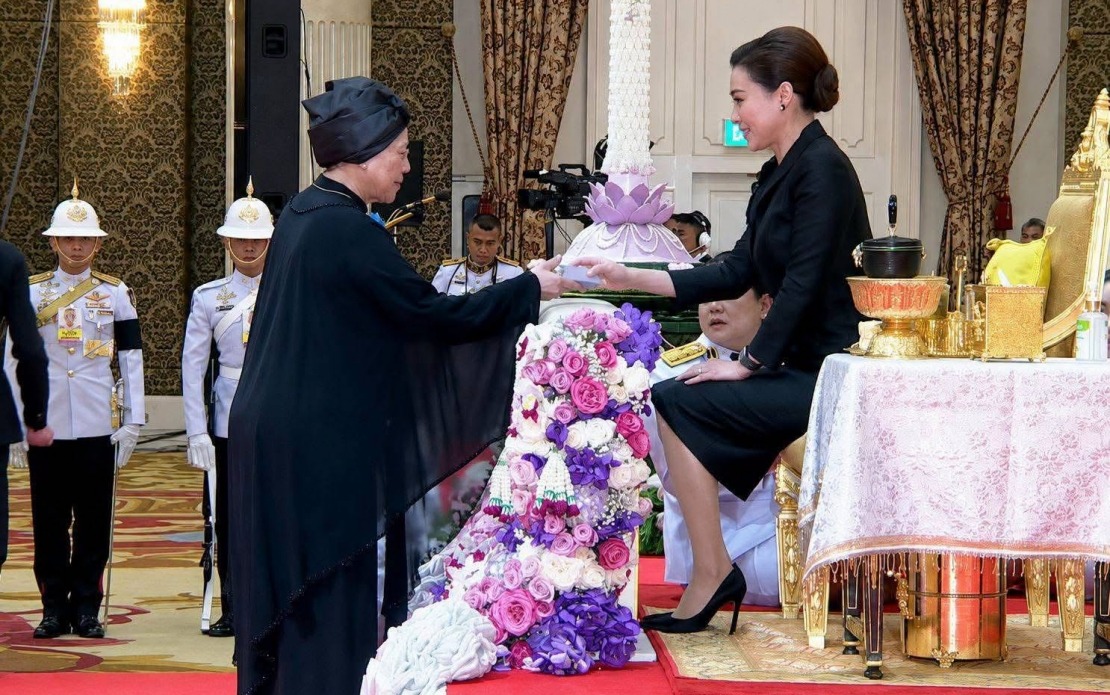
Prime Minister Datuk Seri Anwar Ibrahim and his wife Datuk Seri Dr Wan Azizah Wan Ismail have extended congratulations to Prof Emerita Tan Sri Datuk Seri Dr Sharifah Hapsah Syed Hasan Shahabudin following her conferment of the prestigious 'Outstanding Woman Award for Social Development' by Queen Suthida Bajrasudhabimalalakshana of Thailand. The accolade, bestowed in recognition of exceptional contributions to social advancement, underscores the growing visibility and influence of accomplished Malaysian women on the international platform.
Anwar characterised the honour as more than a personal achievement for Sharifah Hapsah, framing it instead as validation of the broader capabilities and dedication demonstrated by Malaysian women across professional and community spheres. In remarks posted on social media, he emphasised that such recognition on the world stage reinforces Malaysia's standing as a nation that cultivates talent and expertise among its female population. The award thus carries significance beyond the individual recipient, serving as an indicator of Malaysia's human capital development and the quality of leadership emerging from within the country's female workforce.
The Prime Minister used the occasion to articulate his government's commitment to advancing women's participation and leadership at all levels of society. He stressed that the MADANI Government views women's engagement not as a peripheral concern but as integral to the nation's development trajectory. This positioning reflects a deliberate shift in policy emphasis, where female contribution to economic, social and governance structures receives elevated priority in the administration's strategic planning. The sentiment aligns with broader regional trends in Southeast Asia, where several governments have similarly elevated the importance of women's roles in national development frameworks.
Anwar called upon the recognition awarded to Sharifah Hapsah to serve as inspiration for other Malaysian women to step forward and leverage their knowledge, leadership abilities and compassion in advancing societal progress. The framing suggests that individual honours can function as catalysts for systemic change, encouraging broader participation and reducing barriers that traditionally limited women's engagement in high-impact roles. By highlighting Sharifah Hapsah's example, the Prime Minister implicitly challenged other potential leaders to pursue similar trajectories of excellence and service.
The award presents particular relevance for Malaysian readers in understanding how domestic talent is gaining traction internationally. Thailand's recognition of a Malaysian woman for contributions to social development indicates the region's growing interconnectedness in professional and humanitarian spheres. Cross-border acknowledgement of achievement also suggests that excellence in social development work transcends national boundaries, with practitioners from different countries influencing and learning from one another's approaches.
Anwar's emphasis on integrating women's advancement with the Malaysia MADANI agenda demonstrates an attempt to anchor women's empowerment within a broader transformative vision for the nation. The MADANI framework, which encompasses prosperity, sustainability and inclusivity, positions women's participation as essential to achieving these multidimensional objectives. This connection implies that limiting women's contributions would necessarily constrain the country's capacity to realise its development aspirations across economic, environmental and social dimensions.
The government's stated intention to expand opportunities for women's participation across various sectors reflects recognition that talent distribution does not follow gender lines. By removing structural barriers and actively facilitating women's advancement, the administration signals alignment with evidence from development economics indicating that societies maximising their full human capital pool achieve superior growth outcomes. This pragmatic approach, grounded in economic rationale alongside social justice principles, may broaden support for women-focused policies across different constituencies.
Sharifah Hapsah's recognition also carries implications for professional women throughout Malaysia and Southeast Asia who aspire to international visibility and impact. Her award demonstrates that sustained commitment to social development work can generate recognition from prestigious international bodies, validating career choices that prioritise community benefit alongside professional advancement. This visibility serves an important signalling function, particularly for younger women contemplating career paths and considering whether their aspirations align with realistic opportunities for advancement and acknowledgement.
The timing and prominence of the Prime Minister's public acknowledgement of this award underscore institutional commitment to celebrating women's achievement. When senior government figures publicly endorse and amplify recognition of women's contributions, they contribute to shifting social narratives around female leadership and capability. This institutional endorsement can help counter persistent stereotypes and biases that might otherwise limit women's access to opportunities or constrain their ambitions within professional and civic spheres.

