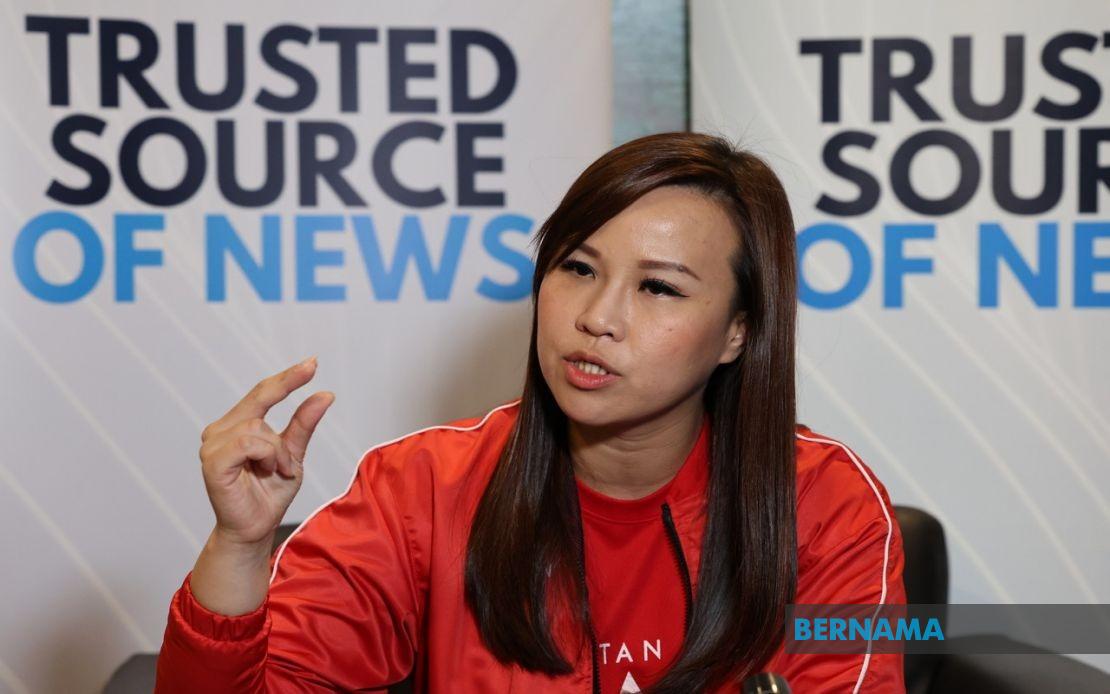
Sharon Teo Siew Hui, the Pakatan Harapan candidate contesting the Permas state seat in the ongoing Johor State Election, has centred her campaign around the political principles of her former mentor, the late Datuk Seri Salahuddin Ayub. The 36-year-old candidate credits her years working as a special officer to the late Minister of Domestic Trade and Cost of Living with instilling in her the core values of accessibility, humility, and unwavering commitment to public welfare that transcends communal divides. These lessons have become the philosophical foundation of her candidacy and her vision for serving the Permas constituency.
Salahuddin Ayub, who earned widespread recognition as "Bapa Rahmah Malaysia" for his advocacy of affordable living and welfare initiatives, served as Teo's primary inspiration for entering electoral politics. She first became involved in Salahuddin's political activities as a volunteer supporter, but her admiration deepened following closer engagement with his leadership style and governance philosophy. This connection eventually led her to join Parti Amanah Negara in 2018, formally committing herself to the political path her mentor had demonstrated through example.
The experience of accompanying Salahuddin through multiple election cycles and grassroots engagements provided Teo with practical insight into what representative governance actually demands of elected officials. She observed firsthand how the late minister treated constituent complaints not as mere administrative boxes to tick but as matters requiring sustained personal attention and follow-through. Teo recalls instances where Salahuddin would monitor the resolution progress of public grievances late into the evening, dispatching messages to staff at midnight to confirm whether residents' problems had been addressed. This hands-on, relentless approach to accountability has fundamentally shaped her understanding of political responsibility and directly informs her campaign promises.
Teo has faced the familiar accusation levelled at many political newcomers that she represents a parachute candidate imposed by party machinery without substantive community grounding. She pushes back against this characterisation by documenting her organisational trajectory within Amanah since joining in 2018. Beginning as an ordinary member, she progressed through the ranks to serve as Assistant Secretary of Amanah Johor and subsequently as head of Amanah Johor Wanita Muda, the party's young women's wing. Additionally, her repeated presence alongside Salahuddin during campaign activities and community events in Permas throughout previous election cycles has given her genuine familiarity with the constituency's geography, demographics, and civic landscape.
Early feedback from voters during the opening days of her campaign has reinforced her confidence in engaging with residents from diverse backgrounds and socioeconomic circumstances. The issues surfacing most persistently from door-to-door canvassing point to longstanding infrastructure deficits affecting daily life in Permas. Potholes pockmarking roads, neglected lanes running behind commercial properties, traffic bottlenecks, and ageing public facilities consistently dominate resident concerns. These practical grievances represent the immediate reality of life for many constituents and offer Teo concrete targets around which to build her service delivery agenda.
Teo's outreach strategy deliberately emphasises engagement with younger voters, particularly first-time electors and school leavers who may feel disconnected from traditional political messaging. She plans to deploy social media platforms and e-sports initiatives as conduits for dialogue with this demographic, recognising that mobilising youth support requires meeting constituents where they naturally congregate online and within digital entertainment spaces. This modernised approach to constituent engagement reflects broader generational shifts in political communication while remaining aligned with Salahuddin's foundational commitment to accessibility across all community segments.
If elected, Teo has outlined an ambitious first hundred days focused on diagnostic work rather than premature policy implementation. Her strategy involves systematically identifying the most pressing issues affecting Permas, gathering comprehensive empirical data on their scope and impact, and subsequently developing phased solutions grounded in evidence rather than guesswork or incumbent assumptions. This methodical approach mirrors the deliberate, constituent-responsive governance style she observed in Salahuddin's operations and suggests a preference for substantive problem-solving over symbolic gestures.
Central to her governance vision is the establishment of PermasKu, a proposed one-stop centre dedicated to managing public complaints with guaranteed monitoring until satisfactory resolution. The creation of such an institutional mechanism would formalise the attentiveness Salahuddin demonstrated informally, embedding constituent accountability into permanent administrative structures. Complementing this initiative, Teo has committed to conducting a comprehensive infrastructure audit across all Permas localities to establish transparent hierarchies of need and guide resource allocation decisions. She further pledges to engage directly with residents across the constituency, developing action plans derived from authentic community input rather than top-down assumptions about voter priorities.
The Permas contest has crystallised into a four-way race encompassing Teo's Pakatan Harapan bid, the incumbent Baharudin Mohamed Taib representing the Barisan Nasional coalition, Dr Zamil Najwah standing for Parti Bersama Malaysia, and T. Vela contesting under the Perikatan Nasional banner. Baharudin's 2022 victory margin of 7,926 votes provides a baseline against which to measure the competitiveness of this election cycle and suggests the seat remains a battleground where campaign quality and constituent mobilisation may prove decisive. The diversity of options available to voters reflects wider fragmentation within Malaysian electoral politics and the strategic calculation by multiple political formations that Permas represents an opportunity worth contesting.
Teo's campaign represents a particular approach to political renewal, one premised on institutional learning from a respected predecessor and the translation of observed practices into formalised governance structures. Rather than breaking sharply with previous political generations, she positions herself as extending the legacy of servant leadership that Salahuddin embodied, adapting his principles to contemporary challenges while maintaining fidelity to his core emphasis on people-centred governance. Whether this strategy of principled continuity resonates with Permas voters in an environment increasingly characterised by political volatility and voter experimentation remains to be determined as the campaign progresses toward polling day.

