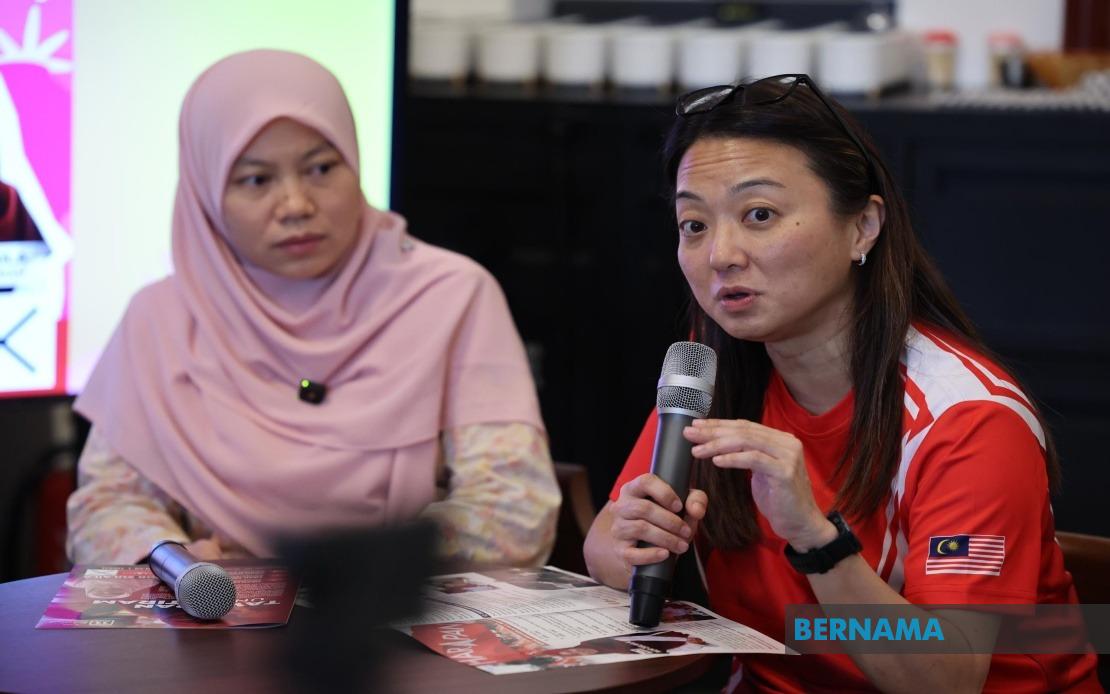
The deputy secretary-general of the Democratic Action Party, Hannah Yeoh, has pushed back against suggestions that political manifestos released ahead of Johor's state election represent mere duplications of existing policy documents. Speaking in Johor Bahru on July 4, the Minister in the Prime Minister's Department (Federal Territories) contended that when multiple parties propose similar positions on key issues, this demonstrates alignment with what constituents actually want addressed, not a failure of political imagination or commitment.
The remarks came as certain political figures had accused Pakatan Harapan of essentially copying the Barisan Nasional's policy platform for the 16th Johor state election. Rather than conceding this charge, Yeoh reframed the conversation entirely, arguing that convergence on issues signals something positive about the democratic process. When welfare systems, affordable housing, and economic opportunity emerge across multiple manifestos, she suggested, voters should welcome rather than scrutinise this consistency, since it reflects what concerns Malaysians most directly.
Yeoh elaborated on her position during remarks following the "Chit Chat Wanita" programme and the launch of the "Offer for Tiram" initiative. She observed that candidates representing different parties and coalitions inevitably gravitate toward the same portfolio areas because these genuinely matter to the electorate. Housing shortages, for instance, appear prominently in virtually every manifesto not through copying but because residential affordability remains a pressing problem across Malaysia. Similarly, welfare provisions dominate campaign messaging because voters recognise their importance to household stability and individual security.
This interpretation carries particular weight within Malaysian politics, where manifestos serve as the primary mechanism through which parties communicate their intentions to voters. Unlike systems where governing coalitions pre-negotiate agreements before elections, Malaysia's competitive model means parties operate independently until ballots close. Overlapping commitments on popular issues actually reinforce voter confidence that multiple options can deliver on shared priorities. Yeoh's framing thus transforms an accusation of unoriginality into evidence that parties genuinely understand constituent demands.
The DAP representative simultaneously used the Johor campaign moment to highlight her party's approach to gender representation and inclusion. The party fielded eight female candidates among its 17 total nominees, a proportion reflecting deliberate commitment to expanding women's participation in politics and governance. Yeoh specifically advanced the argument that female candidates possess the experience, credentials, and capability to occupy senior executive positions, including the position of Menteri Besar, should voters grant them mandate.
As a concrete example of this principle, Yeoh highlighted Nor Zulaila Abd Ghani, the DAP candidate contesting the Tiram seat. With twelve years of professional experience across multiple tiers of administration—from local authorities through state and federal governmental structures—Nor Zulaila represents the kind of seasoned political talent Yeoh argues the party brings to contests. Beyond her administrative background, Yeoh emphasised Nor Zulaila's particular significance as someone whose mixed-race parentage (Malay mother, Chinese father) embodied exactly the kind of bridge-building that could help transcend identity-based political divisions that have historically characterised Malaysian electoral contests.
Nor Zulaila's contest in Tiram unfolds in a crowded field, with candidates from Barisan Nasional, Parti Bersama Malaysia, and Perikatan Nasional also competing in what constitutes a four-way race. This competitive landscape reflects the fragmenting political environment in Johor, where traditional two-coalition contests have increasingly given way to multi-party configurations. For Pakatan Harapan specifically, the 16th Johor state election represented a comprehensive deployment of its candidate slate, with the coalition contesting all 56 available seats across the state.
The timing of Yeoh's remarks becomes significant given the election schedule. Polling took place on July 11, with early voting already conducted on July 7, meaning the campaign sprint was entering its final intensive phase. Within this compressed timeframe, Yeoh's intervention functioned to reshape how media and observers interpreted manifesto similarities, converting a potential liability into evidence of responsible policy-making attuned to actual voter needs rather than partisan differentiation.
For Malaysian voters, particularly those in Johor, Yeoh's position invites reconsideration of how manifestos themselves should be evaluated. Rather than treating parties' policy documents as creative exercises where distinctiveness indicates superior thinking, this perspective suggests that substantive overlap on housing, welfare, and economic issues actually serves voter interests by ensuring multiple political options propose solutions to recognisable problems. It also implicitly acknowledges that state-level electoral contests in Malaysia increasingly feature convergence around technocratic governance questions, with parties competing less on ideological distance and more on which team can deliver implementation excellence.
The emphasis on women candidates and mixed-heritage leadership also signals how Malaysian political campaigns increasingly incorporate narratives around identity inclusivity alongside material policy promises. Yeoh's highlighting of Nor Zulaila's background as a deliberate counter to racial polarisation reflects broader shifts in how parties seek to mobilise support beyond traditional communal voting patterns. By anchoring this argument in specific candidate credentials and experience, the DAP representative attempted to demonstrate that diversity in political representation serves not merely symbolic functions but contributes tangible governance quality.
As the Johor election moved toward its conclusion, the manifesto discussion Yeoh addressed remained relevant to how observers assessed the competing coalitions' claims. The question of whether similarities reflected genuine shared commitment to voter concerns or constituted lazy policy borrowing ultimately depended on voters' own frameworks for evaluation. Yeoh's reframing, however, provided a coherent counternarrative to critics, one that positioned Pakatan Harapan as a party genuinely responsive to what Johor residents identified as their priorities.

