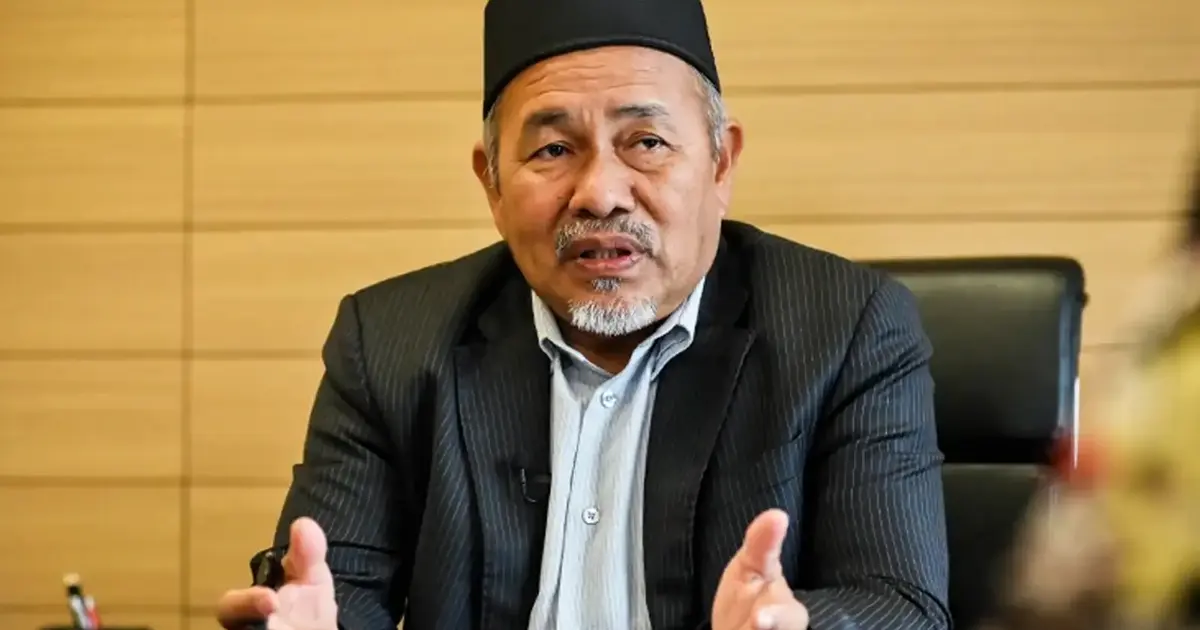
The resilience of Malaysia's evolving political landscape hinges significantly on the strength of partnerships between major political blocs. PAS treasurer-general Iskandar Abdul Samad has placed the enduring success of the PAS-Umno alliance squarely on the foundations of mutual sincerity and unified vision, signalling that the two parties recognise the fragility of modern Malaysian coalitions without robust ideological or strategic alignment.
Although coalition agreements have become increasingly common across Malaysian politics over the past decade, the stakes surrounding the PAS-Umno relationship deserve particular attention. These two parties represent significant voting constituencies with their own historical constituencies and policy priorities. Iskandar's public remarks reflect an acknowledgement that political partnerships in contemporary Malaysia require more than simply winning elections; they demand consistent reinforcement of shared values and long-term strategic objectives. Without these foundations, alliances can rapidly deteriorate when competing interests emerge or external pressures mount.
The treasurer-general's emphasis on sincerity carries implicit weight given Malaysia's recent political history, marked by sudden coalition shifts, defections, and opportunistic realignments. Voters have grown cynical about political marriages of convenience, particularly when they appear motivated purely by electoral calculation rather than principle. PAS and Umno, while both rooted in Malay-Muslim political traditions, have distinct organisational cultures and policy orientations that require careful navigation. The call for sincerity suggests an awareness that internal coherence must be maintained actively rather than assumed.
Shared vision operates as the strategic counterpart to sincerity in Iskandar's formulation. Political alliances often falter because partners pursue divergent medium and long-term objectives, leading to friction over policy direction, resource distribution, or electoral strategy. A unified vision would encompass agreed positions on governance priorities, socioeconomic policy, constitutional matters, and the coalition's role in national development. For PAS and Umno specifically, this likely involves consensus on how Islamic principles inform policy-making, approaches to federal-state relations, and economic development priorities affecting Malay communities.
Iskandar's warning to Bersatu introduces a crucial dimension of intra-opposition dynamics. Bersatu, emerging as a significant political player with its own coalition aspirations, represents both competitor and potential spoiler in the current political configuration. The treasurer's caution suggests that Bersatu may be attempting to exploit any perceived gaps or tensions within the PAS-Umno relationship, seeking to peel away support or create divisions that might benefit Bersatu's own political positioning. This reflects deeper competition for political space and influence within Malay-dominated constituencies that multiple parties vie to control.
The strategic context of these remarks involves Malaysia's broader political competition. The ruling coalition's stability and electoral prospects depend substantially on maintaining the cohesion of its component parties. Any public rift between PAS and Umno could provide openings for opposition parties to capitalise on, potentially shifting the political equation at federal or state levels. Iskandar's public statements serve partly as reassurance to party members and supporters that leadership maintains firm control, and partly as a signal to Bersatu that attempted interference will not succeed in fracturing the alliance.
Historically, Malay-Muslim political movements in Malaysia have experienced periodic tensions between religious conservatism and pragmatic governance considerations. PAS brings significant grassroots Islamic mobilisation capabilities, while Umno commands traditional Malay establishment structures. These complementary strengths can be powerful when aligned, but they can also become sources of conflict if one party perceives the other as compromising core principles. The treasurer's emphasis on vision unity thus addresses a real potential vulnerability that astute political observers will monitor.
Regional dimensions also merit consideration. Southeast Asian politics increasingly involves complex coalition management across multiple levels of government and competing strategic interests. Malaysia's experience with PAS-Umno cooperation could inform broader patterns of Islamist party integration into mainstream political systems. How successfully these two parties maintain coherence while preserving their distinct identities may influence political dynamics not only domestically but across the region, where similar alignments between secular and religiously-oriented parties are being tested.
The treasurer's remarks also implicitly acknowledge that external actors, whether domestic competitors or international observers, maintain keen interest in PAS-Umno stability. Political alliances carry consequences for policy outcomes affecting everything from religious affairs administration to economic regulation, making their strength a matter of broader public concern. Iskandar's public assertions of commitment may therefore be partially directed at stabilising expectations among investors, bureaucratic actors, and international partners who require predictability from Malaysian governance structures.
Moving forward, the sustainability of the PAS-Umno pact will likely depend on how effectively these parties navigate inevitable disagreements without allowing them to threaten the broader alliance. The treasurer's call for sincerity and vision-sharing implicitly acknowledges that conflict will arise; what matters is managing it within a framework of mutual respect and shared strategic objectives. For Malaysian observers, the strength or weakness of this alliance will significantly influence the nation's political trajectory and policy direction over coming years.

