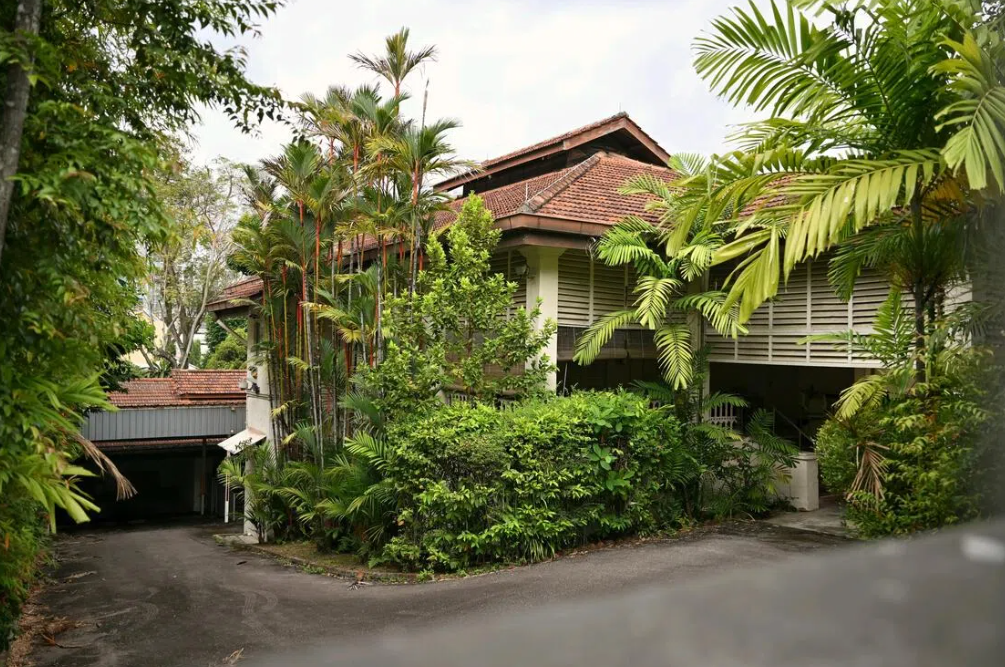
Singapore's government has completed its acquisition of 38 Oxley Road, the historically significant pre-war bungalow that served as the residence of founding Prime Minister Lee Kuan Yew and witnessed crucial conversations among the nation's founding leaders. The Singapore Land Authority and National Heritage Board announced on July 31 that possession of the site had been transferred to the state, marking the conclusion of a complex and often contentious process to preserve one of Singapore's most symbolically important properties.
The exact purchase price of the acquisition was not disclosed in the official statement from the two agencies. However, the completion of this transaction represents a significant moment in Singapore's efforts to safeguard its architectural and political heritage. The property had previously been owned by Lee Hsien Yang, the younger son of Lee Kuan Yew and the sibling of Senior Minister Lee Hsien Loong, whose family dynamics around the property have played out in the public sphere over several years.
The National Heritage Board indicated that it would now embark on a comprehensive examination of the site to determine the most appropriate pathway for transforming it into a public-facing space that honours the legacy of Singapore's founding period while respecting the privacy preferences that Lee Kuan Yew is understood to have maintained throughout his life. During the interim period, the board stated that essential conservation and maintenance activities would be undertaken to ensure the property's structural integrity, though the compound remains closed to public visitation at this stage.
The site's designation as a national monument occurred on December 12, 2025, following a public announcement by the government on November 3 of that year regarding both its intention to protect the property through monument status and to acquire it outright. This dual-track approach reflected the government's determination to prevent any private redevelopment or demolition of a structure that holds substantial symbolic weight in Singapore's post-independence narrative. The formal gazettal for compulsory acquisition followed on January 29, 2026, establishing the legal framework for the state's takeover.
The property has been at the centre of a prolonged family disagreement that touched on competing visions of Lee Kuan Yew's legacy and wishes. Lee Hsien Yang and his late sister Lee Wei Ling had publicly contended that their father harboured a long-standing desire to have the bungalow demolished rather than preserved, and they suggested that Senior Minister Lee Hsien Loong's support for conservation was motivated by political considerations rather than filial duty. These allegations prompted a formal ministerial response in Parliament, during which Senior Minister Lee Hsien Loong denied the accusations and raised concerns about the circumstances surrounding the preparation of their father's final testamentary documents.
In a Facebook statement issued on July 31, immediately following the government's formal possession of the property, Lee Hsien Yang reiterated his position that the state's compulsory acquisition contradicted the foundational values Lee Kuan Yew had championed throughout his life and represented a disregard for his father's explicit preference that the structure be removed rather than preserved. This statement underscores the persistent philosophical divide within the Lee family regarding how Singapore should commemorate its founding period and the role of physical heritage in that commemoration process.
The government's articulated vision for the site extends beyond mere preservation of a historical structure. Minister for Culture, Community and Youth David Neo has outlined plans to develop the property into a heritage park or similar public amenity that would allow Singaporeans to engage with the physical space where foundational decisions about the nation's direction were made. This approach attempts to balance the competing imperatives of historical conservation, public access, and respect for the privacy of the individuals who inhabited the space.
The acquisition ensures that the pre-war bungalow cannot be converted into residential apartments, commercial establishments, or other privately developed uses that might alter or obliterate its historical character. By placing the property under state stewardship and national monument protection, Singapore has effectively locked the site into a public heritage pathway, preventing any future owner from pursuing the demolition that Lee Kuan Yew reportedly desired and that Lee Hsien Yang continues to advocate for.
For Malaysian readers and Southeast Asian observers, the 38 Oxley Road episode illuminates how newly independent nations in the region navigate the preservation of founding-era sites and manage family dynamics around national heritage. The case demonstrates the tension between honouring a leader's personal wishes and fulfilling a nation's perceived need to physically commemorate its foundational moments. Singapore's approach of state acquisition and public heritage designation reflects a broader regional pattern in which governments assert stewardship over sites deemed critical to national identity, sometimes against the preferences of descendants or relatives of the principals involved.
The months of detailed study that the National Heritage Board will now undertake will likely examine not only the architectural and historical significance of the structure itself but also the narratives surrounding it—including the disputed circumstances of Lee Kuan Yew's final years and the divergent interpretations of his legacy offered by different family members. How the board resolves these questions as it develops the site into a public space will carry implications for how Singapore chooses to present its founding narrative to both domestic audiences and international visitors.
The government's commitment to preserve 38 Oxley Road as a heritage park rather than a museum or restrictive monument reflects an emerging Southeast Asian trend toward making founding-era sites more accessible and less austere in their presentation. By potentially opening the grounds as a contemplative public space rather than a formal institutional setting, Singapore may be signalling an evolution in how it wishes younger generations and visitors to engage with the nation's independence story—one that emphasises accessibility and collective ownership rather than exclusive commemoration.

