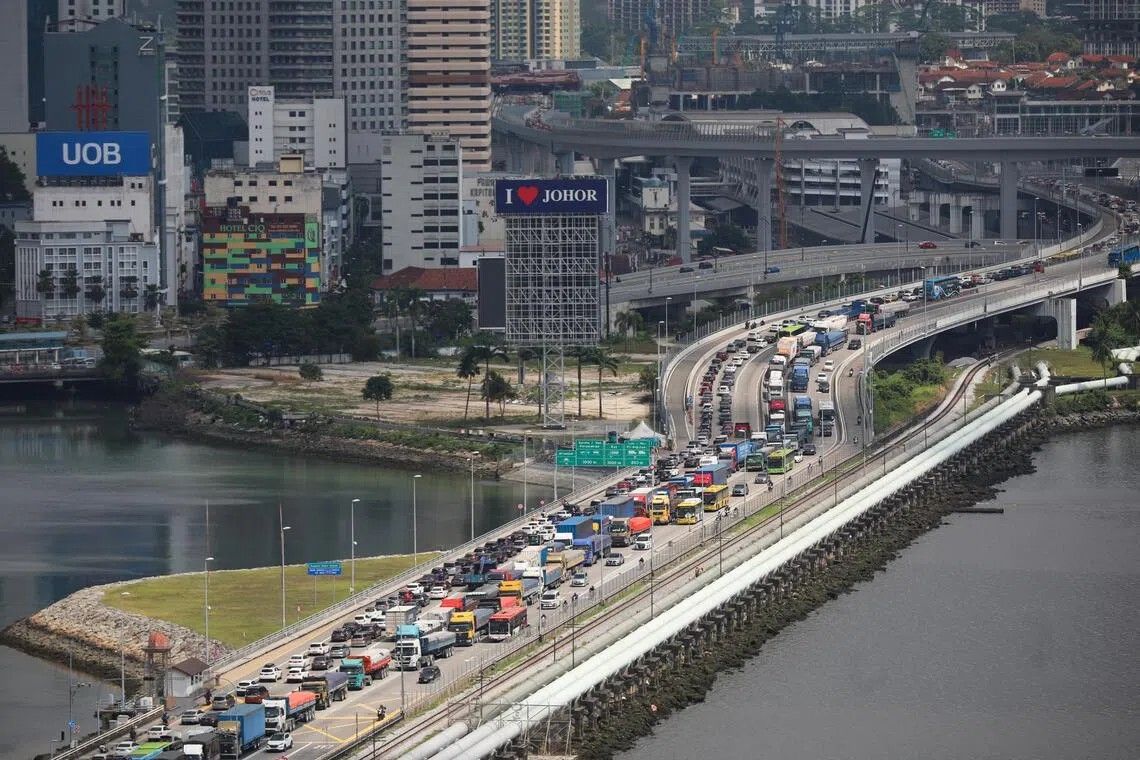
Singapore's Immigration and Checkpoints Authority has issued an alert for motorists to prepare for substantial delays at the Woodlands and Tuas checkpoints over the National Day long weekend from August 7 to 10, a period that traditionally sees a sharp spike in cross-border traffic between Malaysia and Singapore. The warning reflects patterns observed during previous holiday periods, when land crossings become testing points for both national infrastructure and traveller patience.
The ICA's advisory centres on practical recommendations aimed at distributing traffic more evenly across the four-day period. Travellers are urged to time their journeys strategically, departing either during early morning hours before dawn or late evening when vehicular volumes drop significantly below peak levels. The authority also suggests that motorists review real-time traffic conditions at both checkpoints before commencing their journey, a precaution that can save hours of queuing time and fuel consumption.
Recent passenger data provides context for these warnings. Between May 26 and June 28, encompassing the Hari Raya Haji and Vesak Day celebrations alongside school holidays, more than 18 million travellers transited through the two land checkpoints. This figure underscores the extraordinary scale of cross-border movement during extended holiday periods, a phenomenon particularly relevant for Malaysian and Singaporean commuters and visitors accustomed to regular friction at these borders.
The peak capacity challenges became starkly evident on June 19 when the checkpoints processed over 598,000 individuals, eclipsing the previous daily record of 589,000 set on December 19, 2025. During such congested periods, private motorists reported enduring immigration delays of up to three hours, though much of this stemmed from traffic congestion originating on the Malaysian side of the border, a factor beyond Singapore's direct control but affecting overall transit efficiency.
Security protocols have intensified at all checkpoints since February 28 following elevated global security concerns, particularly developments in the Middle East region. This enhanced security framework, while necessary for national safety, inevitably contributes to clearance delays during peak periods. The ICA has attempted to mitigate this effect through technological innovation rather than compromising security standards.
Digital solutions offer the most practical path forward for time-conscious travellers. The MyICA mobile application generates personalised QR codes that facilitate expedited immigration processing, substantially reducing clearance times compared to traditional document verification methods. For motorcycle and pillion passenger users, facial recognition technology under the New Clearance Concept has proven particularly effective, improving clearance capacity by more than 35 percent, or an additional 7,600 travellers per hour during peak departure periods relative to pre-pandemic 2019 levels.
However, technological advantages remain only available to users willing to plan ahead. The gap between available capacity and actual throughput during holiday periods often reflects behavioural factors rather than systemic limitations. The ICA explicitly addresses conduct that exacerbates congestion, noting that queue-cutting disrupts orderly traffic flow and cascades delays across the entire system. During recent holiday periods, 52 motorists were apprehended for traffic violations and dangerous road behaviour, with enforcement measures ranging from referrals to Traffic Police for prosecution to mandatory repositioning at the back of queues and entry bans into Singapore.
The checkpoint crossing represents a critical chokepoint in regional travel patterns, with particular implications for Malaysian workers commuting to Singapore, families visiting relatives, and tourists traversing between the two nations. The August 7-10 weekend will coincide with Singapore's National Day celebrations, traditionally generating heightened travel interest from Malaysians seeking to participate in festivities or capitalise on what they anticipate will be operational disruptions on the Singapore side.
Cooperation from individual motorists remains essential for system-wide efficiency. The ICA's emphasis on lane discipline, compliance with traffic regulations, and orderly queueing reflects the reality that even incrementally smoother individual behaviour compounds across tens of thousands of vehicles to produce meaningful system-wide improvements. Queue-cutting, aggressive lane-changing, and related infractions force enforcement interventions that further slow processing rates.
For Malaysian readers considering cross-border travel during this period, strategic planning offers tangible returns. Early morning departures before 6 AM or late evening crossings after 10 PM typically experience substantially shorter queues, with immigration clearance times potentially measured in minutes rather than hours. The pre-registration and QR code generation via MyICA demands only a few minutes of advance effort yet can save multiple hours of airport-style waiting.
The checkpoint experience ultimately reflects the extraordinary challenge of managing sustained high-volume cross-border traffic through fixed physical infrastructure. While Singapore continues implementing technological enhancements and Malaysia coordinates traffic management on its territory, individual traveller choices regarding timing and preparation fundamentally shape actual outcomes. The National Day weekend will serve as another test of this complex system's resilience and the travelling public's willingness to prioritise collective efficiency over personal convenience.

