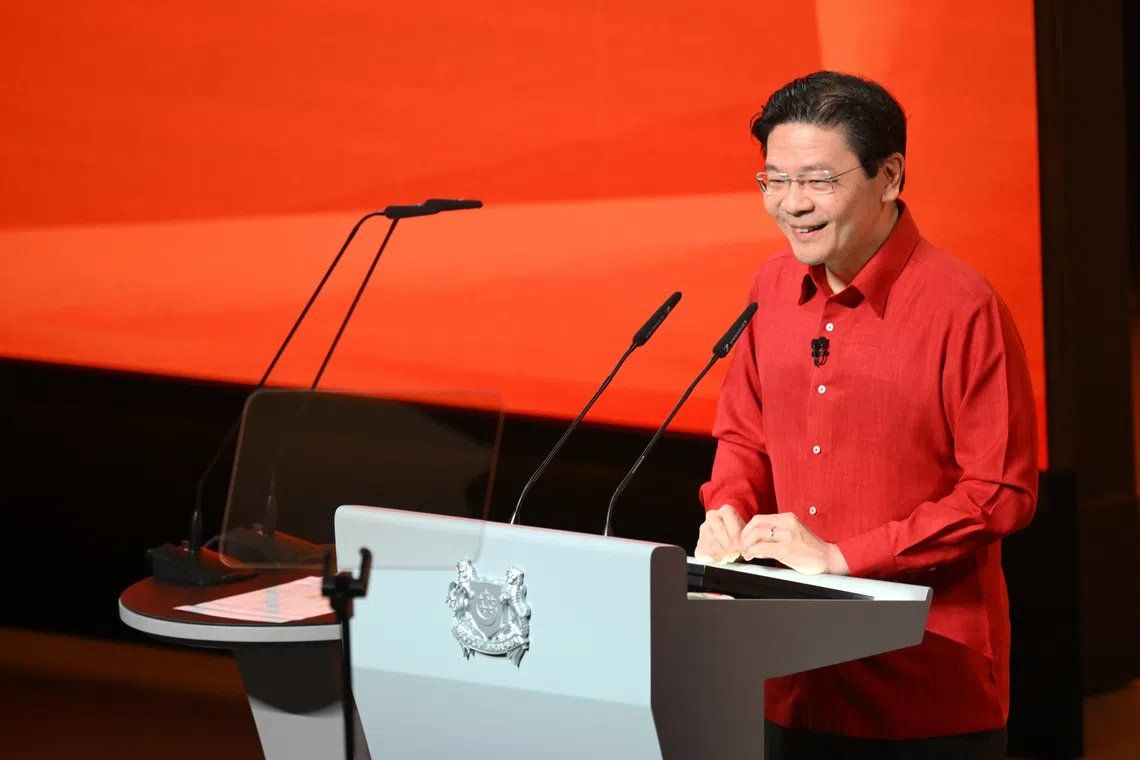
Singapore's transport authorities are preparing for significant traffic disruptions in the Ang Mo Kio district this Sunday as Prime Minister Lawrence Wong prepares to deliver his third National Day Rally address. The Singapore Police Force announced on Thursday that several critical roads and slip lanes feeding into and out of Ang Mo Kio Avenue 5 will be completely sealed off to general traffic from 5am through to the end of the day at 11.59pm on August 23, with the closure centring on the vicinity of ITE College Central where the rally will take place.
The scale of the traffic management operation reflects the significance of the National Day Rally as Singapore's premier political event, during which the prime minister typically outlines the government's policy direction and national priorities for the year ahead. The affected routes include two critical slip roads connecting Ang Mo Kio Avenue 5 to Ang Mo Kio Drive, which serve as major feeder roads for the wider transport network in the north-eastern region. Additionally, four separate lanes along Ang Mo Kio Avenue 5 itself will be progressively closed, including the extreme left lane heading towards the Central Expressway at two distinct locations, and the extreme right lane in the direction of Ang Mo Kio Avenue 8.
For motorists navigating the area, access will be strictly limited to authorised vehicles, with only police and emergency service vehicles receiving unrestricted passage through the closure zones. The police have deployed a comprehensive traffic management strategy involving officers at ground level, auxiliary police personnel, and private security staff positioned along all affected routes to guide and direct the remaining traffic flow. The enforcement approach will extend to parking restrictions, with authorities warning that any vehicles found parked illegally or obstructing traffic in the sealed zones will be summarily towed without exception.
The timing of the closures reflects the scheduled commencement of PM Wong's speech at 6.45pm, when he will address the nation first in Malay, demonstrating Singapore's commitment to its multilingual constituency. The prime minister will then transition to Mandarin before delivering the bulk of his address in English at 8pm, a three-language format that has become standard for the rally in recognition of Singapore's diverse population. For those unable to attend in person or watch the live broadcast on local television and radio stations, the government has arranged for comprehensive digital coverage through multiple YouTube channels operated by the Prime Minister's Office, with recordings made available immediately after the live transmission concludes on August 24.
The National Day Rally has evolved into a critical institutional mechanism through which Singapore's government communicates its strategic vision to both domestic and international audiences. Beyond the ceremonial aspects of national celebration, the rally serves as the primary platform for the prime minister to present a comprehensive progress report on the nation's achievements, articulate major policy initiatives, and address the significant challenges anticipated in the coming period. For regional observers in Malaysia and elsewhere in Southeast Asia, these annual addresses often contain important signals about Singapore's foreign policy orientation, economic priorities, and regional engagement strategies.
PM Wong's tenure as prime minister began in May 2024 following Lee Hsien Loong's transition to emeritus status, and this will represent his third opportunity to shape the national narrative through the rally format. His previous two addresses have set the tone for his administration's approach to economic restructuring, social cohesion, and regional relations. The August 23 event carries particular significance given ongoing discussions within Singapore about demographic challenges, the transition towards greener energy systems, and the nation's positioning within the broader geopolitical shifts affecting Asia-Pacific stability.
For commuters and residents in the Ang Mo Kio area, the full-day closures necessitate careful journey planning, particularly during the morning peak hours and the evening peak periods. The police have publicised a dedicated hotline at 1800-218-0000 for motorists requiring specific information about route alternatives, closure schedules, or related traffic management queries. Those unfamiliar with the locality or dependent on regular passage through these corridors are strongly advised to seek alternative routes well in advance or delay non-essential journeys until August 24.
The comprehensive nature of these traffic arrangements underscores the security and logistical preparations that accompany major state events in Singapore. While such disruptions are routine for the National Day Rally, they reflect the broader challenge faced by densely populated urban centres in balancing the requirements of significant public events with the operational continuity essential for a fast-paced, commerce-driven city-state. The deployment of personnel and implementation of cordoned areas is standard practice for events of this magnitude.
For Malaysian readers and Southeast Asian observers, the National Day Rally offers valuable insights into Singapore's current policy priorities and the prime minister's assessment of both domestic and regional circumstances. The speech often touches upon Singapore's relationships with neighbouring countries, trade and investment policies, and responses to emerging regional challenges. As such, the address carries relevance extending well beyond Singapore's borders, particularly for those tracking developments in ASEAN cooperation, maritime security, and economic partnerships across Southeast Asia.

