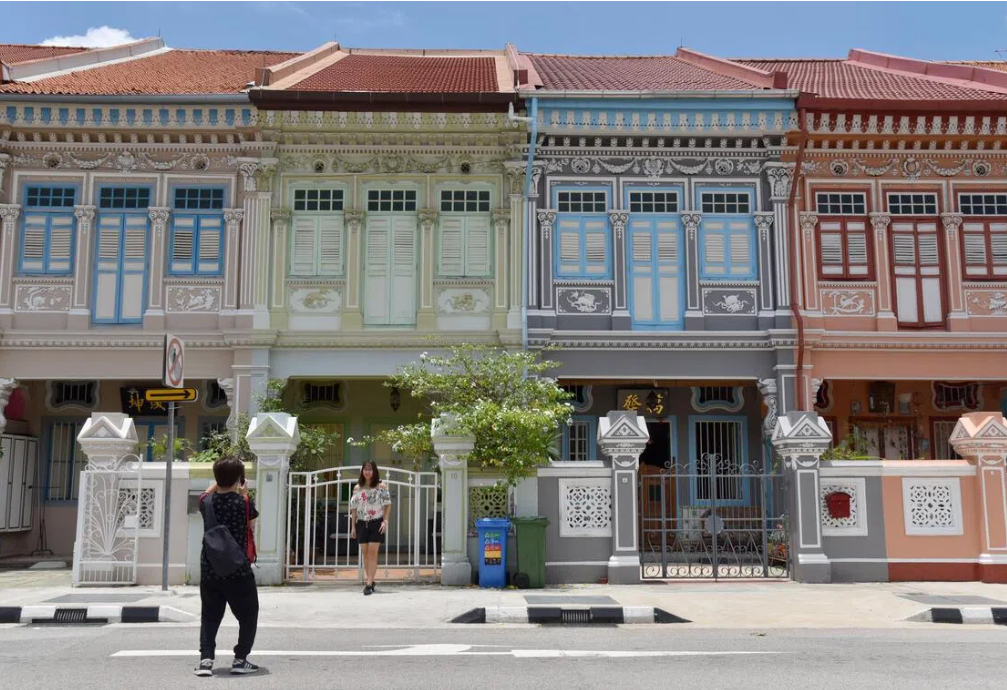
Singapore's tourism authorities are rolling out a targeted incentive programme combining mobility discounts and neighbourhood-focused promotions to maximise visitor spending during the peak third quarter and beyond. Beginning in August and extending through October, the Singapore Tourism Board and ride-hailing platform Grab are introducing bonus vouchers as part of a three-month push to encourage tourists to spend more time exploring diverse precincts across the island nation. The campaign arrives strategically ahead of the Singapore Grand Prix in early October and the Singapore River Festival in mid-September, two major events expected to draw significant visitor numbers from the region.
The promotional structure centres on two distinct voucher types designed to address different tourist travel patterns and interests. The first incentive provides a 20 per cent reduction on fares travelling to and from four specifically designated precincts: Katong-Joo Chiat, known for heritage and local cuisine; Tiong Baru, which offers contemporary dining and creative ventures; Mandai, home to wildlife attractions; and Sentosa, the integrated resort island. Each tourist can redeem this discount twice, creating multiple opportunities to visit these curated neighbourhoods. The second voucher targets evening and nocturnal exploration, granting a one-time 20 per cent discount on journeys to Holland Village, Clarke Quay, Boat Quay, and Robertson Quay between 7pm and 4am. This after-dark focus directly addresses Singapore's competitive positioning as a 24-hour city destination with distinct evening entertainment offerings.
Access to these vouchers requires tourists to register for the Singapore Grab Travel Pass, a bundled package encompassing discounts across transport, dining, and curated travel experiences. By linking voucher distribution to the broader travel pass, Singapore authorities create a pathway for tourists to discover multiple service offerings beyond ride-hailing alone. This ecosystem approach mirrors regional tourism strategies increasingly adopted across Southeast Asia, where integrated digital platforms consolidate destination experiences. The pass structure also generates valuable consumer data for both Grab and the Singapore Tourism Board regarding visitor preferences and neighbourhood popularity, informing future promotional allocation.
The timing of this campaign reflects Singapore's strategic planning around its major events calendar. The Singapore Grand Prix, running from October 2 to 11, traditionally attracts international motorsports enthusiasts, high-net-worth individuals, and corporate hospitality clients. The Singapore River Festival spanning September 11 to 20 positions mid-autumn as a secondary peak season. By launching the voucher programme in August, authorities allow a two-month lead time for awareness-building and tourist planning, particularly important for pre-booking accommodation and event tickets. The three-month window ensures that promotional messaging reaches potential visitors well in advance while covering the full festival period.
The campaign's regional targeting strategy reflects Singapore's increased focus on Southeast Asian source markets. Rather than relying predominantly on long-haul tourists from Europe, Americas, or Asia-Pacific developed nations, the initiative specifically directs digital advertising across key Southeast Asian countries including Indonesia, Thailand, and Vietnam. This approach acknowledges several realities: regional visitors typically make more frequent but shorter trips; intra-ASEAN mobility has increased substantially post-pandemic; and geographically proximate markets generate higher conversion rates for discretionary tourism spending. Grab's established operational footprint and brand recognition across these nine targeted markets provides substantial advantage in reaching intended audiences through familiar digital channels.
The voucher programme forms part of a broader repositioning effort within Singapore's tourism marketing framework. The overarching "We don't wait for fun" campaign, launched in February and targeting young professionals aged 25 to 39 across nine markets, explicitly seeks to rebrand Singapore as a spontaneous, experience-driven destination rather than purely a business hub. By highlighting previously under-promoted neighbourhoods such as New Bahru and Joo Chiat, alongside traditional precincts, Singapore attempts to combat external perceptions of limited cultural authenticity. The precinct-based voucher structure operationalises this messaging by providing financial incentive to physically visit these exact highlighted neighbourhoods, creating a direct bridge between brand messaging and actual tourist behaviour.
Singapore's tourism sector has demonstrated robust recovery and expansion following pandemic disruptions. International visitor arrivals reached 16.9 million in 2025, exceeding the 16.5 million recorded in 2024 and approaching pre-pandemic peaks. More significantly, tourism receipts climbed to an all-time high of 32.8 billion Singapore dollars in 2025, substantially exceeding previous benchmarks. These figures validate Singapore's tourism strategy and justify continued investment in visitor attraction. The government's announcement of a 740 million dollar injection into tourism projects over five years, articulated by Minister Grace Fu in May, indicates sustained governmental commitment to maintaining competitive positioning within the increasingly crowded Southeast Asian tourism marketplace.
Projections for 2026 suggest further growth, with authorities forecasting between 17 million and 18 million international arrivals and tourism spending of 31 billion to 32.5 billion dollars. These forecasts presume continued execution of visitor acquisition strategies and successful differentiation against regional competitors. Thailand, Indonesia, and Vietnam all compete aggressively for the same regional tourist demographics that Singapore targets. Thailand's lower cost positioning and cultural differentiation, Vietnam's emerging adventure tourism offerings, and Indonesia's archipelago advantages mean Singapore must leverage its urban infrastructure, safety reputation, and premium positioning. The Grab partnership and precinct-based approach represent attempts to emphasise Singapore's unique metropolitan character and efficient transportation ecosystems.
For Malaysian travellers and businesses, the implications warrant consideration. Malaysians constitute a significant component of Singapore's tourist arrivals, with cross-border leisure and business travel forming integral parts of both economies' tourism strategies. Promotional initiatives in Singapore inherently compete with Malaysian destination marketing efforts. Furthermore, Grab's expansion of discounting mechanisms in Singapore may influence competitive dynamics in Malaysia's ride-hailing and tourism sectors. The success of precinct-focused tourism marketing in Singapore offers potential lessons for Malaysian authorities developing analogous strategies around Kuala Lumpur, Penang, and Melaka precincts.
The partnership between a government tourism authority and a private mobility platform represents an evolution in destination marketing methodology. Rather than relying solely on traditional tourism promotion, Singapore integrates grassroots transportation incentives directly into tourist journeys. This blurs boundaries between infrastructure provision and tourism marketing, creating systems where economic efficiency and visitor attraction reinforce one another. Tourists receiving discounted rides naturally encounter diverse precincts, while Grab captures ride-sharing data and increased utilisation. For observers across Southeast Asia, this model demonstrates how digital platforms and tourism boards can align commercial and marketing interests to mutual advantage, potentially inspiring emulation across the region.

