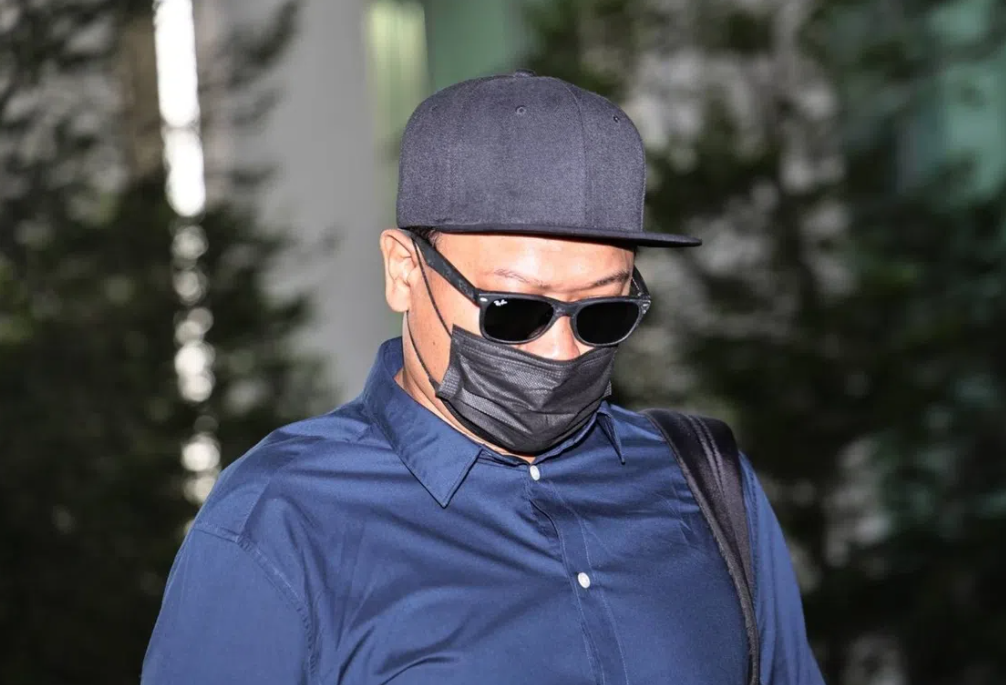
Muhammad Syafie Ismail, 45, entered a guilty plea on August 6 to charges of dangerous driving causing death and dangerous driving causing hurt, bringing an end to legal proceedings that extended more than two years after the fatal collision. The incident on April 22, 2024, at the junction of Tampines Avenue 1 and Tampines Avenue 4 resulted in the deaths of Norzihan Juwahib, 57, and a 17-year-old junior college student, while eight others sustained injuries ranging from fractures to head trauma. The case has drawn significant attention in Singapore's legal and public safety discourse, highlighting the catastrophic consequences of reckless behaviour behind the wheel and the enduring trauma inflicted on surviving families.
Court proceedings revealed the mechanics of the disaster in stark detail. Syafie's vehicle was travelling at speeds exceeding 129 kilometres per hour through a junction with a 50 kilometres per hour speed limit, having just dropped off a Grab Hitch passenger in Bedok. More critically, he drove through a red traffic light that had been active for at least 26 seconds, providing ample time for a cautious driver to respond. Video evidence presented in court showed his black car hurtling past at least three vehicles before initiating the catastrophic chain reaction involving five other vehicles, including a van and minibus. Eyewitness accounts and traffic data established that Syafie had been driving recklessly even before reaching the fatal intersection, abruptly accelerating past another vehicle and swerving between lanes repeatedly without signalling, demonstrating a pattern of dangerous behaviour rather than an isolated lapse in judgment.
The human cost of the collision extends far beyond the immediate fatalities. Norzihan, a senior technician at First Choice Pest Specialist where she had worked for approximately a decade, was a passenger in the van, travelling to her workplace when the impact struck. Medical evidence presented to the court indicated she sustained multiple traumatic injuries including fractures to her neck and ribs, ultimately proving fatal despite cardiopulmonary resuscitation administered at the crash scene. The 17-year-old student, whose identity is protected under court order, was similarly a passenger in a vehicle, though her circumstances were particularly tragic. She had been en route to her school's annual cross-country event when her father's car was struck with sufficient force to overturn the vehicle, the impact so violent that car doors were flung open and the girl became trapped beneath the wreckage.
The psychological devastation inflicted on the student's family emerged as a central theme during court proceedings. Her father, who had been driving the vehicle at the moment of impact, lost consciousness from the force of the collision. When he regained awareness in hospital, his immediate and only concern was the location of his daughter. Learning of her death proved psychologically shattering; the prosecutor recounted that the father experienced a complete breakdown upon receiving the news. Medical professionals subsequently arranged for him to view his daughter's body and hold her hand in farewell, a moment of devastating finality that underscores the irreversible nature of the tragedy. The student's mother has since been diagnosed with major depressive disorder, withdrawing from work and employment entirely as she grapples with overwhelming grief and loss of purpose.
The mother's psychological deterioration carries additional dimensions of family rupture. Despite intellectual awareness that her husband bore no responsibility for the collision, she has developed a distorted pattern of blame directed toward him, a manifestation of trauma-induced cognitive distortion common in severe grief responses. She expressed profound pride in her daughter's academic aspirations and character, noting that the teenager had harboured ambitions of studying medicine and pursuing a career as a physician. The sudden death has collapsed her sense of meaning and future, transforming what would have been a narrative of family accomplishment and generational advancement into one of permanent loss and unfulfilled potential.
Beyond the two fatalities, the crash inflicted substantial injuries across eight additional victims, revealing the indiscriminate destructiveness of high-speed collisions. One victim suffered rib fractures, another sustained a head injury, while a third victim, whose identity was redacted in court documents, experienced hand injuries that have created persistent functional limitations in daily life. The latter victim has encountered particular difficulty donning clothing and performing typing tasks, complications that have cascading effects on employment capacity and quality of life. Psychological impacts accompany the physical injuries; this victim reports chronic difficulty concentrating on work tasks, combined with sleep disturbance and appetite suppression stemming from intrusive memories of the accident, suggesting the development of post-traumatic stress responses.
Syafie's conduct immediately following the collision and his subsequent medical status present a stark contrast to the suffering of victims and families. He remained in the driver's seat until a bystander assisted him from the vehicle, subsequently sustaining only an arm fracture from the impact. Medical evaluation confirmed the absence of permanent disability, allowing him to participate fully in all court proceedings without the additional complications of ongoing severe incapacity. His arrest occurred two days after the collision, on April 24, 2024, following discharge from hospital. His driving licence was immediately suspended, severing his legal ability to operate motor vehicles. The legal timeline from incident to guilty plea spanned more than two years, involving at least four separate court adjournments before Syafie finally admitted culpability for his actions.
The guilty plea resolved potential uncertainty regarding conviction and sentencing but may leave unanswered questions about factors that motivated Syafie to finally accept responsibility after extended legal proceedings. Under Singapore law, those convicted of dangerous driving causing death face potential imprisonment of up to eight years coupled with disqualification from driving, penalties that reflect the severity with which the jurisdiction treats fatal traffic collisions. The sentencing determination remains pending, and judicial discretion will determine whether Syafie receives a sentence approaching the maximum permitted by statute or a more lenient determination. The outcome will carry significance for broader traffic safety discourse in Singapore and the region, where motorist behaviour patterns continue to generate public safety concerns.
The case resonates within the Malaysian context as well, where similar patterns of high-speed driving, red-light violations, and inadequate enforcement have generated comparable tragic outcomes on roads throughout the country. Road safety advocates across Southeast Asia have increasingly highlighted the consequences of reckless driving behaviour and the necessity for both stringent legal frameworks and consistent enforcement to deter dangerous conduct. The Tampines collision exemplifies how instantaneous lapses in judgment—or, as evidence suggests here, persistent patterns of reckless behaviour—can permanently and irreversibly alter multiple family trajectories. For Malaysian readers and policymakers, the case underscores the imperative of advancing traffic safety culture, strengthening enforcement mechanisms, and recognising that penalties imposed upon drivers pale in comparison to the lifelong suffering experienced by bereaved families and injured survivors.
The extended legal timeline leading to the guilty plea also raises questions about case management efficiency and victim-family support systems throughout protracted proceedings. The bereaved mother's descent into major depressive disorder occurred against a backdrop of legal uncertainty extending across more than two years, potentially complicating her mental health trajectory and recovery prospects. Similarly, injured survivors requiring ongoing medical and psychological care may have experienced delayed closure and perpetuated trauma exposure through repeated court appearances and evidentiary presentations. The resolution through guilty plea, while providing finality, cannot restore the lives lost or undo the injuries sustained, yet it does provide bereaved families and survivors with definitive acknowledgment of culpability and movement toward sentencing and, ultimately, emotional closure.

