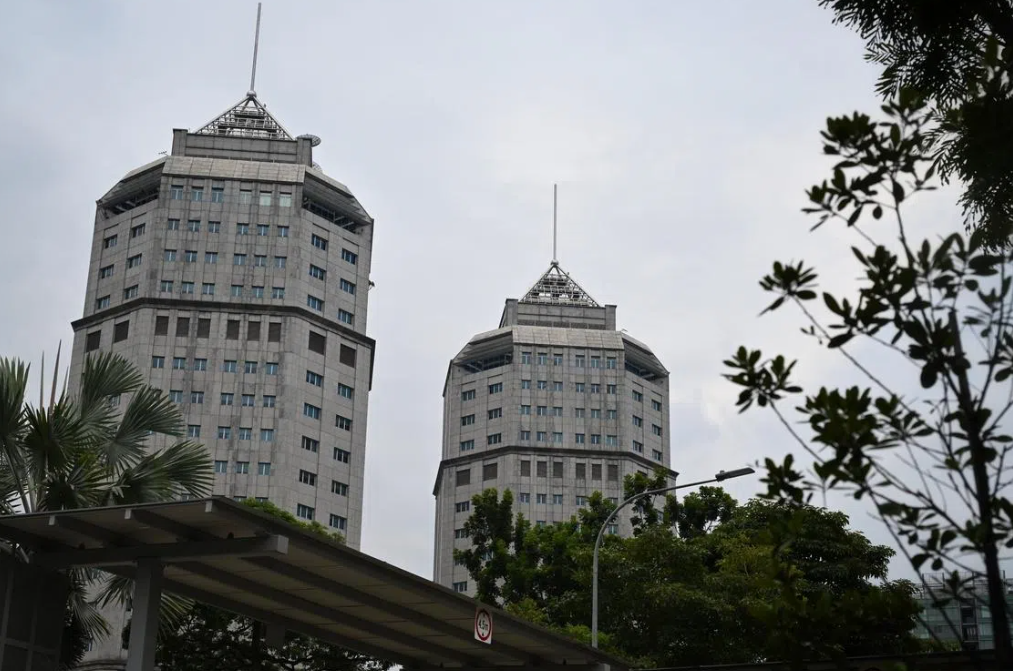
Singapore's Internal Security Department has cancelled the work permits of two Bangladeshi nationals and repatriated them to their home country following investigations into extremist postings on social media platforms. The decision underscores the city-state's zero-tolerance approach towards content that undermines social harmony in a nation with deep religious and ethnic diversity. Tayani Md Risad, 25, and Islam Sahedul, 37, were investigated separately in July before being sent back to Bangladesh, authorities announced on July 17.
Risad's case centred on his public expressions of support for Shafiur Rahman Farabi, a Bangladeshi radical Islamist writer known for inciting violence against secular and atheist bloggers. Farabi maintains alleged connections to Hizb ut-Tahrir, a fundamentalist movement that the Bangladeshi government has proscribed. The nature of Risad's employment in Singapore remains undisclosed, but his digital footprint revealed ideological alignment with banned organisations and individuals. Meanwhile, Sahedul engaged in inflammatory commentary regarding the Israel-Iran conflict whilst also disseminating posts that categorised Muslims unwilling to accept Islamic governance as infidels—comments designed to deepen religious fault lines within plural societies.
Although the Internal Security Department's investigation determined that neither man posed an imminent terrorist threat or harboured plans to execute attacks in Singapore, officials emphasised that their ideological positions fundamentally conflicted with the nation's foundational principles of religious tolerance and social cohesion. The spokeswoman stressed that extremist and divisive worldviews cannot be accommodated, regardless of whether actionable conspiracy evidence emerges. This preventive stance reflects Singapore's experience with radicalisation among migrant workers, a pattern that has manifested repeatedly over the past decade across the construction, marine, and manufacturing sectors where Bangladeshi nationals comprise a substantial labour force.
The pair's arrest at Hazrat Shahjalal International Airport in Dhaka on July 8 initiated a parallel investigation by Bangladeshi authorities, who seized multiple phones and passports. Court proceedings in Dhaka revealed that both men acknowledged connections to militant organisations whilst employed in Singapore, prompting police requests for extended detention to examine funding channels, recruitment networks, and group affiliations. During judicial hearings, the presiding judge expressed scepticism about their motivations, describing them as "remittance warriors"—a colloquial term for overseas migrant workers whose primary objective is sending earnings home to dependants. The judge's remark encapsulated the tension between economic necessity and ideological commitment that often characterises these cases.
Risad claimed his Facebook posts from 2023 concerned Hefazat-e-Islam, another radical Bangladeshi Islamist organisation, and its leadership. The specificity of his focus on particular extremist movements suggests either directed recruitment efforts or algorithmic exposure to increasingly radical content. Such pathways to radicalisation among overseas workers frequently begin innocuously, with individuals exposed to ideology through family networks, diaspora communities, or online platforms, before progressively consuming more extreme material and adopting activist identities. The gradual nature of this transformation makes early detection challenging, yet Singapore's monitoring mechanisms appear effective at identifying concerning patterns before they crystallise into operational threats.
Singapore's historical record with radicalised Bangladeshi workers reveals a troubling pattern requiring context for regional readers. In 2015, authorities arrested 27 Bangladeshi construction workers who had formed a jihadist terror cell within Singapore itself, with members deliberating armed jihad operations abroad. Five years later, a Bangladeshi construction worker arrested in Singapore demonstrated signs of ISIS radicalisation acquired through online propaganda, having purchased foldable knives intended for attacks. Most significantly, in 2016, the Internal Security Department apprehended eight radicalised Bangladeshi nationals employed across construction and maritime industries who were members of the Islamic State in Bangladesh, possessed weapons-making documentation, and had discussed recruiting fellow Bangladeshi workers to expand their group and procure firearms for terror operations in Bangladesh itself.
These precedents establish that Singapore's swift action against Risad and Sahedul reflects institutional learning from previous security incidents. The city-state recognises that extremist ideology circulating among migrant worker populations can generate recruitment networks that transcend national borders, with individuals potentially returning to home countries radicalised and equipped with connections to international jihadist movements. For Malaysia and other Southeast Asian nations hosting significant Bangladeshi migrant populations, this case illuminates vulnerabilities within labour migration systems where workers' ideological trajectories receive insufficient monitoring despite their involvement in national security matters.
The repatriation of these two workers carries implications beyond Singapore's borders. Bangladesh itself faces substantial internal security challenges from radical Islamist movements, and the return of potentially radicalised individuals represents a security concern for Bangladeshi authorities. The country's judicial system's engagement with these cases, including the court's questioning and extended remand procedures, suggests Bangladesh recognises the seriousness of the issue. However, the infrastructure for addressing returning radicalised workers and preventing their reintegration into militant networks remains underdeveloped across South Asia and Southeast Asia generally.
For Malaysian employers and authorities, the case underscores the necessity of enhanced vetting procedures and ongoing monitoring within migrant worker populations. Malaysia hosts approximately 4.5 million documented migrant workers, with Bangladeshis comprising one of the largest groups. Whilst extremist cases among this population have been documented, systematic surveillance mechanisms remain less developed than Singapore's sophisticated Internal Security Department apparatus. The revelation that Risad and Sahedul transmitted extremist content via commercial social media platforms rather than encrypted channels suggests their activities were discoverable through conventional monitoring—a capability that requires institutional investment and cross-agency coordination.
The Internal Security Department's communication that no terrorist attack intentions or terrorism activities were identified offers limited reassurance given broader patterns of radicalisation among migrant workers. Ideological recruitment often precedes operational planning, and individuals identified for holding extremist views may subsequently travel to conflict zones or contribute funding and recruitment to designated terror organisations. The department's emphasis that their views proved incompatible with Singapore's multiracial society reframes security concerns in terms of social cohesion rather than imminent violence, potentially setting a lower threshold for intervention than would prevail if only demonstrable attack conspiracies triggered action.
Singapore's approach reflects confidence in preventive detention authority and willingness to use work permit revocation as an administrative tool for managing ideological threats. The Internal Security Act provides the legal framework enabling such decisions without criminal conviction. This model differs substantially from Western democratic approaches that typically require evidence of specific criminal intent. For a densely populated, religiously and ethnically diverse city-state, the preventive paradigm has achieved security outcomes without the sectarian violence that has afflicted other multicultural societies. Yet it relies fundamentally on intelligence gathering capabilities, judicial oversight mechanisms, and political will to implement controversial measures—attributes not uniformly present across the region.
Authorities have established a public reporting mechanism, with the Internal Security Department hotline 1800-2626-473 available for citizens and workers to report suspected radicalisation. This crowdsourced intelligence approach complements electronic surveillance and administrative monitoring, creating multiple channels through which concerning activity surfaces. Migrant worker communities themselves may provide early warning of radicalisation when reporting mechanisms offer protection and cultural competence. However, community reporting requires trust in authorities and confidence that reporting will not trigger indiscriminate action against particular ethnic or religious groups—a sensitivity especially acute in diaspora communities.
The expulsion of Risad and Sahedul represents one increment within Singapore's ongoing effort to manage security risks within labour-dependent sectors. As Southeast Asian economies remain heavily reliant on migrant workers, and as extremist movements globally continue exploiting digital platforms and diaspora networks, the challenge of identifying and neutralising radicalisation before it generates violence will intensify. Other regional governments would benefit from developing comparable institutional capacity, whilst simultaneously addressing root conditions that make migrant workers vulnerable to radicalisation, including social isolation, economic precarity, and psychological alienation from both home and host societies.

