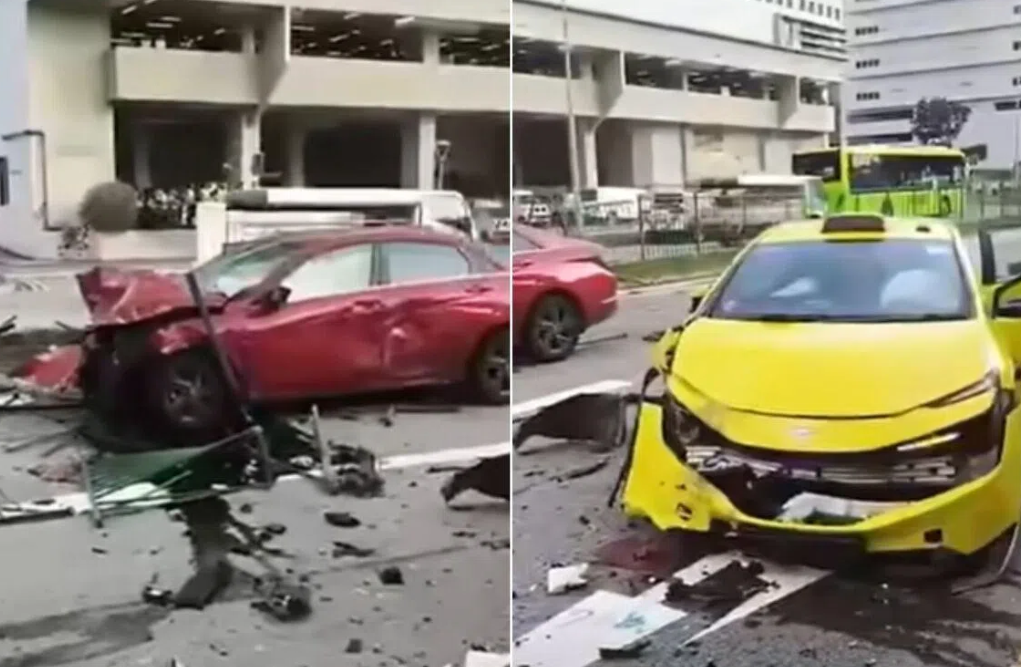
A 36-year-old man has been charged in Singapore's courts following a dangerous driving incident in Kallang that left two people injured, with authorities alleging the driver was under the influence of methamphetamine at the time. Mohamed Firdouz Mohamed Akram appeared in court on June 19 to face a substantial list of charges stemming from a collision that occurred along Kallang Bahru on the morning of June 17.
According to court evidence, Firdouz allegedly consumed Ice, the street name for methamphetamine, before operating a vehicle in the early hours of that day. The court heard that around 8am, his vehicle collided with a taxi after he reportedly failed to maintain proper control of the car. The impact of the crash caused injuries to the taxi's occupants: a 60-year-old driver who complained of chest pains and a 43-year-old passenger who suffered pain in her tailbone.
Beyond the dangerous driving allegations, Firdouz faces additional serious charges that paint a picture of a more complex situation. He is accused of operating a motor vehicle without holding the required Class 3 driving licence. Police also documented the seizure of weapons from his vehicle following the collision, leading to two separate weapon possession charges. The array of offences suggests investigators uncovered multiple layers of criminal conduct during their response to the initial traffic incident.
The sequence of events following the crash reveals particular concern about Firdouz's behaviour at the scene. Rather than remaining at the accident location, he abandoned his vehicle and fled before police arrived. This flight from the scene compounded the initial charge of dangerous driving and raised questions about his state of mind immediately after the collision. Police responded swiftly, issuing a statement the following day that detailed their findings at the abandoned vehicle.
When officers conducted a thorough search of the car, they discovered a disturbing array of items that shed light on Firdouz's circumstances. Beyond the suspected drugs themselves, investigators located drug-related paraphernalia and vaporisers consistent with methamphetamine use, along with a knuckleduster weapon. These exhibits were seized as evidence for the ongoing prosecution. The breadth of items discovered suggested sustained drug involvement rather than a single lapse in judgment.
Law enforcement moved with considerable efficiency in tracking down the suspect. Within five hours of the initial report, Firdouz had been arrested, indicating that police quickly established his identity and located his whereabouts. Court documents subsequently revealed additional details about weapons found in his possession. Approximately one hour after the crash, at around 1pm the same day, officers discovered two knives in a room where Firdouz was located at the Village Hotel Katong on Marine Parade Road. This discovery added further weight to the weapon-related charges filed against him.
The case carries significant implications for road safety discussions in Singapore. The incident demonstrates the intersection between drug abuse and traffic incidents—a problem that law enforcement agencies across Southeast Asia continue to grapple with as methamphetamine use remains persistent across the region. That a driver could operate a vehicle while under the influence of a drug potent enough to impair judgment, reflexes, and decision-making underscores vulnerabilities in enforcement and prevention mechanisms.
For Malaysian readers, the case offers a cautionary perspective on the dangers that extend beyond Singapore's borders. Regional law enforcement agencies regularly encounter methamphetamine trafficking and consumption patterns that flow across the Strait of Malacca and throughout Southeast Asia. The increasing prevalence of Ice use among younger demographics and its correlation with dangerous driving behaviour represents a growing public health and safety concern that affects the entire region.
The legal consequences Firdouz now faces are substantial. For driving under the influence of drugs specifically, Singapore law prescribes imprisonment of up to one year, a fine reaching S$10,000, or both penalties. The dangerous driving charge carries similarly serious maximum punishments: up to one year in jail combined with fines between S$2,000 and S$10,000. When multiple charges are considered together, and should he be convicted on all counts including the weapon offences, the total sentence could extend considerably beyond these individual maximums.
Firdouz's case is scheduled for a further court mention on July 17, at which point additional details about the prosecution's case may emerge. The interval provides time for investigations to conclude and for both the prosecution and defence to prepare their positions. The outcome of this case will likely receive attention from road safety advocates across the region, particularly those focused on the drug-driving nexus that poses ongoing risks to public safety.
Beyond the immediate criminal proceedings, this incident raises broader questions about substance abuse intervention and public transportation safety. The taxi driver and passenger involved represent ordinary citizens who became casualties of another's impairment while simply attempting to travel within their city. Their injuries, though reportedly not life-threatening, carry physical and emotional consequences. For the taxi industry specifically, such incidents underline the occupational hazards drivers face when sharing roads with impaired motorists.