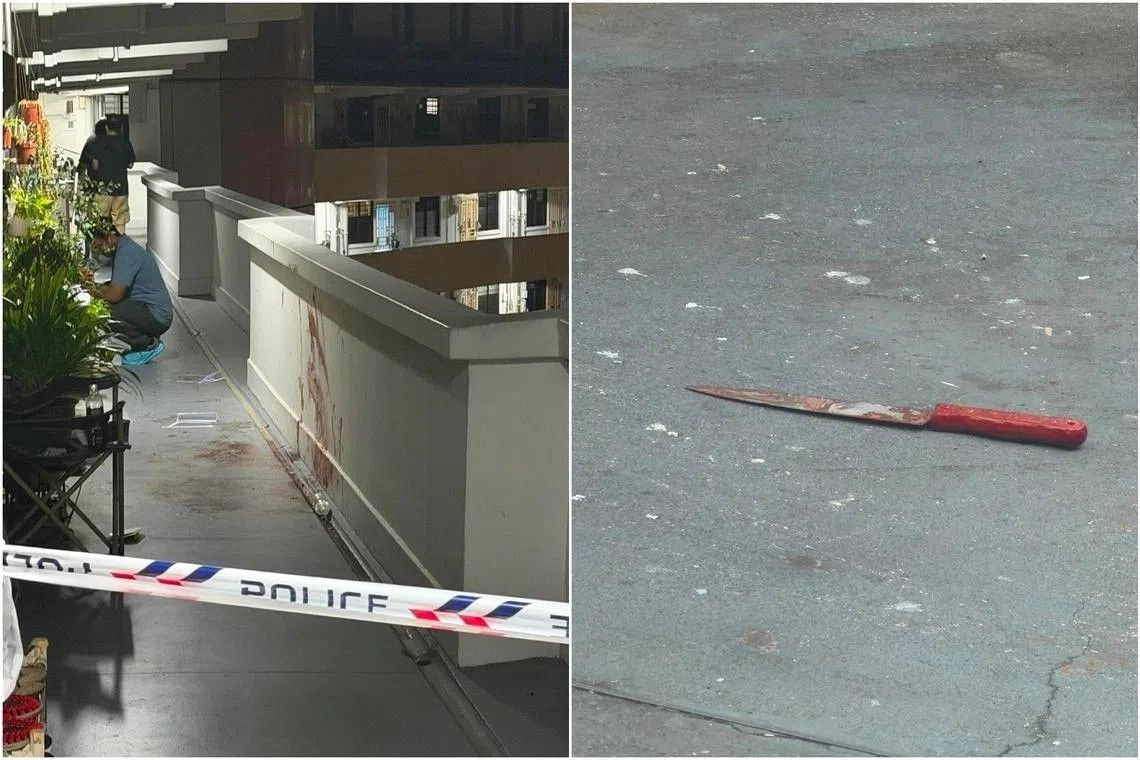
A Singapore resident has been formally charged with murder after an alleged fatal altercation with his neighbour at Block 55 Lengkok Bahru, in the Redhill area, prompting renewed scrutiny of violent disputes within high-density residential settings across the island. The incident, which unfolded on July 20, has raised questions about tension management and community safety in Singapore's public housing estates, where proximity between residents can sometimes escalate disagreements into serious conflict.
Ng Swee Seng, aged 59, made his first court appearance via video link on July 22 before a district court judge. The accused faces the gravest charge under Singapore law—murder—in connection with the death of Thiyagarajan Karunakaran, also 59, who shared the same residential block with him. The judicial process has begun immediately following arrest, with Ng appearing before the court less than two days after police intervention at the scene, reflecting the seriousness with which authorities treat such allegations.
Authorities received multiple emergency calls at approximately 4:50 pm on July 20, prompting police officers to rapidly deploy to the Lengkok Bahru address. Upon arrival, police discovered Thiyagarajan motionless in the lift lobby area on the 16th floor of the residential block. Emergency responders transported him to the National University Hospital, where medical staff attempted resuscitation efforts, but he succumbed to his injuries and was pronounced dead later that evening. The timeline of events points to a swift escalation from an initial confrontation to a fatal outcome.
Physical evidence at the scene provided visible documentation of the violence that had occurred. When journalists visited the 16th-floor corridor on July 21, they observed bloodstains distributed along the hallway and detected a bloodied footprint, suggesting a struggle had taken place outside the lift area. These forensic details would likely form part of the prosecution's case, establishing the location and nature of the fatal incident and potentially corroborating witness accounts or police investigation findings.
According to statements from residents of Block 55 Lengkok Bahru, Ng and Thiyagarajan maintained separate living quarters several units distant from each other on the shared 16th floor. One occupant who had resided in the block for approximately four years indicated that the two men were not immediate neighbours in the strictest sense, suggesting that whatever friction existed between them had developed despite the spatial separation between their homes. This detail raises intriguing questions about what may have triggered contact and subsequent conflict between residents living in such close proximity but not in directly adjacent units.
The Lengkok Bahru incident occurs within Singapore's broader context of maintaining low violent crime rates through robust policing and swift legal action. The rapid charging and court appearance exemplify the efficiency of Singapore's criminal justice system in handling serious offences. However, the case also highlights the prevalence of interpersonal disputes in densely populated residential zones, where residents from diverse backgrounds and varying social circumstances inhabit the same buildings, sometimes creating friction over noise, privacy, shared facilities, or perceived slights.
For Malaysian observers and regional readers, this incident offers a sobering reminder of how quickly neighbourhood disagreements can deteriorate into tragedy, particularly in urban environments where housing density forces regular contact between strangers. While Singapore maintains lower homicide rates than most Southeast Asian nations, this case underscores that such violence can emerge even in highly developed cities with strong governance structures. The incident serves as a prompt for residents across the region to reflect on conflict de-escalation and community engagement strategies.
The implications extend beyond individual criminal responsibility to encompass broader questions about community policing and preventive measures. Singapore's Housing and Development Board estates accommodate hundreds of thousands of residents, and occasional violent incidents, while statistically rare, demonstrate the challenges inherent in managing such large residential populations. Authorities may need to consider enhanced mediation services or early intervention programmes to address simmering tensions before they culminate in tragedy.
As the case progresses through Singapore's judicial system, the trial will likely attract attention from legal observers and criminologists examining how courts handle homicide cases arising from domestic or neighbourhood disputes. The evidence gathered at the scene, combined with witness testimony from residents and forensic findings, will determine whether the prosecution can sustain the murder charge or whether alternative verdicts might apply. The outcome will contribute to evolving jurisprudence on violent crime in densely settled urban environments across the Asia-Pacific region.

