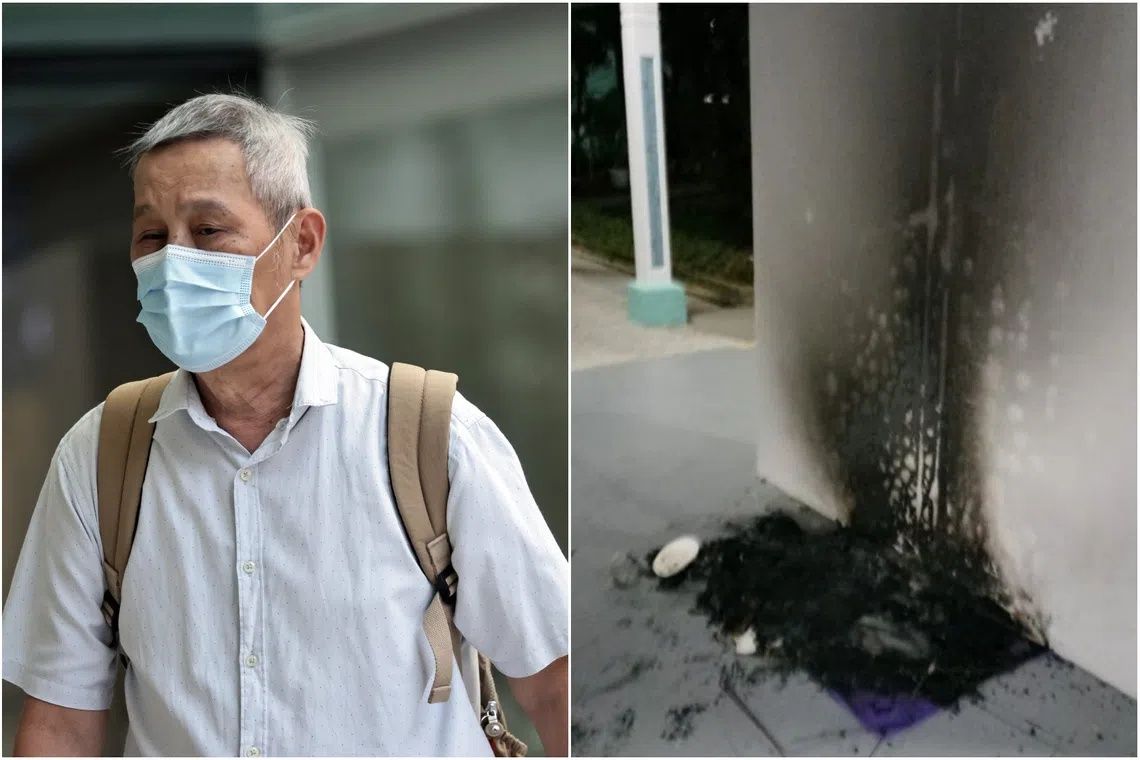
A Singapore court has sentenced a 68-year-old retiree to three months imprisonment for deliberately setting fire to cardboard cat shelters at a void deck in Bukit Batok, marking a cautionary case involving the growing tension between community animal welfare initiatives and residential complaints. Koh Teng Boo, who pleaded guilty to committing mischief by fire, destroyed structures designed to house and feed stray cats in his neighbourhood, resulting in damage exceeding S$900 to the ground and surrounding walls of the common area.
The dispute originated in September 2025 when cardboard houses stocked with food and water began appearing around a pavilion and void deck adjacent to Koh's residence on Bukit Batok East Avenue 4. These informal shelters were established as part of community efforts to provide refuge for stray cats, a practice that has become increasingly common in Singapore's residential neighbourhoods as animal welfare consciousness grows. The structures, while well-intentioned, quickly became a source of friction for Koh, who perceived them as harbingers of broader environmental and hygiene problems affecting his living environment.
Koh's grievances extended beyond mere aesthetic displeasure. He argued that the presence of food and water at the cat houses was inadvertently attracting other wildlife, particularly birds, which he believed would create additional nuisances. More significantly, he voiced concerns that the informal feeding stations were unhygienic and that residents were compounding the problem by discarding litter into the structures themselves. These complaints highlight a recurring friction point in Asian urban centres where informal animal welfare practices collide with traditional neighbourhood standards and expectations regarding public space management.
Attempting to resolve his concerns through proper channels, Koh approached his Member of Parliament in September 2025 to lodge a formal complaint about the cat houses and their perceived negative effects on his neighbourhood. The decision to escalate matters through elected representatives demonstrates his initial intent to work within established community governance structures rather than take unilateral action. However, his frustration evidently mounted when he perceived that his appeals had not resulted in visible remedial action from authorities or the town council.
In October 2025, approximately one month after noticing the initial cat houses, Koh took matters into his own hands. He removed three of the cardboard structures and deposited them into a nearby incense burner bin, where he ignited them deliberately. The act represented a decisive crossing of the line from complaint to criminal conduct, though Koh's subsequent explanation to prosecutors suggested he viewed it as a justified response to the perceived inaction following his parliamentary appeal. His conviction underscores that frustration with public policy or neighbourhood conditions, however genuine, does not provide legal justification for destroying community property.
The situation escalated shortly thereafter when Koh discovered that additional cat houses had been installed around his block within just two days of his destructive act, suggesting that the community members or organisations supporting the feline shelter initiative were undeterred and possibly redoubled their efforts. Rather than accepting this outcome, Koh returned to his MP on November 17 to press his concerns anew, reiterating his objections while emphasising that his issue stemmed from hygiene and pest concerns rather than any inherent animosity toward cats. This second approach to his elected representative again demonstrates an attempt at legitimate problem-solving, yet it would not prevent his subsequent criminal conduct.
On the night of November 19, after consuming alcohol, Koh embarked on a return journey to his residence when he spotted a cat house near his block. Acting impulsively, he used a lighter to set the structure ablaze and then departed the scene without ensuring the fire was extinguished or contained. The unattended fire posed clear safety risks to the surrounding void deck and residential units, though exact details of how the blaze was ultimately suppressed remain unreported. Two days of escalating conduct followed when Koh, demonstrating apparent obsession with the issue, set fire to another cat house on November 20. This time, two passers-by observed the burning shelter and promptly extinguished the flames before any extensive damage occurred.
Koh's arrest followed swiftly after the second incident, leading to investigation and eventual prosecution. The Jurong-Clementi-Bukit Batok Town Council quantified the damage at S$913, covering repairs to flooring and walls affected by the fires. Notably, Koh has since made full financial restitution to the town council, demonstrating some acceptance of accountability for the tangible harm caused. Mischief by fire carries substantial penalties under Singapore law, with offenders liable to imprisonment of up to seven years and criminal fines, making Koh's three-month sentence a relatively moderate outcome reflective of his guilty plea and compensation efforts.
The case illustrates the complex dynamics emerging in Southeast Asian neighbourhoods as environmental concerns and animal welfare movements increasingly shape public space usage, sometimes creating friction with residents holding more traditional views about community standards. The tension between Koh's legitimate hygiene concerns and the community's desire to provide welfare for stray animals represents a genuine policy challenge that Singapore, like Malaysia and other regional cities, continues to navigate. Rather than resolving the underlying disagreement about appropriate void deck usage, the criminal prosecution and jail sentence represent the formal system's response when civil dispute resolution mechanisms fail and parties resort to property destruction. For Malaysian readers, the case serves as a cautionary example of how neighbourhood grievances, when unresolved through proper channels, can escalate to criminal conduct with serious legal consequences, while also highlighting the need for clearer municipal policies regarding informal animal welfare initiatives in shared residential spaces.

