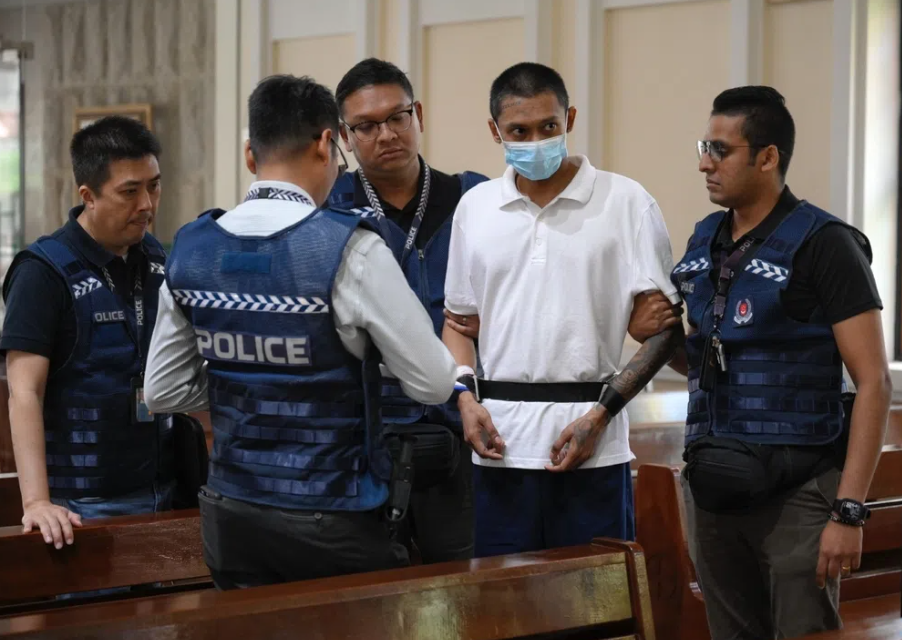
A 38-year-old man in Singapore has been handed a sentence of four years and three months' imprisonment along with nine strokes of the cane for the stabbing attack on Reverend Christopher Lee at St Joseph's Church during a children's mass in November 2024. Basnayake Keith Spencer, who pleaded guilty on Friday to voluntarily causing grievous hurt with a dangerous weapon and weapon possession, appeared via video link in court as the incident details were disclosed. The conviction marks a conclusion to a case that shocked the island's Catholic community and raises fresh concerns about violence in religious spaces.
The assault occurred on the evening of November 9, 2024, when approximately 900 worshippers had gathered for mass. Court documents reveal that Basnayake arrived at the church alone around 5.30pm and took two pills initially to maintain focus. As the service progressed and he realised children were participating, he consumed three additional pills to calm himself. At approximately 6.15pm, with Father Lee and another priest preparing to distribute communion, Basnayake joined the queue behind Father Lee after initially standing in line for the other priest.
Without warning or provocation, Basnayake withdrew a foldable knife measuring 23 centimetres in length with a 10-centimetre blade and plunged it directly into Father Lee's mouth. The weapon caused an 8-centimetre laceration on the priest's tongue alongside a 3-centimetre cut on his upper left lip and a 4-centimetre wound at the corner of his mouth. Blood pooled significantly at Father Lee's mouth as he staggered backwards from the sudden violence. However, the 57-year-old priest quickly responded by seizing Basnayake's rear jean pocket to prevent further attacks on other congregation members.
Congregation members, including an off-duty police officer present at the service, moved swiftly to restrain Basnayake and contacted law enforcement. He was apprehended at the scene immediately. Father Lee was transported to hospital where medical staff assessed the extent of his injuries. He received his discharge on November 15, a week following the incident, but required 40 days of hospitalisation leave and subsequent speech therapy as he recovered from the trauma and physical damage.
The prosecution's case emphasised the severity of Basnayake's actions and his pre-existing criminal history. Investigators discovered that beyond the knife used in the attack, he carried a 14.5-centimetre penknife, a flip knife, and a fishing gaff—a pole with a sharp hook. In December 2024, he was denied bail after authorities characterised him as posing a highly dangerous risk with substantial likelihood of reoffending. He has remained in remand custody for over a year and nine months since his arrest.
Barackground details presented to the court revealed troubling patterns in Basnayake's behaviour. He had previously been convicted in 2019 for voluntarily causing hurt with a dangerous weapon following an incident in which he stabbed his then girlfriend in the buttocks with a kitchen knife while under methamphetamine influence. This prior conviction formed part of the sentencing considerations, demonstrating that his violent propensities had not been adequately addressed through initial incarceration.
Prosecutors argued for a sentence ranging between four years and three months to four years and eleven months, alongside nine strokes of the cane. Deputy Public Prosecutor Xu Sijia acknowledged that whilst Basnayake was intoxicated and experiencing drug-induced psychosis during the attack, he retained sufficient awareness of his actions to constitute criminal culpability. The timing and location of the assault—striking a defenceless man performing a sacred religious duty before a large congregation—compounded the offence's gravity.
Defence counsel Ashwin Ganapathy of the Public Defender's Office sought leniency, requesting a sentence below four years along with the nine strokes. He contended that his client harboured genuine remorse and shame regarding his conduct, asking the court to impose punishment proportionate to the circumstances. The defence strategy emphasised rehabilitation potential and the client's expressions of contrition.
District Judge Shaiffudin Saruwan, in delivering the sentence, underscored that the assault was entirely unprovoked and inflicted severe physical trauma upon a defenceless individual. The judge highlighted that the attack occurred precisely as Father Lee was administering communion, a deeply sacred moment, which created substantial risk of mass panic and cascading injuries among the congregation. This contextual element—the violation of a sanctuary space during ritual worship—appeared to weigh significantly in the judicial determination.
The sentencing carries implications beyond Singapore's borders for Southeast Asian religious communities grappling with security concerns. Houses of worship across the region have increasingly confronted challenges balancing open access with congregational safety. The case demonstrates how mental health crises, substance abuse, and prior violent convictions can converge to create unpredictable threats within spaces traditionally viewed as secure. For Malaysian Catholic communities and other religious groups in the region, the incident underscores the necessity of considering appropriate security protocols without undermining the welcoming nature essential to faith practice.
The legal framework applied in this case reflects Singapore's approach to violent crime involving weapons. Under the Penal Code provisions governing voluntarily causing grievous hurt with a dangerous weapon, offenders face potential life imprisonment or up to 15 years' confinement, along with fines and caning. The sentence imposed on Basnayake, whilst falling within these parameters, represents the court's calibration between the severity of the offence and considerations of the perpetrator's mental state and prior conduct.
Father Lee's recovery process remains ongoing. The physical wounds—whilst surgical attention could address the structural damage—have required extended rehabilitation involving speech therapy to restore normal communication. The psychological impact of such a violent assault within what should be a sanctuary environment typically extends far beyond the immediate medical recovery period. His experience exemplifies how violence in religious spaces affects not merely the direct victim but reverberates through entire faith communities.

