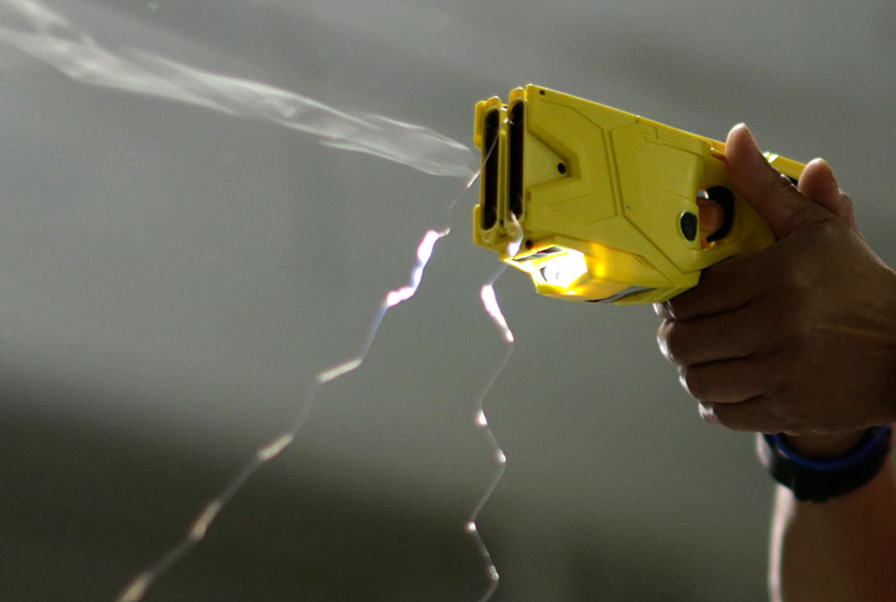
Police in Singapore deployed a Taser to apprehend a 55-year-old man who was wielding a saw outside a public housing block in the Bedok North area on July 5. The incident unfolded at Block 539 Bedok North Street 3 after officers responded to an emergency call around 3.25pm, arriving to find the individual in a state of agitation while brandishing the tool near residential premises.
The sequence of events highlights the operational challenges law enforcement faces when managing situations involving armed individuals exhibiting signs of distress or altered mental states. Officers on the scene issued multiple verbal directives instructing the man to relinquish the saw, a standard protocol designed to de-escalate volatile encounters before they escalate further. However, the individual disregarded these warnings and continued his erratic behaviour, shouting incoherently and maintaining his grip on the weapon despite repeated police intervention attempts.
According to the police statement released on the day of the incident, the decision to deploy the Taser was made as a measured approach to neutralising an immediate threat while minimising the risk of serious physical harm to all parties involved. The electronic device proved effective in subduing the suspect without requiring more forceful intervention, allowing officers to safely apprehend him and bring the situation under control. This approach reflects evolving best practices in police de-escalation that prioritise non-lethal methods when circumstances permit.
The arrested individual was subsequently transported to Changi General Hospital while conscious, suggesting he remained stable following the Taser application. The incident resulted in no reported injuries to police officers, bystanders, or the suspect himself, indicating that despite the weapon involved and the need for physical intervention, the outcome was managed without causing serious harm. The fact that he was conveyed to hospital suggests medical assessment was deemed prudent following both the weapon-related incident and his erratic behaviour.
Charge sheets filed against the man encompass multiple offences that address different dimensions of his conduct during the encounter. The public nuisance charge reflects his disruptive behaviour in a residential area frequented by families and other occupants. The possession of an offensive weapon in a public place charge directly addresses the saw-wielding conduct, which poses an obvious danger in an urban residential setting where children and vulnerable persons gather. These offences carry significant implications under Singapore's public order legislation.
A fourth charge relating to suspected drug consumption adds complexity to the investigation and raises questions about whether substance use played a role in the man's erratic behaviour and failure to comply with police instructions. The coherence between shouting incoherently and suspected drug involvement suggests investigators believe pharmacological factors may have contributed to his mental state during the incident. This dimension transforms the case from a simple weapons violation into a matter encompassing broader public health and safety concerns.
The involvement of the Central Narcotics Bureau indicates the severity with which authorities treat the suspected drug element. Rather than treating this as an isolated incident of weapon possession, the referral acknowledges that substance abuse may be a contributing factor worthy of dedicated investigation by the specialist agency. The ongoing investigation into the drug-related aspects will determine whether the man faced additional pressures or circumstances that culminated in the dangerous public conduct.
For Singapore residents, this incident exemplifies the types of security challenges that housing estates and public spaces encounter periodically. Bedok North, a densely populated neighbourhood with significant Housing and Development Board concentrations, represents the kind of residential area where such incidents attract heightened community concern. The swift police response and relatively safe resolution offer some reassurance about emergency response capabilities, though the incident serves as a reminder of persistent public order challenges even in carefully regulated urban environments.
The case also underscores broader regional concerns about substance abuse and mental health issues manifesting in public spaces across Southeast Asia. Singapore's approach to such situations—combining measured force options with hospital referrals and multi-agency investigation—reflects a system attempting to balance public safety with individual welfare considerations. However, the prevalence of such incidents across Singapore and neighbouring jurisdictions suggests that addressing underlying drivers remains an ongoing challenge for policymakers and enforcement agencies alike.
From a policing perspective, this incident demonstrates the training and judgment required of frontline officers managing weapons-related calls involving individuals who may be under the influence or experiencing mental health crises. The decision-making process of when to escalate to electronic restraint devices versus other interventions remains a sensitive area in police operations across Southeast Asia. Singapore's approach in this case—where Taser deployment resulted in successful apprehension without serious injury—may provide instructive lessons for other jurisdictions grappling with similar operational dilemmas in increasingly complex urban environments.

