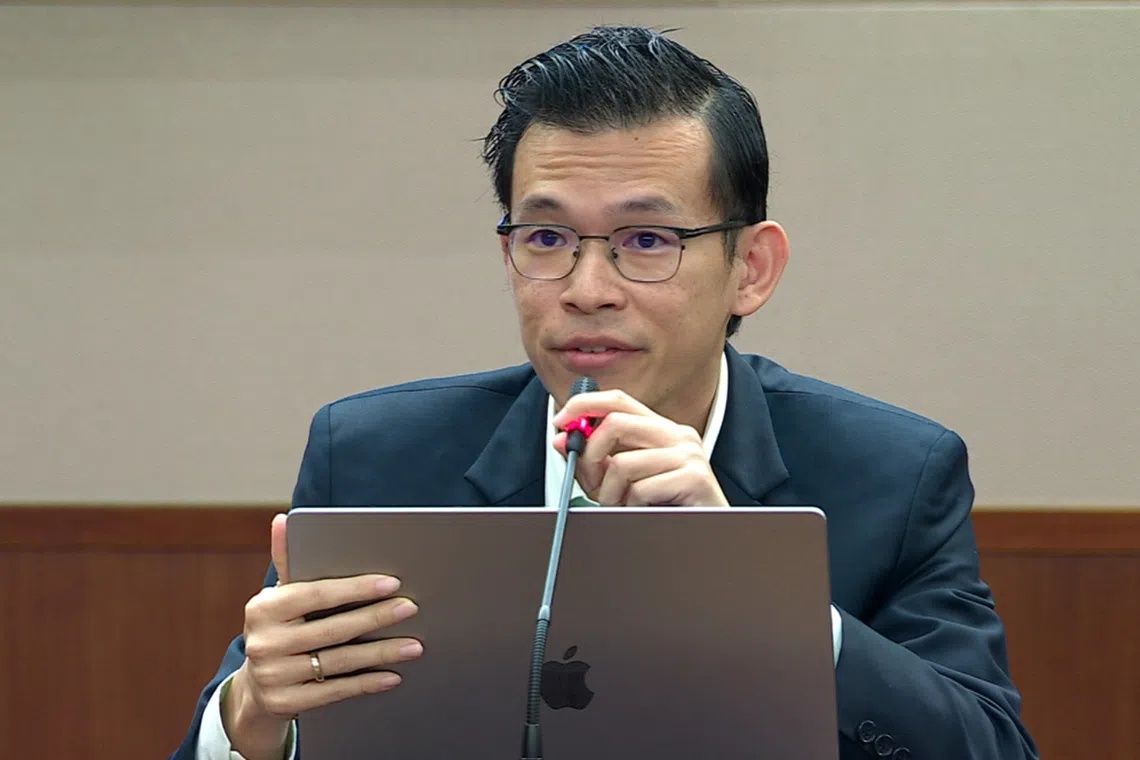
Singapore's parliament has affirmed a motion addressing the nation's economic direction following an intensive parliamentary debate, marking a significant moment for the city-state's approach to balancing growth with broader social benefit. Minister for Trade and Industry Tan See Leng stressed that Singapore's economic strategy has always aimed beyond mere expansion in numbers, seeking instead to translate growth into tangible improvements in living standards and prosperity for ordinary Singaporeans across all income levels. The government's current priority, he emphasized, involves ensuring that the proven model—which has historically delivered stable employment, wage growth, and pathways for upward mobility—remains effective as the global economy undergoes profound structural changes.
The parliamentary proceedings centred on a motion introduced by Workers' Party MP Kenneth Tiong questioning whether Singapore's current economic model requires substantial revision. Though parliament ultimately affirmed the motion following amendments proposed by ruling party MP Edward Chia, the Workers' Party withheld its support, with all twelve of its members voting against the final version. This division reflects a growing debate within Singapore's political landscape about whether reliance on attracting foreign multinational corporations represents the optimal path forward or whether the economy requires a fundamental reorientation toward nurturing homegrown enterprises and strengthening domestic consumption patterns.
Tiong articulated his party's alternative economic vision during opening remarks, proposing that Singapore should prioritize equitable wealth distribution as an integral component of growth rather than treating it as an afterthought requiring government vouchers and subsidies to address inequality. He advocated for an economy underpinned by robust local companies with international competitiveness, stronger consumer demand from Singapore's own population, and increased capital flows from Singaporean entrepreneurs and investors into regional and global markets. The Workers' Party MP argued that Singapore's longstanding model—centred on hosting multinational enterprises and providing them with a hospitable business environment—has increasingly failed to generate quality employment prospects for younger workers while simultaneously constraining the development and expansion of local businesses that might otherwise flourish.
The nine-hour parliamentary debate encompassed contributions from twenty-three speakers who addressed interconnected challenges facing the island nation's economy: how to develop and strengthen small and medium-sized enterprises, create meaningful employment opportunities, and foster genuine innovation and entrepreneurship amid mounting global instability. The extended discussion reflected the complexity of economic policymaking in an era marked by geopolitical tensions, technological disruption, and shifting supply chains. Speakers grappled with the question of how a small, trade-dependent economy must adapt its strategic priorities to maintain prosperity and living standards for its citizens.
Tan's substantive response acknowledged the legitimacy of diverse perspectives across the political spectrum while highlighting surprising consensus on fundamental objectives. Despite differing diagnoses of economic challenges and disagreements over solutions, he noted that Members of Parliament broadly concurred on essential goals: ensuring Singaporeans access fulfilling careers offering decent incomes and providing platforms for Singapore-based enterprises to achieve international success. This rhetorical emphasis on common ground served to frame government policy as addressing shared national concerns rather than pursuing partisan interests, a positioning significant for Singapore's parliamentary dynamics where the ruling People's Action Party commands overwhelming representation.
The minister articulated a realistic government position acknowledging inherent limitations on state capacity and responsibility. No government, he noted, can guarantee that every business venture will succeed, that employment positions will remain permanently stable, or that economic transitions will proceed without hardship. However, Singapore's government can commit to maintaining institutional frameworks and policy conditions that provide citizens genuine opportunities to attempt entrepreneurial pursuits, establish realistic pathways for career advancement, and access meaningful support when confronting setbacks. This formulation attempted to distinguish between achievable government functions and outcomes that require business sector and individual initiative.
Drawing from his personal trajectory, Tan shared his experience founding Healthway Medical Group alongside fellow physicians at age twenty-seven despite lacking formal business training. His narrative illustrated how initial success came through identifying underserved market niches—providing corporate healthcare services to employees in public housing estates and industrial zones—before winning business from multinational corporations seeking medical services for their workforces. Rather than portraying multinational enterprises as competitive threats that displaced local firms, Tan presented them as enablers of local company growth, noting that meeting the rigorous standards demanded by established global corporations provided his business with credibility and reference points that attracted subsequent customers. This point-of-view directly contradicted the Workers' Party assertion that Singapore's MNC-centred model has crowded out local entrepreneurship.
Tan developed a metaphor characterizing government's proper economic role: providing the operational runway upon which entrepreneurs and workers must themselves generate momentum and achieve flight. Government responsibility encompasses constructing sound institutional infrastructure, maintaining open competitive markets, establishing transparent regulatory frameworks, eliminating unnecessary bureaucratic obstacles, and selectively sharing risks where broader economic benefits warrant such intervention. Critically, he delineated what government cannot accomplish: discovering customer markets, assembling effective business teams, making commercial decisions, or demonstrating the persistence that characterizes successful entrepreneurs. Government support, he insisted, must function as a catalyst enabling enterprise rather than substituting for the business model itself, and he cautioned against the misconception that larger government expenditures alone generate business champions.
Tan highlighted Enterprise Singapore's Scale-Up programme as a concrete example of government supporting company development toward global competitiveness. The initiative's first seven cohorts encompassed eighty companies that collectively generated two point five billion Singapore dollars in incremental revenue within three years of programme participation, with one billion Singapore dollars derived from overseas market expansion. This performance metric underscored, from the government's perspective, that well-designed intervention mechanisms could facilitate local firm internationalization and revenue growth without requiring constant government funding. The data suggested that strategic government facilitation combined with private sector execution could drive substantive economic outcomes.
The minister outlined a diagnostic framework identifying five critical capability gaps that entrepreneurs and established companies frequently encounter: transitioning from aspiration to executing a first venture; translating research and development into commercial innovation; moving from product development to securing initial customers; scaling from early traction to sustained expansion; and establishing domestic market strength as a platform for global operations. Government interventions had been calibrated to address each gap through specialized programmes. Startup SG Founder provides early-stage capital, mentorship, and networking infrastructure enabling serious entrepreneurs to test business concepts. The Partnerships for Capability Transformation scheme creates structured linkages between local firms and multinational corporations, enabling smaller companies to integrate into established supply chains and access advanced operational practices. Startup SG Equity catalyzes private investment in technology-intensive companies at early and growth stages, addressing capital constraints that frequently constrain deep-tech ventures.
Tan concluded by acknowledging that not all Singaporeans will become business founders, and that most citizens experience the economy through employment relationships. This observation implicitly shifted focus toward workforce development, job quality, and worker support during economic transitions—areas requiring attention beyond entrepreneurship promotion. The parliamentary motion's affirmation, despite Workers' Party dissent, indicated that while Singapore's ruling coalition successfully defended its economic model against immediate challenges, the debate itself reflected genuine questions about whether current approaches adequately serve all demographic groups and whether wealth distribution mechanisms merit strengthening. For Malaysian observers, the Singapore debate illuminates how neighbouring developed economies are grappling with balancing market dynamism against distributional concerns, questions increasingly relevant across Southeast Asia as regional economies mature.

