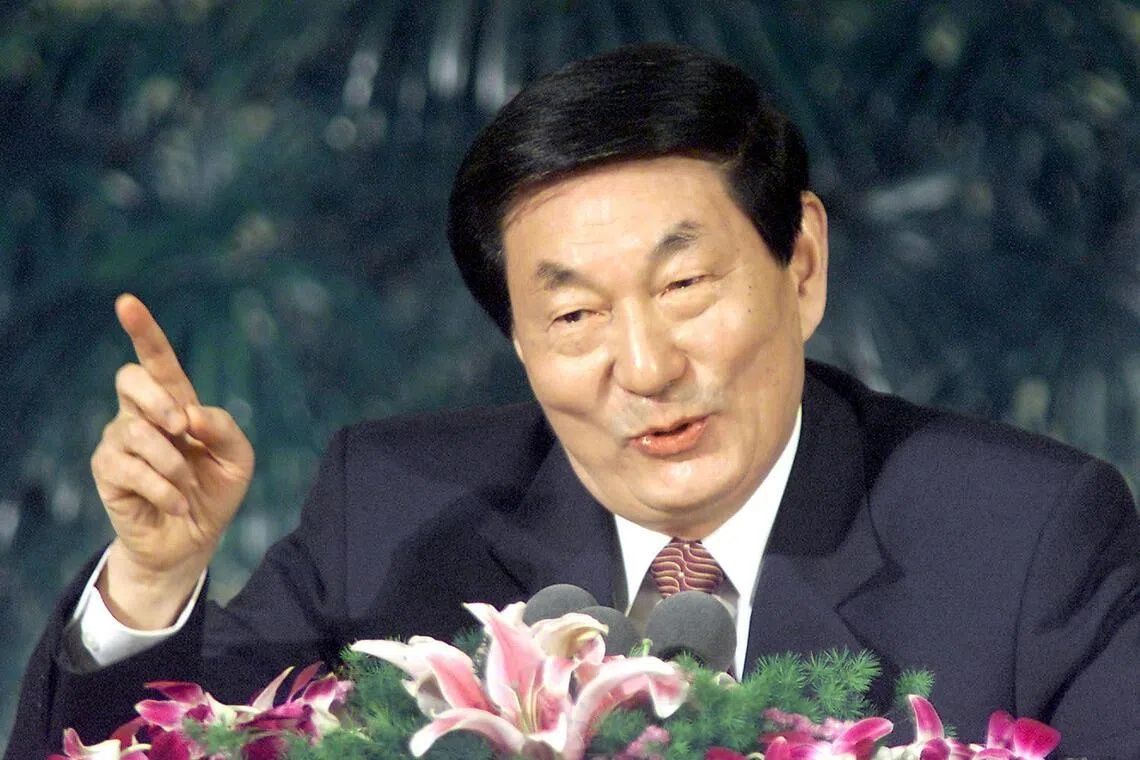
Prime Minister Lawrence Wong has conveyed his sympathies to Chinese Premier Li Qiang following the passing of former premier Zhu Rongji, who died in Beijing on Wednesday at the age of 97, just two months before his 98th birthday. The death of one of China's most influential reform-era leaders marks the end of a significant chapter in the country's economic modernisation and regional diplomacy.
In a letter dated August 13 addressed to Premier Li, PM Wong acknowledged Zhu's substantial legacy across multiple domains of governance and international affairs. The Singaporean leader highlighted how Zhu's tenure was defined by his crucial role in steering China through transformative economic policies and navigating the nation's complex path to becoming a global trading power. His stewardship proved pivotal during a period when China was repositioning itself within the international economic system, a transition that would reshape not only China's fortunes but also reverberate across Asia and beyond.
Among Zhu's most consequential achievements was his instrumental role in orchestrating China's entry into the World Trade Organization in 2001, a milestone that fundamentally altered the trajectory of global commerce and supply chains. PM Wong specifically commended this accomplishment, recognising how the accession represented the culmination of years of diplomatic negotiation and domestic economic restructuring. This development had particularly profound implications for Southeast Asian nations like Singapore, which would subsequently benefit from increased trade flows and deeper integration with the Chinese economy.
The Singapore Prime Minister emphasised the personal relationships that Zhu cultivated with Singapore's leadership over his long political career. He noted that Zhu had met with Singapore's former premiers Lee Kuan Yew and Goh Chok Tong on numerous occasions, underscoring a pattern of sustained engagement between the two nations' top officials. These interactions reflected a commitment to maintaining strong bilateral channels during a period of rapid change in Asia's geopolitical and economic landscape. Such high-level exchanges, while routine on the surface, often carried strategic significance in shaping mutual understanding and cooperation frameworks.
A particularly notable dimension of Zhu's influence on regional thinking was his 1999 keynote address at the Singapore Lecture, a prestigious platform hosted annually by the ISEAS – Yusof Ishak Institute where prominent global figures present their perspectives on international and regional developments. Zhu's participation in this forum represented a statement of intent regarding China's future orientation, and his remarks proved prophetic in numerous respects. He articulated a vision wherein China's own economic prosperity would generate positive externalities for neighbouring countries and the broader Asian region, a formulation that would become central to Beijing's regional diplomacy in subsequent decades.
During that 1999 lecture, Zhu went further by proposing the establishment of a free trade agreement encompassing the Association of Southeast Asian Nations and China, a concept that would eventually materialise in tangible form. This initiative reflected strategic thinking about how deepened economic interdependence could serve mutual interests across the region. PM Wong underscored how this early proposal has been vindicated by subsequent events, as China has indeed become an indispensable economic partner for Singapore and other regional nations, fundamentally reshaping trade patterns and investment flows throughout Asia.
Beyond high-level diplomatic pronouncements, Zhu's contributions to Singapore-China relations extended into concrete collaborative projects. PM Wong specifically highlighted the China-Singapore Suzhou Industrial Park as a signature achievement, noting that Zhu had been an early advocate for this government-to-government initiative. Such industrial parks represented an innovative approach to bilateral economic cooperation, creating designated zones where both nations' enterprises and workers could participate in joint ventures, technology transfer, and skills development. The Suzhou project became a template for understanding how China and Singapore could pursue complementary development objectives while building mutual prosperity.
Zhu's tenure as mayor of Shanghai, before ascending to national office, also provided opportunities for cultivating relationships with Singapore officials. PM Wong noted that during this period, Zhu actively promoted exchanges and mutual learning between government officials from both Shanghai and Singapore. These mid-level connections, often less visible than headline-grabbing summits, proved instrumental in building institutional relationships and establishing trust across bureaucratic structures. Such networks often persist beyond individual leaders' tenures, creating durable foundations for sustained cooperation.
The Singapore Prime Minister's tribute emphasised how Zhu's foundational work, spanning his mayoral years through his premiership, had established infrastructure for the extensive and multifaceted relationship that Singapore and China now enjoy. The connections forged during his tenure—whether through industrial projects, official exchanges, or strategic dialogues—created pathways for subsequent deepening of ties across trade, investment, cultural, and educational domains. These developments proved particularly consequential for a small, trade-dependent economy like Singapore, which has benefited enormously from access to China's vast market and complementary economic structures.
PM Wong's measured and substantive response to Zhu's death reflects the significance that Singapore attaches to its relationship with China and the respect accorded to architects of China's modern development. The letter's emphasis on specific projects, historical meetings, and strategic foresight suggests that Singapore views Zhu not merely as a historical figure but as someone whose vision and decisions continue shaping the regional environment in which Malaysian and other Southeast Asian nations operate. For Malaysia and the broader region, Zhu's legacy encompasses the expansion of economic opportunities that followed China's WTO entry and the establishment of regional frameworks that have become central to contemporary Asian integration efforts.

