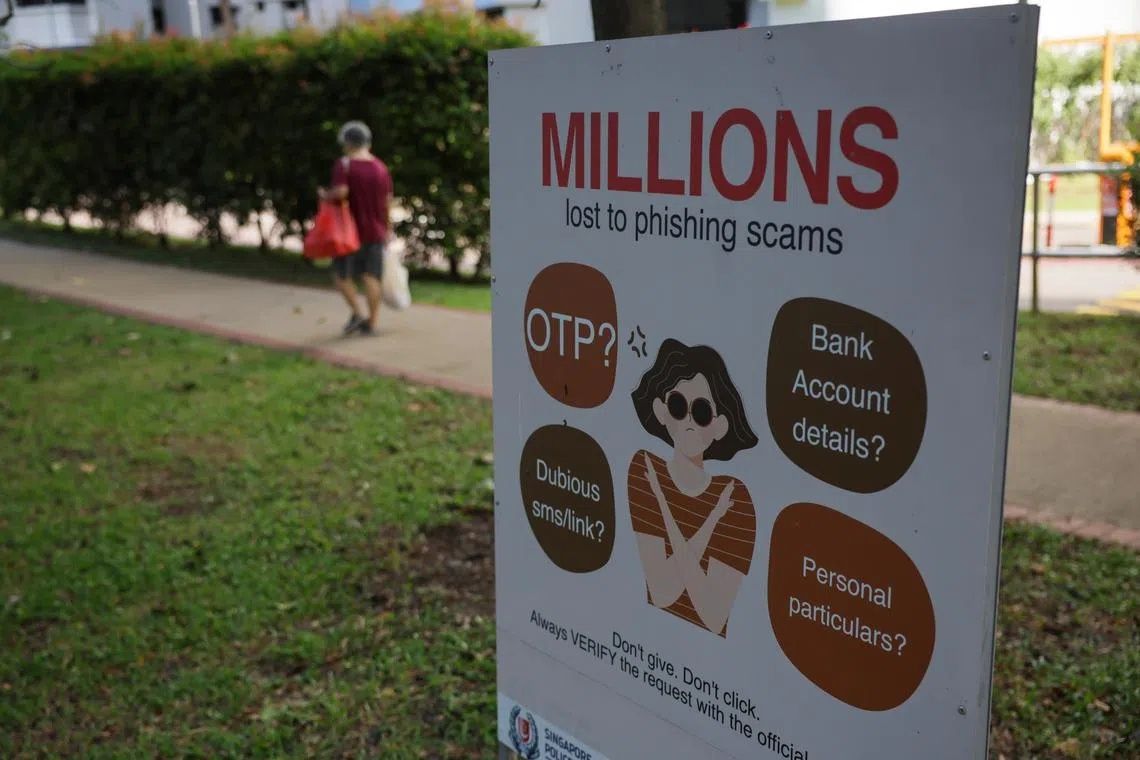
Singapore's police force has cast a wide net in combating organised fraud, bringing 230 suspects under investigation following an intensive two-week enforcement operation that concluded on July 1. The scale of the dragnet underscores the persistent challenge scam syndicates pose to the city-state's financial system and consumer protection landscape. Among those detained are individuals ranging from a teenager to pensioners, arrested on suspicion of participating in a sophisticated web of fraudulent schemes that has defrauded victims of approximately S$9 million.
The composition of the suspect group reveals the multi-generational nature of scam participation in Singapore. Police have identified 159 men and 71 women as either active scammers or money mules—individuals who facilitate fraud by moving illicit proceeds through financial channels. The inclusion of a 16-year-old highlights an alarming trend of youth recruitment into criminal networks, a concern that extends across Southeast Asia as digital literacy combines with economic vulnerability to make younger people targets for organised crime recruitment.
The suspects are alleged to have orchestrated more than 713 separate scams across multiple fraud categories. E-commerce fraud, where victims are duped during online shopping transactions, represents one of the primary schemes. Friend impersonation scams, which exploit social engineering and intimate knowledge of victims' relationships, rank among the most emotionally damaging variants. Job scams targeting employment seekers have proliferated as remote work normalised, with fraudsters posing as recruiters to extract upfront fees or personal data. Government official impersonation scams exploit trust in institutions, while investment schemes promise unrealistic returns to lure savings from unsuspecting individuals. Rental scams, which deceive property seekers, complete the spectrum of criminal activity uncovered.
The two-week operation, conducted between June 18 and July 1, involved coordinated action by Singapore's Commercial Affairs Department and the seven police land divisions across the island. This institutional mobilisation reflects resource allocation decisions around fraud prevention, indicating that authorities view the scam epidemic as sufficiently serious to warrant sustained, comprehensive investigation. The coordination across multiple divisions suggests police recognised that scam networks operate beyond traditional geographical boundaries, with syndicates often maintaining distributed operational structures to complicate law enforcement detection.
Investigation charges encompass three distinct legal categories. Suspects face potential prosecution for cheating, the foundational fraud offence carrying sentences up to ten years imprisonment alongside potential fines. Money laundering charges, which target the concealment and integration of illicit funds into legitimate financial systems, carry identical ten-year maximum sentences but add fines reaching S$500,000. The third category addresses unlicensed payment service provision, a technical offence that typically ensnares individuals operating digital transfer systems without regulatory approval, with penalties including three-year jail terms and fines up to S$125,000.
Singapore's penal framework imposes particularly severe consequences for organised fraud participation. Scammers and syndicate members face mandatory caning sentences ranging from six to 24 strokes if convicted, a punishment regime substantially harsher than most Commonwealth jurisdictions and reflecting the state's zero-tolerance approach to fraud. Money mules receive somewhat lighter mandatory caning—up to 12 strokes—yet still face corporal punishment, acknowledging their enabling role while recognising reduced culpability compared to scheme architects. These punishments function both as individual deterrents and as general deterrents signalling to potential recruits the severe consequences of involvement.
Beyond criminal prosecution, convicted individuals face administrative restrictions designed to prevent recidivism. Authorities may impose banking service restrictions, preventing convicted mules from accessing financial institutions' services, thereby eliminating their utility to future scam networks. Mobile subscription restrictions similarly sever their capacity to coordinate criminal activity or receive victim payments through telephony-based channels. These post-conviction disabilities recognise that punishment alone proves insufficient; preventing future criminal utility becomes essential when targeting criminal service providers rather than isolated offenders.
The enforcement action occurs within context of measurable progress on scam reduction at the national level. Singapore's police reported in February 2026 that scam case numbers declined from over 50,000 in 2024 to 37,308 in 2025, representing approximately a 25 percent reduction. Financial losses similarly fell from S$1.1 billion to S$913.1 million, suggesting both fewer scams and potentially reduced average victim losses per incident. These statistics provide encouraging signals that sustained enforcement and public awareness campaigns produce tangible protective effects for Singapore's population.
E-commerce fraud emerges as the most prevalent scam variant despite the overall decline, with 6,703 reported cases in 2025 generating S$16.7 million in losses. This persistence despite declining overall numbers suggests that while enforcement may deter certain fraud types, the e-commerce space remains particularly vulnerable. The category's resilience likely reflects the explosive growth of online shopping, minimal friction in consumer transactions, and the challenge of authenticating sellers and products within compressed transaction timeframes that scammers exploit.
For Malaysian readers observing Singapore's enforcement activities, the operation carries regional implications. Cross-border scam networks frequently leverage jurisdictional complexity, with operators in one nation targeting victims in neighbouring countries while maintaining money movement infrastructure elsewhere. Singapore's crackdown may disrupt networks with Malaysian connections, potentially benefiting domestic consumers. Conversely, criminal entrepreneurs may seek to shift operations to jurisdictions perceived as offering less enforcement intensity, a familiar pattern of regulatory arbitrage within organised crime.
The police have established multiple reporting mechanisms acknowledging that public cooperation remains essential for intelligence gathering. The dedicated ScamShield helpline (1799) and general police hotline (1800-255-0000) provide accessible reporting channels, while the online submission portal at www.police.gov.sg/i-witness enables anonymous tip provision. These mechanisms recognise that scam victims and witnesses, though often reluctant to report due to shame or distrust, represent critical intelligence sources that feed enforcement operations like the two-week initiative concluding on July 1.
Singapore's comprehensive anti-scam framework combines enforcement action with victim support and public education, reflecting sophisticated understanding that fraud requires multifaceted responses. The ScamShield platform provides information resources alongside reporting facilities, attempting to shift public consciousness toward scepticism and verification. Yet the persistence of large-scale scam operations despite these interventions underscores the evolving adaptability of criminal networks and the continuing challenge authorities face in remaining operationally ahead of fraud innovation. The 230 suspects under investigation represent one enforcement cycle in what appears to be an enduring struggle against organised financial crime.

