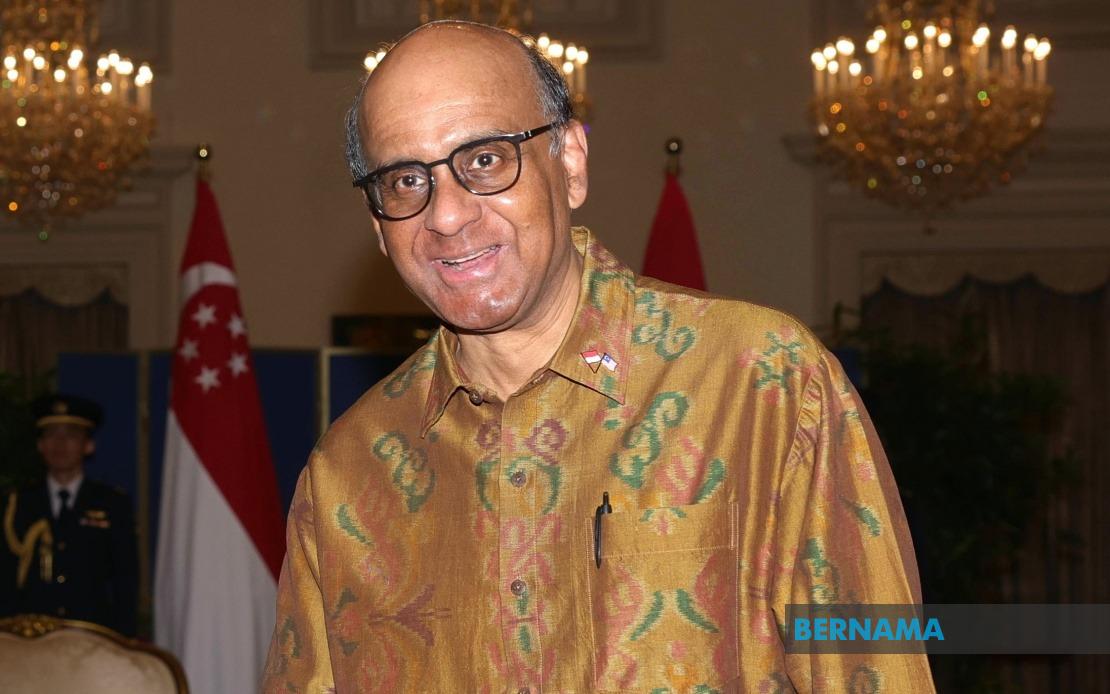
Singapore President Tharman Shanmugaratnam will arrive in Malaysia on July 13 for a three-day state visit that extends until July 15, coming at the formal invitation of His Majesty Sultan Ibrahim, King of Malaysia. This marks the ninth President of Singapore's inaugural state visit to Malaysia since his inauguration on September 14, 2023, and represents a significant diplomatic engagement at the highest level between the two neighbouring nations.
The visit functions as a reciprocal gesture, acknowledging His Majesty's own state visit to Singapore conducted on May 6 and 7 last year. Such diplomatic exchanges underscore the established protocol and mutual respect between Malaysia and Singapore, two countries whose histories, economies, and peoples remain deeply intertwined despite their distinct governance systems and strategic orientations. The Foreign Ministry's characterisation of the visit as reflective of "strong and enduring partnership" carries particular weight given the complexities of Malaysia-Singapore relations, which have at various points navigated territorial disputes, water agreements, and the broader architecture of regional cooperation.
President Tharman will travel accompanied by his spouse, Jane Ittogi Shanmugaratnam, alongside a substantial delegation comprising several cabinet ministers and high-ranking government officials. This composition signals Singapore's investment in the visit as more than ceremonial; the presence of senior ministerial figures suggests substantive discussions on bilateral matters will occur alongside the formal state proceedings. The delegation's scale and seniority reflect Singapore's institutional commitment to strengthening ties with Malaysia across multiple sectors and governmental portfolios.
During his time in Malaysia, President Tharman will be received with full state honours, beginning with a formal State Welcoming Ceremony upon arrival. He will subsequently be granted an audience with His Majesty at Istana Negara, the royal palace, where matters of state significance are traditionally addressed. The visit's itinerary also includes a State Banquet in his honour, one of the highest ceremonial gestures a host nation can extend to a visiting dignitary. Additionally, Prime Minister Datuk Seri Anwar Ibrahim is scheduled to hold a courtesy meeting with the Singapore President, providing an opportunity for the executive heads of both governments to engage on bilateral and regional matters.
The economic dimensions of the Malaysia-Singapore relationship warrant particular attention given the scale and trajectory of their commercial ties. Singapore currently holds status as Malaysia's second-largest trading partner globally, whilst simultaneously serving as Malaysia's most significant trading partner among all ASEAN member states. This dual significance reflects both the depth of integrated trade flows and the relative concentration of Malaysian external commerce within the association. The bilateral relationship encompasses sophisticated supply chains, financial services, maritime commerce, and increasingly, technology and green energy initiatives.
Bilateral trade between the two countries reached RM402.35 billion, equivalent to US$93.97 billion, during 2025, registering growth of 1.5 per cent year-on-year. Whilst this expansion rate appears modest in percentage terms, it occurred within a context of global economic uncertainty and reflects the resilience of Malaysia-Singapore commercial linkages. More significantly, the momentum accelerated substantially during the initial months of 2026, when cumulative bilateral trade through May totalled RM189.90 billion (US$47.87 billion), demonstrating a robust 14.5 per cent increase relative to the comparable five-month period in 2025, which had recorded RM165.93 billion (US$37.65 billion).
This acceleration in 2026 trade growth suggests underlying structural improvements in the bilateral commercial relationship, potentially reflecting enhanced market access, improved logistics infrastructure, or expanded cooperation in emerging sectors. For Malaysian policymakers and business communities, the upward trajectory carries implications for employment, investment flows, and sectoral development. The trade figures demonstrate that notwithstanding occasional political tensions or diplomatic friction, the fundamental economic architecture binding Malaysia and Singapore remains robust and mutually beneficial.
Regionally, President Tharman's visit arrives at a time when ASEAN faces mounting external pressures and internal coordination challenges. As the world's fourth most populous regional bloc and a key player in Indo-Pacific geopolitics, ASEAN's internal cohesion depends substantially on functional relationships between its major economic engines. Malaysia and Singapore, representing distinct models of development and governance within the association, nonetheless share common interests in maritime security, trade facilitation, counterterrorism cooperation, and the maintenance of a rules-based regional order. The strengthening of bilateral ties between these two nations indirectly contributes to broader ASEAN solidarity.
The visit also occurs within a broader context of Malaysia's diplomatic reorientation and enhanced regional engagement. Under Prime Minister Anwar Ibrahim's administration, Malaysia has pursued a more proactive foreign policy stance, seeking to leverage its geographic position and economic weight to deepen partnerships across Southeast Asia and beyond. The emphasis placed on receiving Singapore's President at the highest ceremonial level reflects Kuala Lumpur's commitment to maintaining strong bilateral relations even as Malaysia pursues diversified international partnerships with other regional and global powers.
For Singapore, President Tharman's first state visit to Malaysia since assuming office carries significance in establishing the tenor and focus of his presidency's international dimension. Early presidential visits typically signal priority relationships and preferred policy domains. By conducting this visit to Malaysia, Tharman underscores Singapore's continued commitment to Southeast Asian engagement and recognition of Malaysia's centrality to regional stability and prosperity. The visit also provides an opportunity to reaffirm shared commitments to maritime security, particularly concerning the Strait of Malacca and Singapore Strait, critical waterways through which enormous volumes of global commerce transit annually.
The diplomatic choreography surrounding high-level state visits, whilst sometimes dismissed as merely ceremonial, carries genuine significance in international relations. Formal protocols, ceremonial gestures, and carefully orchestrated engagements communicate commitment, respect, and strategic intent in ways that complement substantive negotiations. President Tharman's reception in Malaysia, including the State Banquet and audience with His Majesty, sends clear signals to domestic constituencies in both nations regarding the value placed on bilateral partnership, whilst simultaneously projecting an image of regional stability and cooperation to international audiences monitoring ASEAN dynamics.

