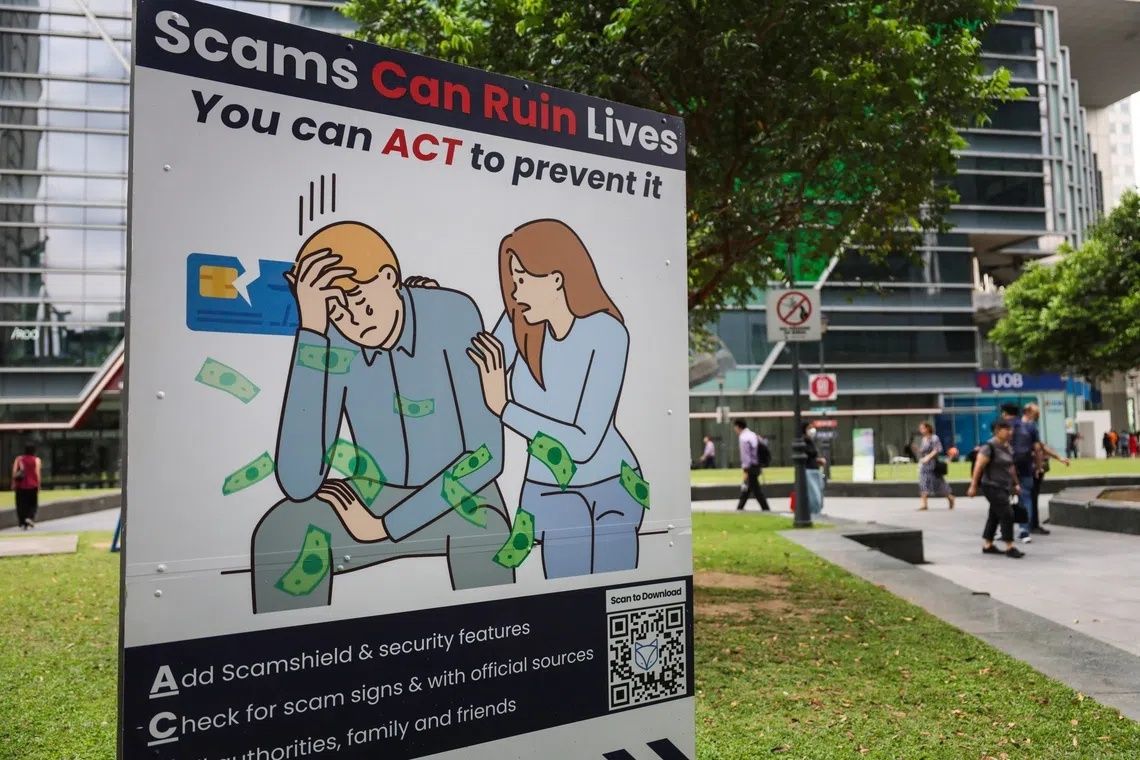
Singapore is moving decisively to combat one of its most pressing criminal challenges by introducing sweeping legislation that closes a critical enforcement gap in digital fraud prevention. The Scams (Countermeasures) and Other Matters Bill, tabled in Parliament on Tuesday, targets online account mules—individuals who supply personal details or sell accounts on platforms like Carousell, TikTok, Telegram, Facebook, Instagram and WhatsApp to criminal syndicates. This legislative overhaul represents a significant escalation in Singapore's fight against scams, which have claimed over S$4 billion from victims since 2019 and now constitute three out of five police reports filed in the nation.
The new bill makes it a criminal offence to provide personal information for creating accounts, to trade such accounts, or to knowingly use them for illegal purposes. Currently, Singapore has laws targeting money mules and those trading SIM cards or Singpass accounts, but online account mules have operated in a legal grey zone. Conviction will now carry penalties of up to S$10,000 in fines, imprisonment for up to three years, and potentially 12 strokes of the cane. This formidable combination of financial, custodial and corporal punishment signals the government's determination to deter participation in account trafficking schemes that enable fraud networks.
The legislation also represents a dramatic escalation in enforcement pressure against technology platforms themselves. Online service providers failing to comply with anti-scam codes of practice and government directives now face maximum fines of S$10 million, a tenfold increase from the previous S$1 million cap. Daily fines for ongoing violations will jump from S$100,000 to S$300,000, ensuring that platform non-compliance becomes financially untenable. Meta, which has received implementation directives in September 2025 and January 2026, has already demonstrated that such pressure yields results—police data shows that Facebook impersonation scams have declined following these orders, though the overall threat remains serious.
The scope of the scam epidemic in Singapore underscores why these measures are necessary. In 2025 alone, scammers extracted S$913.1 million from residents, with government impersonation scams more than doubling from 1,504 cases in 2024 to 3,363 in 2025, making it the fifth most prevalent scam category. These figures reveal not merely individual victimization but systemic vulnerability to increasingly sophisticated criminal operations. For Malaysian observers, the scale and evolution of Singapore's scam problem offers a cautionary tale about the risks posed by poorly regulated digital platforms and the inadequacy of legacy criminal frameworks in addressing modern fraud networks.
Criminal syndicates have adapted to enforcement pressure by deploying artificial intelligence and automating account creation at industrial scale. According to police assessments, scammers now establish large volumes of fraudulent sites, accounts and advertisements within compressed timeframes, overwhelming manual review capabilities. This technological arms race necessitates similarly advanced defensive measures. The new bill empowers police to issue anti-scam directives through automated systems and AI algorithms, enabling real-time detection and disruption at speeds matching scammer operations. Safeguards will govern algorithmic accuracy and fairness, protecting against false positives while maintaining enforcement speed.
Central to the legislative package is the development of Singapore's National Scams List, a real-time information-sharing platform connecting government agencies, banks, telecommunications companies and online service providers. The bill establishes three new police powers to facilitate this ecosystem. First, disclosure orders will compel service providers to furnish information on specified accounts and scam-related activities. Second, account disabling orders will allow police to force temporary suspension of suspicious accounts for up to 60 days total, preventing immediate fund transfers. This architecture represents a departure from the siloed approach that historically hampered fraud prevention, instead creating what amounts to a digital immune system capable of coordinated rapid response.
The third innovation—service limitation orders—extends restrictions to up to three years, restricting access to financial, telecommunications and digital services for individuals identified as mule operators or scam facilitators. This follows the facility restriction framework introduced in October 2025, which has already enrolled 1,423 money mules, 1,439 SIM card mules and 53 corporate mules under graduated restrictions. The framework's expansion reflects growing recognition that choking off mules' ability to move money or operate accounts upstream prevents scams from reaching completion. For Malaysia and other Southeast Asian nations grappling with similar challenges, Singapore's multi-layered restriction model offers a template for incapacitating scam infrastructure at multiple chokepoints simultaneously.
The regional implications are substantial. Scam syndicates operating across Southeast Asia have historically exploited jurisdictional gaps and varying enforcement standards, moving operations between markets as pressure mounts. Singapore's enhanced penalties and platform accountability requirements will raise the operational cost of maintaining accounts and mule networks in the city-state, potentially displacing criminal activity to jurisdictions with weaker frameworks. This enforcement arbitrage represents a critical vulnerability for neighboring countries including Malaysia, which faces similar scam epidemics but lacks comparable integrated platforms or penalty structures. As Singapore firms up its defenses, coordinated regional responses become increasingly necessary to prevent criminal migration.
The bill's emphasis on technological solutions reflects the asymmetry between traditional policing and modern fraud networks. By enabling AI-driven detection and real-time information sharing, Singapore moves beyond reactive investigation toward predictive intervention. This shift acknowledges that investigating completed scams after massive losses occur is far less efficient than preventing account provisioning and fund movement. The approach resonates beyond Singapore—Malaysian authorities watching this legislation unfold may recognize both the regulatory gaps it addresses and the technological capacity gaps their own systems must close. Implementation of comparable systems would require investment in platform integration, algorithmic governance and cross-agency data infrastructure.
Singapore's escalating legislative response reflects scams' evolution from isolated crimes into systemic threats affecting national economic productivity and public confidence. When scams generate three out of five police reports, they have transitioned from peripheral concerns to first-order law enforcement priorities consuming disproportionate resources. The government's willingness to increase platform fines tenfold and introduce account mule penalties suggests recognition that deterrence requires raising the ante substantially. For Malaysian policymakers observing this trend, the message is clear: legacy criminal frameworks and voluntary industry cooperation have proven insufficient to contain digitally-enabled fraud networks operating at scale.
The legislation also introduces enhanced police operational powers extending beyond the measures outlined above, though specific details remain to be elaborated during parliamentary debate. These additional enforcement tools likely target remaining loopholes in jurisdiction, evidence gathering and international cooperation. Given the transnational nature of many scam syndicates, enabling police to operate more effectively against overseas-based operators or their facilitators becomes crucial. The bill's comprehensive architecture—combining direct criminal penalties, platform accountability, real-time information sharing, account disruption and long-term service restrictions—represents the most integrated anti-scam framework Singapore has yet deployed. Whether it succeeds in reversing upward trends in scam victimization will determine whether other Southeast Asian governments follow suit with comparable legislation or whether enforcement gaps persist, allowing criminal networks to maintain profitable operations.

