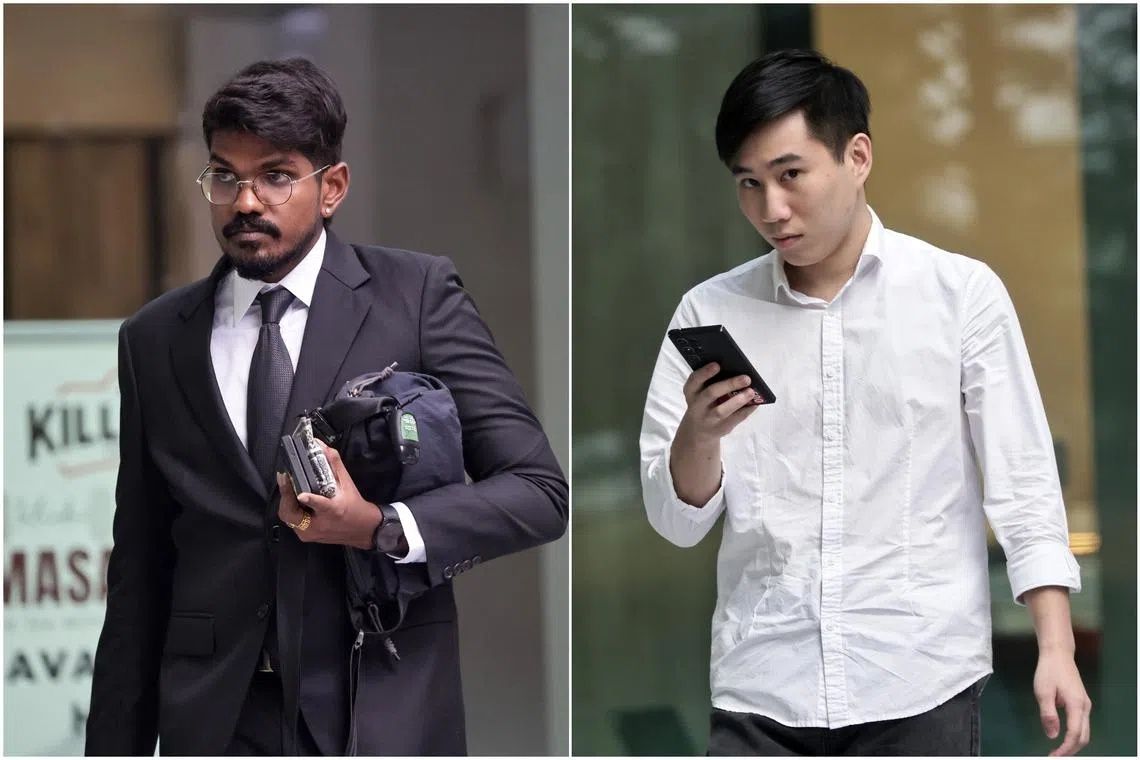
A Singapore Traffic Police investigation officer has been handed a 16-month prison sentence for breaching official information systems and compromising the safety of a woman who had reported his friend to authorities. The case underscores serious vulnerabilities in how confidential police data can be misused by insiders with criminal intent, raising questions about systemic safeguards within law enforcement agencies across Southeast Asia.
Shivasuria Maniam Kesaval, 29, was convicted on multiple charges including four counts of computer system misuse and one count of violating the Official Secrets Act following a trial in Singapore's District Court. His accomplice in the scheme, Brayden Ong Ying Shan, 25, was similarly found guilty of criminal intimidation and breaching the Official Secrets Act. The case reveals how a friendship forged in 2019 became the conduit for a systematic breach that endangered a vulnerable person.
The circumstances that triggered the entire affair began innocuously when a woman in a relationship with Ong reported him to police for driving without a valid licence. Acting on this tip, two Traffic Police colleagues of Shivasuria ambushed Ong on July 12, 2022, impounding his vehicle. Rather than accepting the consequences, Ong immediately contacted Shivasuria, seeking assistance. This phone call set in motion a chain of events that would compromise police systems and ultimately threaten the woman's life.
Following Ong's call about the impounded vehicle, Shivasuria systematically exploited his workplace access to the Ministry of Home Affairs computer systems between July 14 and July 26, 2022. Through these unauthorized searches, he retrieved sensitive personal details about the woman and located the original police report she had filed against his friend. The prosecutor's evidence demonstrated that Shivasuria was not merely curious; he repeatedly met with Ong during this period, actively sharing information that would help Ong identify and locate his accuser.
Shivasuria's breach directly enabled Ong's subsequent intimidation campaign. By informing Ong when the initial complaint had been lodged, the officer effectively handed his friend the ability to deduce the woman's identity. On July 15, 2022, Ong escalated matters by telephoning the woman and explicitly threatening to "murder" whoever had reported him to police. The threat was not empty rhetoric; Ong accompanied his deadly promise with a photograph of Shivasuria while boasting of having "a TP friend that is high ranking," deliberately leveraging the officer's position to amplify the menace.
The intimidation intensified when Ong demanded that the woman provide her family members' names, darkly suggesting that Shivasuria could perform database checks on them to determine which relative had betrayed him. This request represented a chilling escalation, transforming a simple traffic offence into a coordinated harassment and threats campaign. The woman, reasonably fearing for her safety and that of her family, lodged a police report in late July 2022 documenting the threats and coercion.
The investigation that followed revealed the full extent of Shivasuria's misconduct. Police suspended him in August 2022 as inquiries proceeded. During the trial, the Deputy Public Prosecutor presented compelling evidence that the officer had systematically accessed confidential records without authorization and deliberately shared sensitive information with a person who had criminal intent. The prosecutor argued for a sentence of 16 months and seven months' jail, emphasizing that Shivasuria had demonstrated no remorse for his actions.
Shivasuria's lack of contrition proved costly during sentencing. Although he submitted written mitigation, he declined to have it read in court and told the judge he had nothing further to contribute to his defence. District Judge Lim Tse Haw sentenced him to exactly 16 months' imprisonment, accepting much of the prosecution's recommendation while noting the gravity of the official secrets violation combined with the serious consequences for the victim.
Ong's case took a dramatic turn when he fled Singapore by boat on June 2, evading custody following his conviction. A warrant for his arrest now circulates, and authorities anticipated reviewing the matter on July 14. His escape demonstrates the seriousness with which he regarded his sentence and suggests awareness of the magnitude of his crimes, which encompassed not merely making threats but orchestrating them through corrupt official channels.
For Malaysian and Southeast Asian observers, this case illuminates critical governance issues. It demonstrates how insider threats within police and government agencies can directly endanger public safety, particularly that of vulnerable complainants who come forward with allegations. The ability of a single officer to access confidential databases and share sensitive information raises questions about audit trails, access controls, and whistleblower protection mechanisms that extend beyond Singapore's borders.
The case also highlights the psychological toll on those who report crimes. The woman in this incident faced not only the emotional burden of coming forward but then confronted escalating threats from someone attempting to weaponize government systems against her. Effective whistleblower and witness protection protocols—including systems that shield complainant identities from subjects of investigations—are essential infrastructure that many jurisdictions have yet to fully develop.
Moreover, the prosecution's reliance on comprehensive digital forensics and evidence of Shivasuria's repeated meetings with Ong suggests sophisticated investigative capability within Singapore's law enforcement community. The ability to reconstruct unauthorized database access and connect it to subsequent criminal conduct demonstrates technical competence that serves as a model, even as the case simultaneously illustrates the vulnerabilities such systems must address.
As the matter proceeds toward a review hearing on July 14, officials will likely examine internal controls that permitted Shivasuria's extended access abuse and whether warning signs existed that colleagues could have noticed. The case will undoubtedly inform policy discussions across the region regarding vetting, supervision, and accountability mechanisms for officers with sensitive data access.

