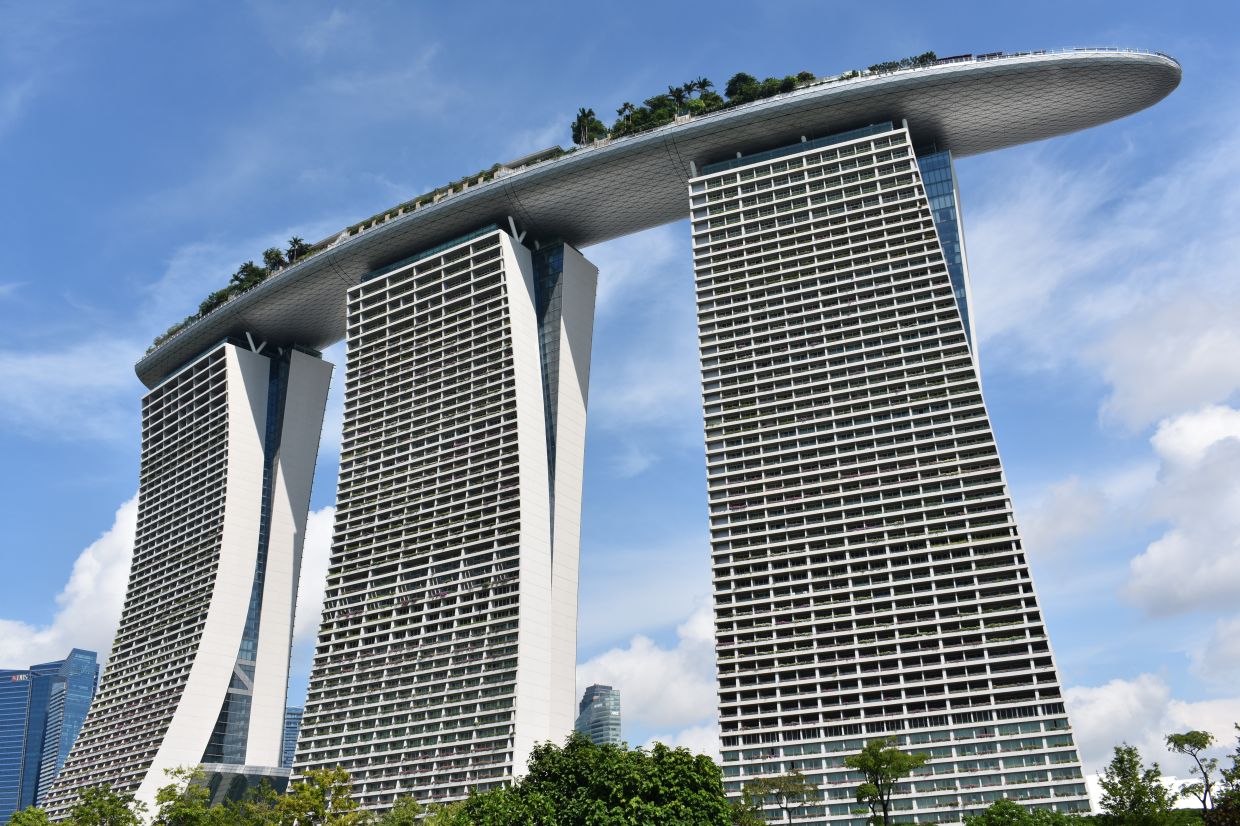
The competitive landscape between Singapore's two casino operators has shifted dramatically in favour of Las Vegas Sands Corp.'s Marina Bay Sands, leaving Resorts World Sentosa in a precarious position as it prepares for a pivotal licensing review. The divergence between the two properties became apparent in the first half of 2026, when Marina Bay Sands generated casino revenues exceeding US$2.1 billion—a figure that dwarfs Resorts World Sentosa's comparatively modest take of less than one-third that amount. This performance gap reflects deeper structural challenges facing the Sentosa property, which has struggled to retain the high-value clientele that drives profitability in the premium gaming segment.
The regulatory environment has already signalled dissatisfaction with Resorts World Sentosa's trajectory. Singapore's Gambling Regulatory Authority publicly criticized the integrated resort's tourism performance as "unsatisfactory" in November 2024, punctuating that assessment by granting only a two-year casino license rather than the customary three-year term. This shortened licensing window, which took effect in February 2025, functions as a deliberate pressure tactic to compel operational improvements before the authority makes its next determination in February 2027. By contrast, Marina Bay Sands received the full three-year renewal just months earlier, underscoring the regulator's confidence disparity between the two operators. The messaging is unmistakable: Resorts World Sentosa must demonstrate substantial progress or face more severe consequences when its license comes up for assessment.
The regional context amplifies these challenges for Resorts World Sentosa. Singapore has experienced a robust recovery in tourist arrivals since the pandemic, coupled with a marked influx of high-stakes gamblers from neighbouring countries and mainland China. This wealth migration has paradoxically benefited Marina Bay Sands almost exclusively. Significantly, Singapore has captured market share from Macau, which has endured repeated crackdowns by Chinese authorities targeting casino junkets and illicit money-exchange operations. Wealthy mainland Chinese clients increasingly view Singapore as a preferable alternative, attracted both by visa-free entry arrangements and the jurisdictional distance that offers greater privacy protections—a consideration that has become increasingly important given concerns about personal data exposure to Chinese government agencies. Yet despite this favourable macroeconomic environment, Resorts World Sentosa has failed to capitalize on these opportunities, allowing Marina Bay Sands to consolidate its position.
The divergence in high-roller retention crystallizes the operational divide between the two properties. Market share among VIP patrons, the most lucrative casino demographic, deteriorated sharply for Resorts World Sentosa, collapsing to approximately 20 percent in the first quarter of 2026 before recovering modestly to 36 percent subsequently. These fluctuations mask a concerning trend: despite recent upticks, the Sentosa property remains significantly disadvantaged compared to Marina Bay Sands' commanding position. VIP gamblers constitute a relatively small proportion of total casino traffic, yet they generate disproportionately large revenue contributions. Securing and retaining these customers requires institutional excellence across multiple touchpoints, and here Resorts World Sentosa has demonstrably underperformed.
Complaints from Resorts World Sentosa's VIP club members reveal systemic deficiencies that extend beyond mere marketing or amenity offerings. Club members have voiced concerns regarding what they characterize as outdated infrastructure, unresponsive management systems, and operational friction even in routine transactions such as currency and chip exchanges. These grievances, while potentially remedial, suggest organizational complacency that has allowed Marina Bay Sands to establish qualitative differentiation. In contrast, Marina Bay Sands' VIP programme delivers tangible premium experiences including butler-service suite accommodations, exclusive theatre tickets, and restaurant credit packages. The flagship property, consistently ranked among the world's most profitable integrated resorts, leverages its three 57-story hotel towers, iconic boat-shaped rooftop, art museum, and shopping facilities to create an aspirational brand experience that Resorts World Sentosa struggles to match.
The marketing battle extends to seemingly minor details that reveal strategic divergence. During Singapore's Lunar New Year lucky draw for high rollers, Resorts World Sentosa offered a bottle of Martell Cognac as its top prize—a token gesture compared to Marina Bay Sands' presentation of a Mercedes-Benz CLA 200. This illustrative difference captures a fundamental positioning gap: one property offers consolation prizes while the other delivers transformational rewards. Such asymmetries in promotional strategy reinforce market perception that Marina Bay Sands represents the premium destination for serious, affluent gamblers.
Genting Singapore Limited, the parent company controlling Resorts World Sentosa and Malaysia-based itself, confronts intensifying structural pressure. The operator maintains that it has preserved constructive dialogue with regulatory authorities and positions the group favourably for the upcoming assessment cycle. Management has emphasized recent infrastructure enhancements and hospitality improvements rolled out over the preceding 18 months, asserting that "early signs of progress are encouraging." However, such statements from operators perpetually facing market-share erosion often mask deeper anxieties about organizational capacity to reverse entrenched disadvantages. Zheng Feng Chee, a consumer analyst at DBS Group Holdings, characterizes the Gambling Regulatory Authority's shortened license term as a deliberate soft threat—calculated pressure that stops short of extreme sanctions while clearly signalling performance expectations.
The broader competitive dynamic offers little respite for Resorts World Sentosa. Ben Lee, managing partner at IGamiX consulting in Macau, bluntly assesses the situation as a decisive market-share loss, with the Sentosa property unlikely to recover significantly. He attributes this deterioration to Marina Bay Sands' superior ability to deliver the "luxuriate experience" that VIP clientele demand and reward generously. This evaluation reflects the structural reality that Marina Bay Sands has cultivated operational excellence, iconic architecture, and premium positioning that Resorts World Sentosa cannot easily replicate through incremental improvements alone.
Resorts World Sentosa's strategic response involves a substantial S$6.8 billion transformation programme scheduled for completion by 2030. This initiative encompasses construction of an all-suite luxury hotel property, expanded oceanarium facilities, and integration of Super Nintendo World within the Universal Studios Singapore precinct. These ambitious undertakings signal management's commitment to fundamental repositioning rather than superficial enhancements. However, the timeline presents a critical vulnerability: the February 2027 licensing decision will occur well before these transformative elements materialize, forcing the Gambling Regulatory Authority to evaluate renewal prospects based on current trajectory rather than promised future amenities.
Meanwhile, Marina Bay Sands has initiated its own US$8 billion expansion programme, adding a 55-story hotel tower and live entertainment arena that will further cement its market leadership. This simultaneous capital deployment by both operators indicates an industry-wide conviction that Singapore's premium gaming market will continue expanding. Yet the competitive mathematics remain asymmetrical: Marina Bay Sands can implement enhancements from a position of market dominance and profitability, whereas Resorts World Sentosa must deploy equivalent resources from a position of relative disadvantage, raising questions about execution capability and return on investment.
The licensing renewal framework itself warrants closer examination. The Gambling Regulatory Authority's evaluation methodology encompasses the entire integrated resort's performance rather than casino operations alone, potentially offering Resorts World Sentosa pathways to demonstrate broader value creation across hospitality, retail, and entertainment functions. Universal Studios Singapore, the oceanarium, and hotel properties may collectively offset gaming deficiencies in the regulator's holistic assessment. Nevertheless, the regulatory authority's demonstrated willingness to impose shortened license terms and public performance criticism suggests that casino performance carries outsized weight in renewal deliberations.
For Malaysian stakeholders specifically, the Resorts World Sentosa struggle carries indirect implications. Genting Singapore's difficulties in Singapore's premier gaming market could constrain investment capacity and financial flexibility for its Malaysian operations and strategic initiatives. The Singapore property's underperformance may also attract investor scrutiny regarding management effectiveness and market positioning across the Genting group's global portfolio. Conversely, successful turnaround execution could restore confidence in the operator's capacity to compete in high-stakes markets.
The February 2027 licensing decision will likely prove pivotal for Singapore's casino duopoly trajectory. A full three-year renewal would signal regulatory acceptance of Resorts World Sentosa's improvement efforts, while another shortened term or conditional approval would suggest continued dissatisfaction. The integrated resort's ability to enhance VIP market share, modernize infrastructure, and articulate credible transformation roadmaps over the next 11 months will substantially determine the regulator's stance. Regardless of the licensing outcome, Marina Bay Sands' current dominance appears durable absent dramatic operational failures or strategic missteps.

