Singapore is grappling with an accelerating public health and road safety crisis centred on substance-impaired driving, with anaesthetic chemicals delivered through vaporisers emerging as a particularly menacing factor in recent years. The city-state recorded 149 traffic deaths in 2025, marking a decade-high, and the involvement of drug abuse in these incidents has become a critical concern for authorities and medical professionals alike. Over just a 12-day stretch in June, three men faced criminal charges stemming from accidents where they operated vehicles while under the influence of narcotics, illustrating the frequency and immediacy of the threat to public safety on Singapore's roads.
The substances fuelling this crisis span multiple drug categories, though one in particular has alarmed emergency medical staff and law enforcement. Two of the three men charged in that June period admitted to consuming methamphetamine, commonly known as Ice, whilst controlling their vehicles. The third defendant allegedly operated his vehicle whilst affected by etomidate, a prescription anaesthetic that has begun circulating in recreational form through vape devices marketed as Kpods. This dual problem—traditional stimulants combined with the emerging anaesthetic vape phenomenon—has created an unpredictable landscape where drivers may be impaired in markedly different ways, each carrying distinct hazards for road users.
Dr Jonathan Tang, a clinical toxicologist at the Emergency Medicine Department of the National University Hospital, has become one of Singapore's leading voices on this issue after treating multiple patients injured in traffic collisions where etomidate intoxication played a role. Tang emphasises that the impairment profile of etomidate closely mirrors alcohol intoxication in its effects on driving capability, compromising reaction time, hazard awareness, and vehicle control. The anaesthetic's impact extends beyond simple motor impairment; it induces neuropsychiatric complications including mood depression, heightened aggression, and impulsivity that further degrade the user's capacity to operate a motor vehicle responsibly. These combined factors place not only the impaired driver at risk but also passengers, pedestrians, and other motorists who share the road.
The scale of the problem became starkly apparent when Parliament deliberated on the issue in February, prompted by Member of Parliament Valerie Lee representing Pasir Ris-Changi GRC. Lee sought clarification on whether Singapore's Traffic Police incorporated routine screening for drug and vape use as part of their standard response protocol following accidents. Coordinating Minister for National Security K. Shanmugam confirmed that Traffic Police do assess motorists for signs of impairment at accident scenes and will order blood tests when drug or etomidate use is suspected. Drivers found to have operated vehicles whilst impaired face serious legal consequences, including charges under driving-whilst-under-the-influence statutes. However, Shanmugam's disclosure of underlying statistics revealed the scope of the crisis had been substantially underappreciated by the public.
Between 2023 and 2025, Singapore's authorities documented 38 traffic accidents directly attributed to drug or etomidate impairment, of which 19 proved fatal. The distribution among fatalities proved telling: ten involved conventional drugs whilst nine specifically involved etomidate-laced products. More alarming still, 29 of the 38 accidents occurred during 2025 alone, demonstrating a sharp acceleration in recent months. Of these 2025 incidents, eighteen were connected to etomidate and seven involved concurrent use of both conventional drugs and the anaesthetic vape product. The trajectory suggests the problem is worsening rather than stabilising, raising questions about the effectiveness of current control measures and public awareness campaigns.
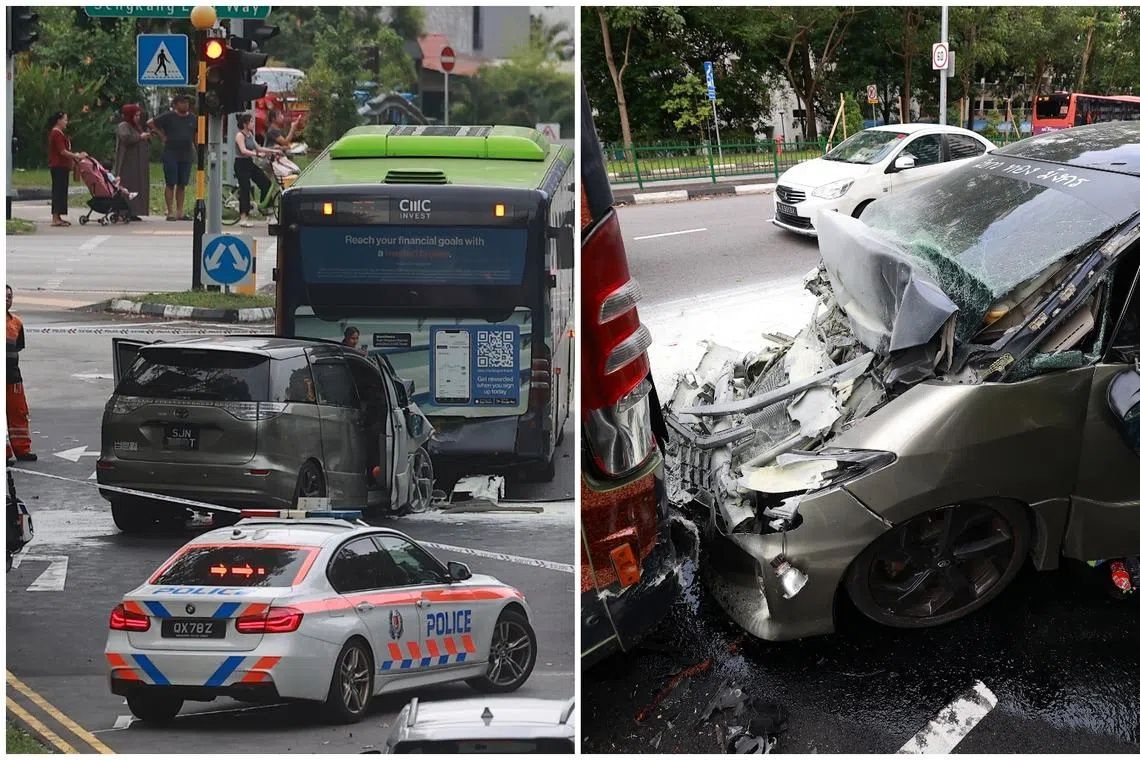
A particularly tragic case illustrates the human cost of this escalating trend. On 13 May 2025, a vehicle driven by a man collided with a bus in the Punggol area, with the driver's female passenger occupying the seat beside him. The impact proved catastrophic for the woman, who died from her injuries sustained in the collision. Police investigation revealed the driver's vehicle contained 42 vaping devices and more than 1,200 pods, with several containing etomidate. Subsequent blood testing confirmed the presence of etomidate in both the driver and the deceased passenger, establishing substance impairment as a contributing factor in her death. This case transcended statistics, highlighting how the choices of a single impaired motorist could extinguish lives and devastate families.
Three men processed through the courts in June exemplify the diverse manifestations of this problem and the range of substances involved. Mohamed Firdouz Mohamed Akram, 36 years old, faced multiple charges on 19 June for causing injuries whilst driving dangerously in the Kallang area after consuming methamphetamine. His vehicle collided with a taxi, injuring both the taxi driver and a passenger, yet Firdouz abandoned his vehicle at the scene and fled before police apprehension. Police discovered drugs, vaporising equipment, and weapons within his car. On 10 June, Puah Zhe Cong, aged 34, appeared in court facing seven charges including dangerous driving that caused a death and failure to remain at an accident scene after allegedly consuming etomidate. His impaired driving resulted in one fatality and two injuries. Three days earlier, Sivakandesh, 32 years old, faced charges for methamphetamine-impaired driving after his Mercedes-Benz struck bollards, a parked vehicle, and a refuse chute on Yishun Street 11, with the driver subsequently removing registration plates from the vehicle.
The legal framework governing these offences establishes graduated penalties designed to deter impaired driving. First-time offenders convicted of operating a vehicle whilst under the influence of intoxicating substances face potential imprisonment of up to one year, fines reaching S$10,000, or both penalties combined. Repeat offenders encounter substantially harsher consequences, including up to two years' imprisonment and fines as high as S$20,000. Despite these statutory provisions, the frequency of incidents suggests either inadequate deterrence, insufficient enforcement, or broader social factors driving substance use among drivers that legal penalties alone cannot address.
The broader trajectory of Singapore's traffic fatality data underscores the urgency of the drug-impaired driving problem within the context of road safety generally. The 149 deaths recorded in 2025 represent the highest annual toll in a decade, exceeding the 142 deaths in 2024 and the 141 deaths in 2016, the previous comparative benchmark. Injuries similarly climbed sharply, rising from 9,342 in 2024 to 9,955 in 2025. These aggregate figures encompass all traffic fatalities and injuries, but the drug-related subset's acceleration within this expanding total suggests substance impairment accounts for an increasingly disproportionate share of the road toll. Police statements issued on 18 June characterised driving whilst impaired by drugs as profoundly dangerous and irresponsible, signalling official determination to treat the issue with gravity.
For Malaysia and other Southeast Asian nations observing Singapore's experience, the emergence of etomidate-laced vapes as a driving hazard presents a cautionary tale regarding novel substances that exploit existing regulatory frameworks. The anaesthetic's distribution through vaporising devices circumvents traditional drug enforcement mechanisms designed around conventional consumption methods and established narcotics. The fact that a prescription anaesthetic could circulate in recreational form, branded as consumer products, suggests regulatory gaps and supply-chain vulnerabilities that neighbouring countries would be wise to examine proactively. Singapore's experience indicates that substance impairment, whether from traditional stimulants or novel anaesthetic products, poses escalating risks to road safety across the region and warrants coordinated policy responses beyond individual jurisdictions.
%22%2F%3E%3C%2Fpattern%3E%3C%2Fdefs%3E%3Crect%20width%3D%22100%25%22%20height%3D%22100%25%22%20fill%3D%22url(%23ph29bu7g)%22%2F%3E%3Crect%20width%3D%22100%25%22%20height%3D%22100%25%22%20fill%3D%22url(%23ph29bu7p)%22%2F%3E%3Ctext%20x%3D%2250%25%22%20y%3D%2250%25%22%20text-anchor%3D%22middle%22%20dominant-baseline%3D%22central%22%20fill%3D%22rgba(255%2C255%2C255%2C0.95)%22%20font-family%3D%22Georgia%2C%20'Times%20New%20Roman'%2C%20serif%22%20font-weight%3D%22700%22%20font-size%3D%22272%22%20letter-spacing%3D%22-0.02em%22%3EJohor%3C%2Ftext%3E%3C%2Fsvg%3E)
%22%2F%3E%3C%2Fpattern%3E%3C%2Fdefs%3E%3Crect%20width%3D%22100%25%22%20height%3D%22100%25%22%20fill%3D%22url(%23ph1i38g)%22%2F%3E%3Crect%20width%3D%22100%25%22%20height%3D%22100%25%22%20fill%3D%22url(%23ph1i38p)%22%2F%3E%3Ctext%20x%3D%2250%25%22%20y%3D%2250%25%22%20text-anchor%3D%22middle%22%20dominant-baseline%3D%22central%22%20fill%3D%22rgba(255%2C255%2C255%2C0.95)%22%20font-family%3D%22Georgia%2C%20'Times%20New%20Roman'%2C%20serif%22%20font-weight%3D%22700%22%20font-size%3D%22170%22%20letter-spacing%3D%22-0.02em%22%3EJudicial%3C%2Ftext%3E%3C%2Fsvg%3E)