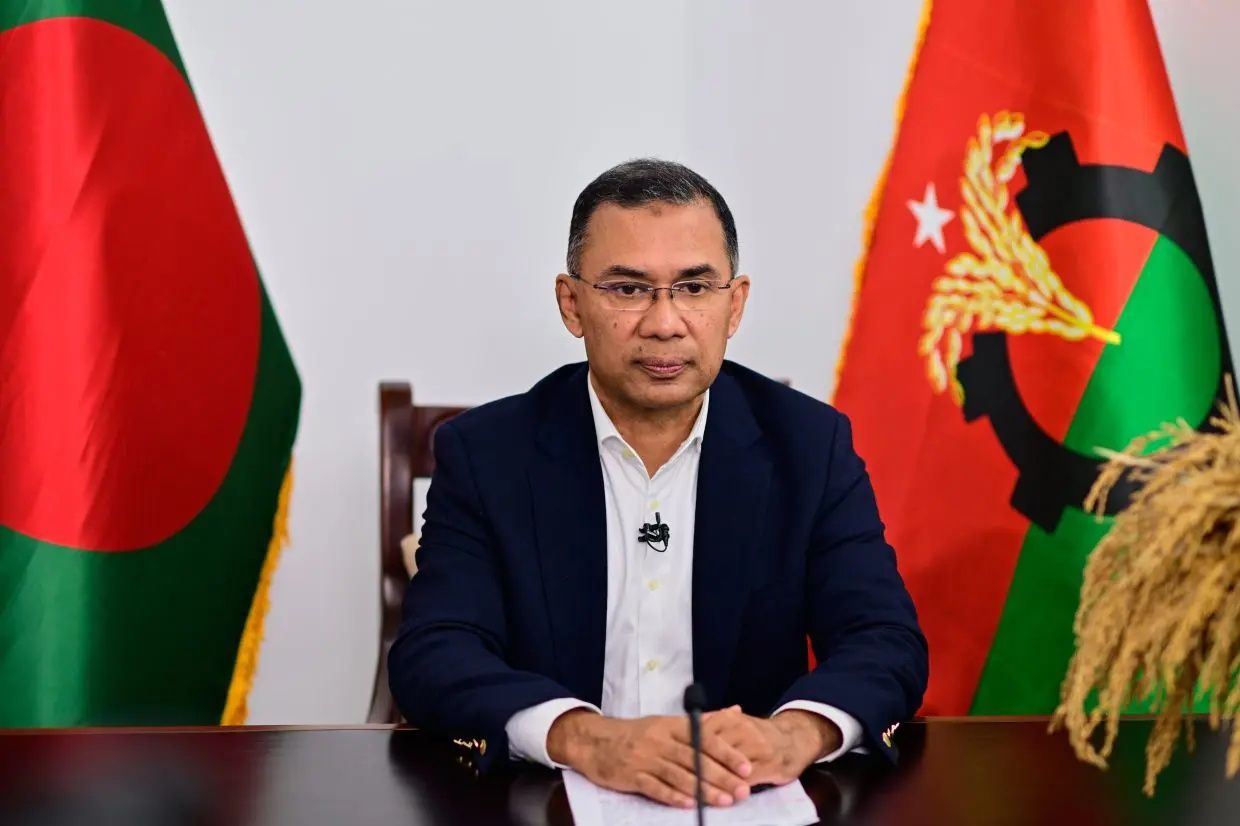
Bangladesh's newly installed Prime Minister Tarique Rahman is embarking on his inaugural foreign tour this weekend, with visits scheduled to Malaysia and China rather than the traditionally expected neighbouring India, marking a significant shift in the country's diplomatic positioning. The decision to bypass New Delhi in favour of engagements with Kuala Lumpur and Beijing underscores the changing dynamics of South Asian relations following Rahman's electoral victory earlier this year and the political upheaval that preceded it.
Rahman will arrive in Malaysia on Sunday before proceeding to China on Monday, according to Bangladesh's state-run news agency BSS, which cited foreign ministry representatives. The timing of these consecutive visits reflects Dhaka's deliberate strategy to prioritise economic partnerships at a critical juncture in the nation's stabilisation process. For Malaysia, the visit carries particular significance given the substantial Bangladeshi diaspora working throughout the country—approximately 800,000 individuals constitute more than a third of Malaysia's foreign workforce, making bilateral economic ties substantially interdependent.
The China leg of the journey will focus extensively on trade collaboration and infrastructure development initiatives, with discussions expected to encompass crucial long-term projects. Among the priorities is Chinese participation in the long-stalled Teesta project, an ambitious undertaking designed to rehabilitate and optimise one of Bangladesh's most vital waterways through comprehensive dredging operations, embankment reinforcement, and advanced irrigation systems. This initiative has remained dormant for years, and renewed momentum could have transformative consequences for agricultural productivity and water resource management across northern Bangladesh.
From the foreign ministry's perspective, these consecutive visits represent a deliberate diplomatic gambit aimed at fortifying Bangladesh's economic architecture during a period of internal consolidation. The government has framed the mission as a major strategic initiative intended to deepen partnerships with significant economic actors in the region, moving beyond traditional alignment patterns that characterised previous administrations. This repositioning reflects Rahman's administration's broader determination to chart an independent course in South Asian geopolitics.
The decision to begin the tour in Malaysia rather than India carries unmistakable political messaging, particularly given the fraught state of Bangladesh-India relations since the tumultuous 2024 uprising that toppled the previous government of Sheikh Hasina, who had maintained close alignment with New Delhi. Though relations have thawed somewhat following Rahman's February election victory and assumption of leadership from the interim administration that managed the country's 170 million population since Hasina's departure, underlying tensions persist and continue to complicate diplomatic efforts.
A critical flashpoint remains the status of former Prime Minister Hasina, who has maintained a clandestine presence in India since fleeing the revolutionary upheaval, and Dhaka has persistently demanded her extradition to face justice for alleged crimes committed during her tenure. This unresolved matter remains a lightning rod for public sentiment within Bangladesh, particularly among supporters of the movement that precipitated her downfall. The Indian government's continued protection of Hasina, whether explicit or tacit, serves as a constant reminder of diverging interests between the two nations.
Beyond the Hasina question, cross-border tensions have intensified along the India-Bangladesh frontier, where Indian authorities have systematically transported individuals categorised as undocumented migrants across the border into Bangladesh territory. These actions have fuelled resentment in Dhaka and generated ongoing public criticism of what Bangladeshi observers characterise as discriminatory and destabilising behaviour by New Delhi. The cumulative effect of these grievances has created diplomatic distance that Rahman's government appears reluctant to bridge through immediate rapprochement.
China's positioning as the destination following Malaysia reflects broader Asian geopolitical realities wherein Beijing has substantially expanded its regional influence, much to the consternation of New Delhi. The competition between Asia's two most populous nations for dominance within South Asia remains a defining feature of contemporary regional dynamics, with smaller neighbouring states navigating carefully between the interests of both powers. Bangladesh's decision to prioritise engagement with Beijing at this particular moment signals the Rahman administration's willingness to diversify partnerships and reduce dependency on traditional Indian primacy.
The visit also coincides with Bangladesh's pressing need for infrastructure investment and economic stimulus as the nation rebuilds institutional frameworks following the turmoil of recent political transitions. Chinese capital and technical expertise have proven attractive to numerous countries throughout Asia, and Bangladesh's participation in infrastructure projects aligned with Beijing's Belt and Road framework could accelerate development timelines for critical projects like the Teesta restoration initiative. For Rahman's government, demonstrating tangible progress on such fronts carries considerable domestic political weight as the administration seeks to consolidate support among the population.
Malaysia's substantial Bangladeshi workforce represents another dimension of strategic importance, as labour remittances constitute a vital source of foreign currency for Bangladesh while providing essential employment opportunities for millions of citizens. Strengthening ties with Kuala Lumpur during this inaugural tour signals recognition of mutual economic interdependence and commitment to facilitating the welfare of Bangladeshi workers within Malaysian territory. The visit provides an opportunity to address labour-related concerns and explore mechanisms for deepening commercial collaboration between the two nations.
Rahman's inaugural foreign engagement pattern suggests his administration intends to operate with greater independence from traditional South Asian alignments, particularly the India-centric orientation that characterised previous governments. By beginning his tenure with visits to Malaysia and China, the new Prime Minister is communicating to domestic audiences and international observers that Bangladesh intends to pursue its interests through diversified partnerships rather than deference to regional hegemons. This strategic recalibration will likely define the trajectory of Bangladesh's foreign policy for the coming years.
%22%2F%3E%3C%2Fpattern%3E%3C%2Fdefs%3E%3Crect%20width%3D%22100%25%22%20height%3D%22100%25%22%20fill%3D%22url(%23ph2fc1ig)%22%2F%3E%3Crect%20width%3D%22100%25%22%20height%3D%22100%25%22%20fill%3D%22url(%23ph2fc1ip)%22%2F%3E%3Ctext%20x%3D%2250%25%22%20y%3D%2250%25%22%20text-anchor%3D%22middle%22%20dominant-baseline%3D%22central%22%20fill%3D%22rgba(255%2C255%2C255%2C0.95)%22%20font-family%3D%22Georgia%2C%20'Times%20New%20Roman'%2C%20serif%22%20font-weight%3D%22700%22%20font-size%3D%22320%22%20letter-spacing%3D%22-0.02em%22%3EMOH%3C%2Ftext%3E%3C%2Fsvg%3E)