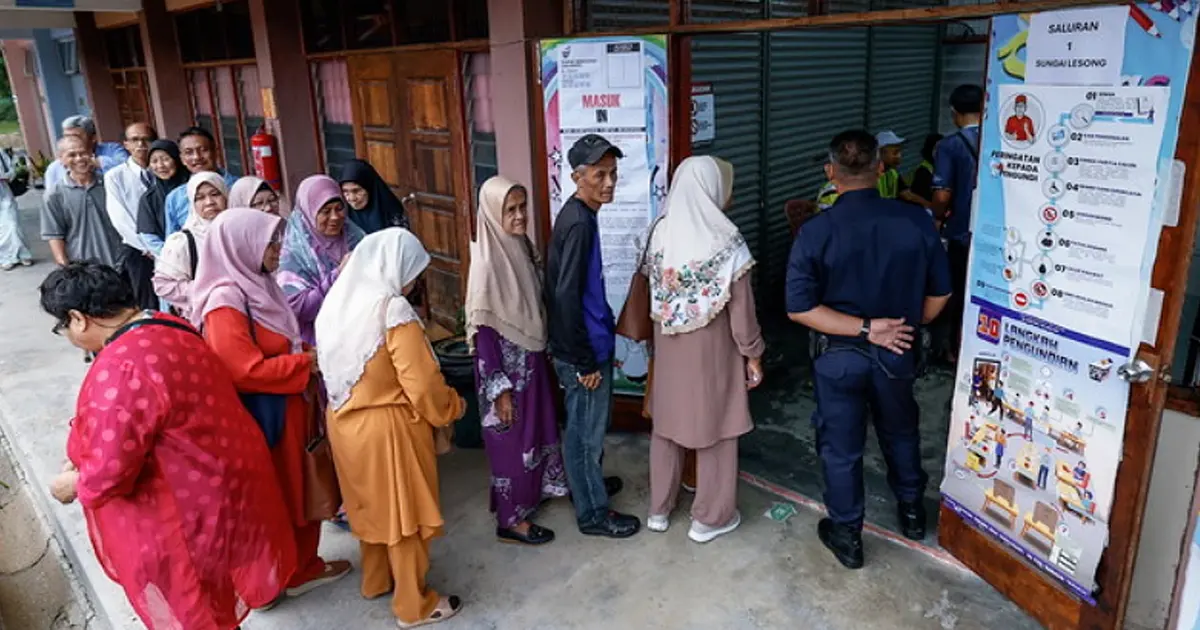
Prolonged debate over the so-called 3R issues threatens to exhaust Malay voters emotionally, potentially dampening their political participation and enthusiasm, according to a senior academic observer of Malaysian politics. Awang Azman Pawi, a scholar at Universiti Malaya, has flagged the risk that repetitive discourse around these sensitive matters may gradually disengage a key electoral demographic whose energy and turnout are considered vital to electoral outcomes across the country.
The observation comes as Malaysia navigates a particularly complex political moment, with multiple factions competing for support among Malay-Muslim constituencies. Rather than serving as a mobilising force indefinitely, the constant recitation of identity-related grievances and disputes could paradoxically lead to voter apathy, Awang Azman suggests. This dynamic reflects a broader truth about electoral behaviour: repeated exposure to the same messaging can produce diminishing returns, particularly when the underlying issues lack clear resolution pathways or when political actors appear trapped in cyclical disputes.
According to the analyst's assessment, the ultimate measure of political success extends beyond symbolic or ideological positioning. Instead, parties seeking to maintain or expand their electoral base must demonstrate concrete competence in addressing immediate challenges that affect voters' daily lives. The framework Awang Azman outlines emphasises performance-based evaluation rather than sentiment-driven loyalty, a shift that could reshape how Malaysian political parties strategise their appeals to Malay voters.
Cost-of-living pressures have emerged as a defining concern across Malaysia's economic landscape in recent years. Rising prices for essential goods, transport, utilities, and housing have squeezed household budgets across income levels, creating palpable frustration that political parties cannot easily dismiss or substitute with symbolic gestures. For many Malay voters, particularly those in lower and middle-income brackets, the ability to afford basic necessities takes precedence over abstract political debates, however emotionally resonant those debates might be in certain quarters.
The tension Awang Azman identifies reflects a growing sophistication among voters who increasingly scrutinise what politicians actually deliver rather than simply accepting rhetorical appeals. This represents a maturation of electoral consciousness, where issues of genuine material impact—inflation, employment, housing affordability—become the principal criteria for judging government and opposition effectiveness. Political parties that fail to address these tangible concerns risk appearing out of touch, regardless of their positioning on culturally significant matters.
For Malaysian policymakers and political strategists, the implication is clear: sustained engagement with Malay voters requires a dual commitment to both identity-oriented issues and bread-and-butter governance. The challenge lies in balancing these dimensions without allowing either to entirely overshadow the other. Voters expect parties to remain true to their foundational commitments while simultaneously demonstrating practical competence in delivering economic improvements and social stability.
The emotional fatigue phenomenon carries particular weight in a nation where electoral participation directly shapes governance outcomes. When significant voter cohorts experience exhaustion from repetitive messaging, turnout may decline, potentially altering electoral mathematics in unpredictable ways. Lower engagement could advantage certain parties while disadvantaging others, creating broader systemic effects on representation and government stability.
Historically, Malaysian elections have turned partly on Malay voter mobilisation patterns, making the dynamics Awang Azman describes strategically significant across the political spectrum. Political coalitions that successfully integrate identity preservation with credible economic stewardship tend to maintain stronger voter loyalty than those emphasising one dimension at the expense of the other. The most successful parties have typically offered a comprehensive vision addressing both cultural concerns and material wellbeing.
Looking forward, the question for Malaysia's political class becomes whether parties can break from what appears to be an entrenched cycle of identity-focused disputation. Developing substantive policy platforms that tackle inflation, create employment, improve service delivery, and strengthen social infrastructure would signal to voters—particularly those experiencing the Malay voter base—that their concerns are being taken seriously. Such an approach would simultaneously honour cultural and political commitments while demonstrating the practical governance capacity voters increasingly demand.
Awang Azman's analysis ultimately suggests that Malaysian politics faces a pivotal moment. The party or coalition that successfully recalibrates its appeal to emphasise both identity-rooted concerns and transformative economic management may find itself best positioned to command sustained voter support. Conversely, those remaining locked in perpetual 3R disputes risk watching their core constituencies drift toward competitors offering more comprehensive solutions to the challenges defining voters' lived experiences. The road ahead depends significantly on whether Malaysia's political leaders recognise and respond to this fundamental shift in voter priorities.