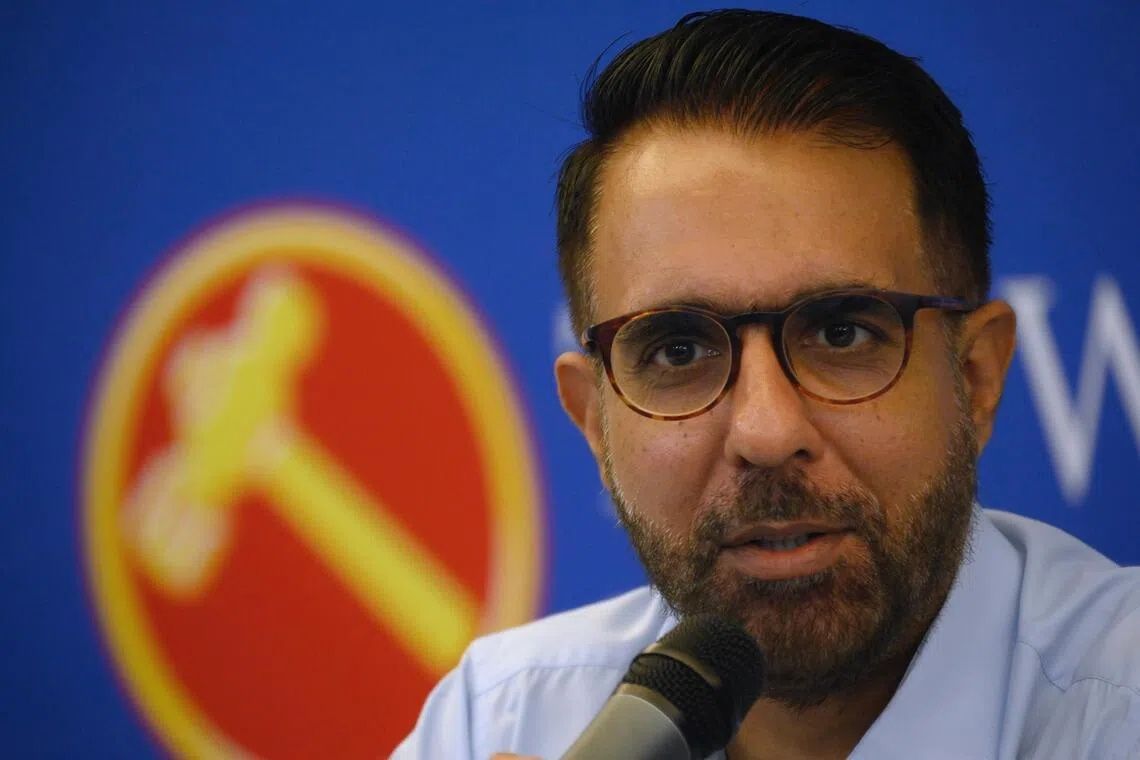
The Workers' Party faces a critical leadership juncture as disaffected members prepare to challenge Pritam Singh's continued tenure as secretary-general. Internal dissent has crystallized following a High Court decision in December 2025 upholding his conviction for providing misleading testimony to a parliamentary committee. The party's cadre elections scheduled for June 28 will determine whether Singh retains his position after eight years without facing meaningful opposition.
The push for leadership change represents a significant moment for Singapore's main opposition grouping. A cohort of more than 25 cadres, including former senior committee members and election candidates, formally requested a special conference in December 2025 to address Singh's conduct. These dissidents have been quietly approaching potential challengers among the party's senior MPs, seeking someone willing to stand for election, though none have publicly committed to running. The search reflects genuine tension within the party structure, with multiple senior figures mentioned as possible contenders, including Aljunied GRC MP Gerald Giam, Hougang MP Dennis Tan, and Sengkang GRC MPs He Ting Ru and Jamus Lim.
The immediate trigger for this uprising traces to Singh's handling of former Sengkang GRC MP Raeesah Khan's false parliamentary testimony from August 2021. Khan fabricated an anecdote during a debate, then maintained the falsehood for months before admitting the truth in November 2021. Parliamentary inquiries and subsequent court proceedings found that Singh had guided her in sustaining the deception. This sequence of events fundamentally undermined the opposition party's carefully cultivated brand as an alternative built on transparency and moral integrity, something cadres emphasize repeatedly in private conversations.
The conviction carries particular sting for an opposition party that has sought electoral advantage precisely by positioning itself as different from the ruling establishment. Multiple cadres have articulated this concern directly: the Workers' Party's appeal rests partly on voter confidence in its trustworthiness and ethical standards. When the party leader himself stands convicted of dishonesty, however, that foundational claim weakens considerably. The party received a formal letter of reprimand in April 2026, escalating internal pressure on Singh to step aside voluntarily. Yet he has indicated no intention to resign, setting the stage for what may become a contested election.
The procedural mechanics of June 28 contain multiple layers that could influence outcomes. The party will first hold a special cadre conference where Singh must account for his actions before the conviction and face calls for his resignation. A secret ballot vote on his fate may follow if he declines to step down voluntarily. Subsequently, the party will convene its regular biennial cadre conference to elect the full leadership slate, including the secretary-general position. This dual-meeting structure creates multiple pressure points and decision moments that could shift the trajectory of events.
A pivotal wildcard involves former party chief Low Thia Khiang, who led the Workers' Party from 2001 to 2018 and engineered its historic first GRC victory in 2011. Low currently sits on the party's central executive committee and reportedly voted against Singh during recent disciplinary proceedings, suggesting his support may have eroded. Cadre insiders believe Low retains substantial influence over party voting patterns. Should Low publicly back a challenger, the mathematics could shift decisively: approximately 30 dissatisfied cadres combined with those loyal to Low could potentially command the simple majority required to remove Singh. Intriguingly, Low himself faced a leadership challenge in 2016 from former Aljunied GRC MP Chen Show Mao, backed by some of the same veteran cadres now calling for Singh's removal.
The party's recent electoral performance has compounded Singh's leadership vulnerabilities. The 2025 general election disappointed many cadres who believed the Workers' Party fielded a sufficiently strong slate to contest another constituency. The failure to gain ground, combined with Singh's decision to withdraw from Marine Parade-Braddell Heights GRC on Nomination Day, has sparked private criticism about strategic judgment. These accumulating grievances interact with the conviction issue to create a broader narrative of leadership inadequacy. Some cadres have also questioned the party's decision to decline the Prime Minister's invitation to nominate another MP as Leader of the Opposition, viewing this as unnecessarily sacrificing parliamentary prominence to maintain unity around Singh.
The question of whether a challenger will actually emerge remains genuinely fluid heading into June. Party insiders acknowledge that developments at the first special conference could influence whether someone steps forward for the second election. If Singh is voted out or wins by only a narrow margin, potential candidates may feel emboldened to run. Conversely, if Singh achieves a decisive victory at the special conference, dissidents may lack momentum to field a credible challenger for secretary-general. The secrecy surrounding cadres' positions, combined with awareness of potential disciplinary action against public critics, creates genuine uncertainty about alignment.
The integrity narrative driving the revolt deserves particular attention for Malaysian and regional observers monitoring Singapore politics. Opposition parties across Southeast Asia frequently position themselves as cleaner alternatives to incumbent governments. The Workers' Party built considerable equity with this positioning in Singapore's context. Yet when the party leader himself faces conviction for dishonesty, that entire brand promise contracts. This dynamic contains lessons for how opposition movements construct identity and credibility. A party claiming moral superiority must manage internal crises with exceptional transparency and accountability, or risk losing not just voter confidence but internal cohesion.
Several factors create openings for Singh to survive the June challenge. He faces no incumbent advantage burden and only requires a simple majority. The pool of willing challengers remains modest, and stepping forward carries real costs including exposure to public scrutiny and factional criticism. Singh has demonstrated organizational skill during his tenure, building relationships across the party apparatus. His eight years without opposition also reflects some level of acceptance among cadres, even if currently strained. However, the convergence of legal conviction, electoral disappointment, and leadership performance concerns presents a genuine threat to his continued tenure.
For Singapore's opposition landscape more broadly, a leadership transition or contested election would signal significant internal reckoning. The Workers' Party remains the dominant non-establishment force in Parliament, and its internal health directly affects opposition capacity to challenge government policy and provide parliamentary scrutiny. A divided party could paradoxically weaken opposition voice at a moment when some voters appear frustrated with electoral outcomes. Conversely, resolving leadership questions through contested elections rather than backroom consensus could strengthen organizational legitimacy. Regional observers will watch whether the party's internal democratic mechanisms produce renewal or entrenchment.

