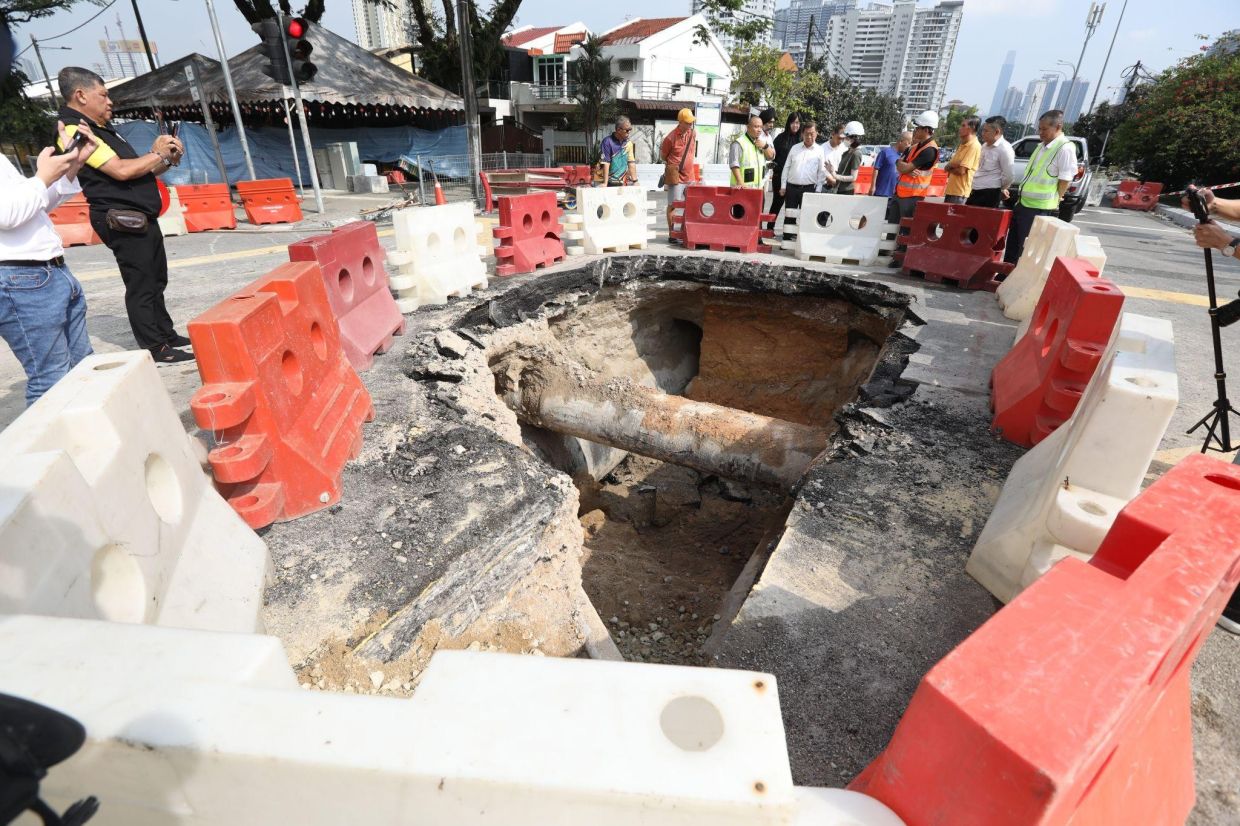
Malaysia's sewerage infrastructure faces mounting pressure as climate patterns grow more volatile and rainfall events intensify. The risk of sinkholes—sudden ground collapses that endanger public safety and damage critical infrastructure—has emerged as a pressing concern for the nation's water utilities. Indah Water Konsortium (IWK), the country's primary sewerage management body, is responding with a comprehensive approach combining technological innovation, preventive maintenance and enhanced emergency preparedness to protect communities and ensure the stability of an essential service that few Malaysians think about until disaster strikes.
Sinkholes result from a complex interplay of natural and human-induced factors. Beneath every city and town lies a hidden world of geological conditions, underground water flows, construction disturbances and ageing infrastructure—all of which can interact to create instability. No two sinkhole incidents develop identically; each collapse follows its own pathway depending on local soil composition, depth of sewer lines, historical construction practices and current water saturation levels. Determining what went wrong requires sophisticated technical investigation, yet the underlying vulnerabilities are increasingly predictable and manageable through modern asset management techniques.
With responsibility for approximately 22,500 kilometres of public sewer pipelines nationwide, IWK has prioritised the large reinforced concrete trunk sewers—those measuring 600 millimetres in diameter and above—that form the backbone of Malaysia's sewerage network. These major pipelines operate under constant strain, frequently running at or near maximum capacity and carrying sewage at high velocities. The internal environment proves particularly corrosive; prolonged exposure to hydrogen sulphide gas accelerates concrete degradation, weakening structural integrity and creating pathways toward failure. Understanding this vulnerability hierarchy allows IWK to allocate resources where risks run highest.
The utility's mitigation strategy rests on systematic condition assessment using technologies that would have seemed science fiction to previous generations. Ground Penetrating Radar (GPR) and Closed-Circuit Television (CCTV) crawler inspections allow engineers to visualise pipe interiors and surrounding soil conditions without excavation. Push rod and pole cameras provide supplementary views of difficult-to-reach sections. This technological toolkit reveals developing problems long before they surface—literally—as dangerous sinkholes. By establishing baseline conditions and tracking deterioration over time, IWK builds the evidence base necessary for targeted rehabilitation investments.
When inspections identify defects, IWK employs advanced rehabilitation techniques including trenchless sewer lining—a method that installs new pipe material inside existing pipes without major excavation—and selective pipe replacement where damage proves beyond restoration. These interventions restore structural integrity and prevent the cascading failures that transform minor leaks into catastrophic collapses. The investment in preventive maintenance proves far more cost-effective than responding to emergency sinkholes that disrupt traffic, endanger lives and require expensive emergency repairs.
The relationship between extreme weather and underground infrastructure vulnerability has become increasingly apparent to IWK leadership. According to IWK chief executive officer Narendran Maniam, Malaysia's growing climate unpredictability demands that the utility rethink traditional approaches to sewerage management. Intense rainfall events trigger multiple failure mechanisms simultaneously. Heavy downpours destabilise soil by increasing groundwater saturation, reducing soil strength and enabling ground shifting that displaces or misaligns sewer pipes. Blockages and fractures often follow, creating paths for sewage to escape and contaminate surrounding soils.
Evenmore problematic, rainfall-induced surges dramatically increase water pressure within sewer lines. Pipes under sustained pressure crack or burst, generating leaks that allow surrounding soil to wash away into underground voids. As these cavities expand beneath the surface, the ground above progressively loses support until the entire overlying layer suddenly collapses into a sinkhole. The process accelerates when older pipes—common throughout Malaysia's urban centres—deteriorate from decades of service. When ageing infrastructure encounters modern extreme weather, the results can be catastrophic.
The phenomenon extends beyond direct pipe failure. Large rainfall events introduce massive volumes of stormwater into sewerage systems through cracks, joints and manhole openings—infiltration that overloads treatment facilities and exerts sustained pressure on infrastructure designed for different flow rates. Older pipe networks prove especially vulnerable to this shock loading, responding with shifts, cracks and progressive deterioration. Without proactive intervention, Malaysian cities face an escalating cycle of pipe failures, traffic disruptions and public safety incidents as climate extremes become routine rather than exceptional.
Recognising that readiness depends on more than technology and maintenance protocols, IWK recently conducted a comprehensive Crisis Simulation Exercise at its Asian Sewerage Training, Research & Innovation Centre of Excellence (ASTRICE). The scenario imagined a major sinkhole involving casualties and suspected damage to critical sewerage infrastructure—a plausible nightmare that demanded mobilisation of operational teams, crisis management expertise and coordination with the Fire and Rescue Department, Royal Malaysia Police and other government agencies. The simulation tested decision-making under pressure, inter-agency communication and the ability to implement response procedures when lives depend on speed and accuracy.
Narendran reflected on the exercise's value, noting that simulation environments allow organisations to identify procedural gaps without suffering actual consequences. IWK's team discovered opportunities to strengthen coordination, streamline communication protocols and clarify roles during emergencies. The exercise generated concrete improvements to crisis management standard operating procedures, ensuring employees understand their responsibilities and can execute them effectively when real emergencies occur. Documentation of lessons learned creates institutional memory that persists across staff changes and training cycles.
The simulation revealed broader truths about emergency preparedness in Malaysia's critical infrastructure sectors. As extreme weather becomes increasingly common rather than occasional, the margin for error shrinks dramatically. Communities depend on sewerage systems functioning reliably even when storms test infrastructure to breaking points. Through continuous planning, scenario-based training and deepened collaboration with emergency response agencies, IWK is working to shift from reactive crisis response toward anticipatory resilience. The goal extends beyond surviving individual incidents to building systems robust enough to weather whatever climate change delivers.
For Malaysian households and businesses, these efforts remain largely invisible—which represents success. When sinkholes suddenly appear on neighbourhood streets, they become impossible to ignore, yet the deeper reality involves countless kilometres of underground pipes quietly conveying waste away from cities. IWK's commitment to protective maintenance, technological investment and emergency preparedness operates in the background to keep that invisible service functional. As rainfall patterns continue shifting, infrastructure that seemed adequate just years ago may prove insufficient; hence the ongoing need for innovation, vigilance and cross-agency coordination to ensure this essential service endures.

