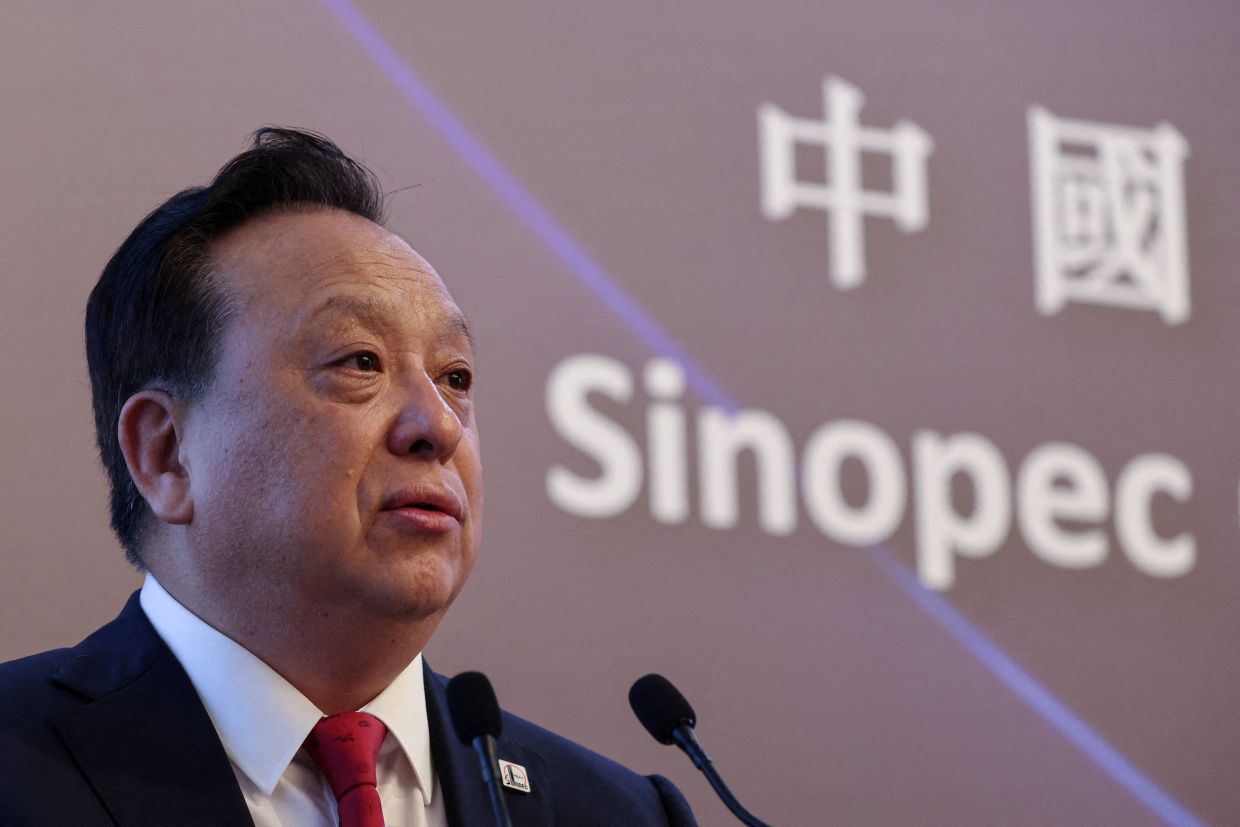
Hou Qijun, appointed Sinopec chairman just over a year ago, is pursuing an ambitious modernisation programme at the world's largest oil refiner at a stage when many Chinese state executives would contentedly approach retirement. His strategic overhaul addresses mounting structural challenges: shrinking demand for conventional fuels, excess capacity in petrochemicals, and the cascading effects of global energy market disruptions. Rather than maintain the status quo, Hou has chosen to confront what he characterises as systemic obstacles that threaten the company's long-term viability in a carbon-constrained world.
The centrepiece of Hou's restructuring involves reorganising Sinopec's sprawling operations into four distinct profit centres, each with enhanced autonomy to respond to market conditions. These divisions—encompassing oil, gas and new energy; refining and chemicals; finance and strategic business development; and global trading alongside fuel and chemicals marketing—represent a radical departure from traditional hierarchical structures that have historically slowed decision-making. By decentralising authority and establishing clear financial accountability, Hou aims to inject agility into a corporation that he himself acknowledges has become unwieldy.
In remarks published by China's State-owned Assets Supervision and Administration Commission in July, Hou articulated his diagnosis with uncommon candour for a state enterprise executive. He identified institutional inertia and organisational bloat—the "big company syndrome"—as the true obstacles to transformation, rather than technological or resource constraints. This frankness signals a willingness to challenge entrenched interests within the organisation, a posture that distinguishes him from predecessors content to manage decline. His diagnosis reflects a sophisticated understanding that structural reform matters as much as investment in new technologies.
The competitive pressures facing Sinopec are formidable and multifaceted. Fuel sales have retreated to 2017 levels, eroding the revenue base that historically sustained the corporation. The company distributed approximately 3.6 million barrels daily of petrol and diesel last year, predominantly to domestic consumers, yet this scale has become a vulnerability rather than a strength. The accelerating electrification of vehicle fleets—Hou noted that half of new cars sold no longer require petrol—fundamentally undermines the traditional refinery model. As conventional fuel demand contracts, Sinopec risks operating excess capacity while competitors adapt faster to market shifts.
Hou's strategic pivot centres on repositioning Sinopec as a diversified chemicals and energy materials producer rather than a conventional refiner. He has committed to allocating approximately 20 per cent of annual capital expenditure—exceeding 30 billion yuan ($4.46 billion)—towards new energy and advanced materials development through 2030. This reallocation reflects his conviction that long-term prosperity depends on transitioning from hydrocarbon extraction to manufacturing higher-value chemical compounds and renewable energy infrastructure. The company targets completing more than thirty major projects by the end of the decade, spanning reserve development, shale oil extraction, sustainable aviation fuel production, and refining cost reduction.
Yet Sinopec's petrochemicals ambitions encounter intense competition from rival operators. State-backed enterprises like Wanhua Chemical and privately-managed companies such as Satellite Chemical control significant market share in key segments. Ethylene production, a foundational input for plastics and synthetic fibres, faces structural overcapacity that constrains pricing power and profitability. Breaking through this competitive environment requires not merely capital investment but technological superiority and operational excellence—both of which Hou has demonstrated through previous roles.
Hou's background as a geologist and his career trajectory illuminate why SASAC selected him for this demanding role. He ascended through China's energy sector via the prestigious Daqing oilfield before leading the Asia-Pacific operations of China National Petroleum Corp, the nation's largest integrated energy producer. Most significantly, he orchestrated the consolidation of pipeline assets from China's three major oil corporations into PipeChina between 2019 and 2021, a consolidation that required navigating complex stakeholder interests and delivering tangible operational gains. Colleagues describe him as decisive, action-oriented, and capable of extended strategic discourse without notes, qualities essential for leading wholesale organisational change.
Sinopec's shale oil development at the Jiyang trough within the Shengli oilfield represents a critical test case for Hou's strategic vision. Conventional reserves at China's historic production hub are depleting, forcing investment in more technically demanding extraction methods. Hou has personally positioned himself as the project's commanding officer, signalling the priority he assigns to this initiative. Success here could demonstrate that Sinopec retains technological competence and capital discipline amid the energy transition, while failure would validate critics who argue state enterprises cannot compete effectively in capital-intensive, technically complex domains.
From a regional perspective, Sinopec's transformation carries significance for Southeast Asia and broader Asia-Pacific energy security. As the world's largest refiner by throughput, Sinopec's success or failure in adapting to demand destruction and competitive pressures influences pricing, supply chain stability, and investment patterns across the region. Chinese state enterprises typically export their capital and operational models to neighbouring economies; Hou's restructuring approach could become a template for state-owned energy companies across Asia. Additionally, Sinopec's commitment to new materials and sustainable fuels production positions it as a competitor in emerging value chains that Malaysia, Singapore, and Vietnam aspire to develop.
The financial results Sinopec reported for the first half of 2026 provide a temporary cushion for strategic investments. Despite exposure to oil supply disruptions stemming from the Iran conflict and domestic price controls that limit margin expansion, the company recorded a 19 per cent rise in net profit. This performance offers Hou political capital to justify capital reallocation towards lower-margin but strategically essential segments, and to absorb potential losses during the transition period. However, this window of opportunity may not persist indefinitely should geopolitical calms stabilise fuel supplies or should demand destruction accelerate.
The question confronting Sinopec—and indeed all state-owned energy enterprises globally—centres on whether integrated operations can compete effectively with specialised, privately-managed competitors in emerging energy and materials sectors. Hydrogen production, carbon capture technologies, and advanced battery materials represent domains where nimble private companies and focused state ventures have demonstrated advantages. Oxford Institute analysts note that Hou's background and government backing provide advantages in pursuing commercially challenging investments, yet such support cannot substitute for technological innovation and market discipline.
Hou's appointment and mandate represent a calculated wager by Chinese leadership that the state sector remains capable of leading energy transformation rather than merely managing decline. At age 60, with most Chinese executives departing leadership roles by 63, his willingness to undertake radical restructuring rather than coast into retirement suggests either profound confidence in his strategy or unusual pressure from political overseers to succeed. Either way, his tenure at Sinopec will substantially determine whether China's state energy enterprises can navigate the energy transition or whether that leadership passes to more nimble, technology-focused competitors.

