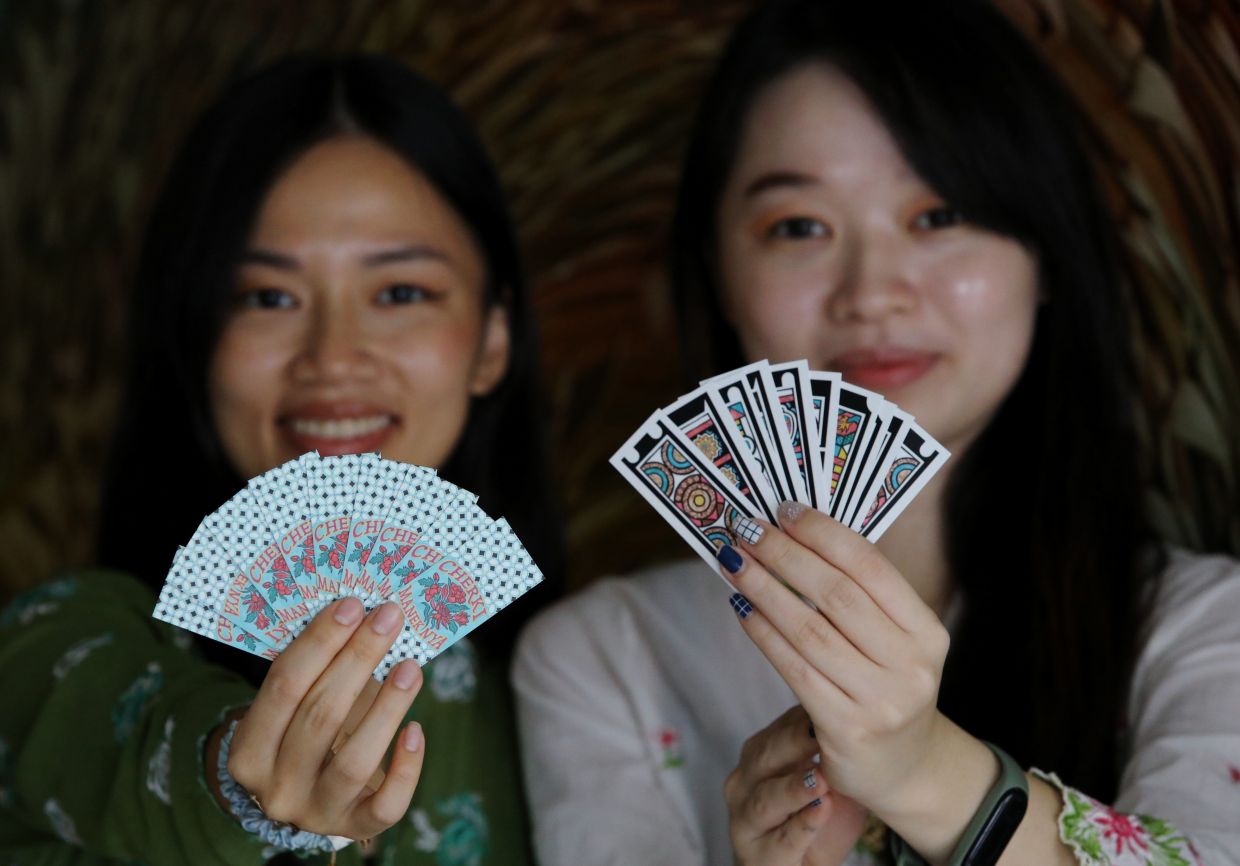
Two Malaysian sisters are undertaking a quiet but meaningful cultural mission: rescuing a centuries-old Peranakan card game from obscurity. Lee Swee Lin, 32, and Lee Swee May, 31, have reimagined Cherki, a traditional game once central to Baba Nyonya households, by introducing bold colours and contemporary aesthetics while preserving its ancestral symbols and structure. The sisters, who operate a Kuala Lumpur-based enterprise focused on Peranakan beaded footwear and decorative items, released their redesigned deck in 2024 as part of a broader effort to ensure that their community's cultural heritage does not fade into historical obscurity.
While Peranakan culture remains celebrated through its distinctive visual markers—the ornate beaded slippers, intricately embroidered baju kebaya, glazed tiles, and celebrated dishes such as ayam buah keluak and Nyonya laksa—fewer people today recognise or understand Cherki, a game that once entertained families across the Peranakan diaspora. The original cards featured only simple monochrome designs, limiting their appeal to modern sensibilities. Lee Swee Lin and her sister recognised that for Cherki to survive, it needed to speak to contemporary audiences without abandoning its essence. Their redesigned deck maintains the game's traditional three-suit structure—coins, strings and myriads—alongside three special cards, now reimagined as butterfly, dragon and phoenix instead of the historical white flower, red flower and old thousand. Yet each card now showcases distinct Peranakan cultural symbols: the kantan, a fragrant flower essential to Nyonya cuisine; the chupu, traditional porcelain jars for serving food; the kerongsang, ornamental brooches that fastened kebaya garments; and the gelang, bracelets favoured by Nyonya women.
The sisters' motivation for this project runs deeply personal. Lee Swee Lin credits their paternal grandmother, Deo Yeok Kim, as their primary inspiration and cultural conduit. Growing up largely in their grandmother's Melaka home, the sisters absorbed Peranakan traditions through observation, storytelling, food preparation and daily domestic practice. Following their grandmother's recent passing, they realised how much of their cultural knowledge stemmed directly from her living example. This recognition propelled them to document and preserve aspects of heritage that might otherwise slip away as older generations pass. The beading expertise that underpins their commercial enterprise—learned from their mother and grandmother—carries forward these ancestral teachings, infusing even their modern business venture with inherited meaning and purpose.
Yet the sisters' initiative addresses a broader communal challenge. Younger Peranakans today face increasing disconnection from their roots, a phenomenon documented in a 2022 comparative cultural study examining Baba Nyonya descendants in Melaka. That research highlighted how younger community members, exposed to global pop culture and digital entertainment, increasingly prioritise contemporary interests over traditional practices. The competing demands of modern life—career ambitions, urban living, and social media engagement—leave limited space for cultural activities that many view as peripheral rather than essential. Lee Yuen Thien, 36, deputy president of Persatuan Peranakan Baba Nyonya Malaysia (PPBNM) and manager of the Baba & Nyonya Heritage Museum Melaka, corroborates this assessment, noting that busy professionals rarely allocate time to heritage pursuits. With an estimated 10,000 to 15,000 Peranakans nationwide and the association maintaining 3,000 members, demographic and social shifts have fundamentally altered how younger generations engage with ancestral traditions.
Migration patterns have intensified this estrangement. As Peranakans dispersed from ancestral strongholds in Melaka and Penang to urban centres across Malaysia and beyond, the family structures that traditionally transmitted cultural knowledge fractured. Mixed marriages, accelerating globalisation and the normalisation of digital leisure have collectively reshaped community identity and practice. Lee Yuen Thien argues that reduced intergenerational exposure within families, compounded by geographical distance from cultural heartlands, has created a generation gap in heritage literacy. Fewer young Peranakans learn traditional games, cooking techniques or language from elders because fewer opportunities exist within nuclear family settings. This rupture in the transmission chain threatens the continuity of practices that define Peranakan identity.
Cherki itself carries historical significance extending beyond Malaysian borders. The game, also known as Ceki, Chi Kee or Koa, emerged from China—Tang Dynasty records from the ninth century reference a "leaf game"—and travelled westward along medieval trade routes to eventually reach Europe by the fourteenth century. In the region, it gained prominence across Singapore, Malaysia, Indonesia and Thailand, with Malay-speaking communities adopting the term "daun ceki" (literally "leaf cards"), which Peranakans subsequently integrated into their own nomenclature. The game's traditional structure employs two decks of 60 cards featuring 30 patterns repeated twice, with gameplay mechanics resembling mahjong in complexity and social function. This shared heritage across Southeast Asia underscores Cherki's regional importance and its vulnerability to modern cultural attrition.
The Lee sisters approached their redesign methodically. Working with a small design team and deploying digital tools including Procreate and Adobe Illustrator, they expanded the card deck to feature 30 patterns repeated four times rather than twice, maintaining structural integrity while increasing playability and aesthetic variety. Importantly, they developed clearer instructional materials, recognising that newcomers faced barriers to entry when learning rules transmitted only through oral tradition or observation. The visual modernisation—accomplished through contemporary illustration techniques and deliberate colour application—transforms Cherki from a curiosity relegated to museums into an object genuinely appealing to current players. As Lee Swee May explains, their objective was creating a game "you want to pull out with friends today, not something stuck in a history book." This philosophy acknowledges a fundamental truth: heritage practices survive not through academic preservation but through active, enjoyable engagement.
Lee Yuen Thien advocates for precisely this approach: allowing culture to evolve with time while simultaneously building awareness among younger generations about their ancestry. He contends that sparking interest in heritage continuity requires making tradition relevant and accessible rather than insisting on rigid adherence to historical forms. The Lee sisters' initiative embodies this adaptive philosophy, demonstrating that modernisation and authenticity need not conflict. By rendering Cherki visually compelling, easier to learn and genuinely fun to play, they create pathways for younger Peranakans to discover something meaningful about their identity without requiring them to abandon contemporary sensibilities.
The broader implications of this project extend beyond a single card game. The Lee sisters' work exemplifies how cultural preservation in the twenty-first century demands creativity, investment and willingness to meet younger generations where they are culturally and technologically. Their success—or lack thereof—will signal whether heritage communities can effectively adapt ancestral practices for modern contexts. For Malaysia's Peranakan community, already navigating profound demographic and social transformations, such initiatives represent essential infrastructure for cultural survival. The redesigned Cherki deck becomes more than a novelty product; it becomes a test case for whether traditions can remain vital by evolving, whether heritage can feel contemporary without becoming diluted, and whether reconnection with cultural roots remains possible even as communities scatter and lifestyles transform. As younger Peranakans face unprecedented exposure to global influences and competing leisure options, the availability of heritage activities designed with their preferences in mind may prove decisive in determining whether these traditions flourish or gradually fade from living practice into historical record.

