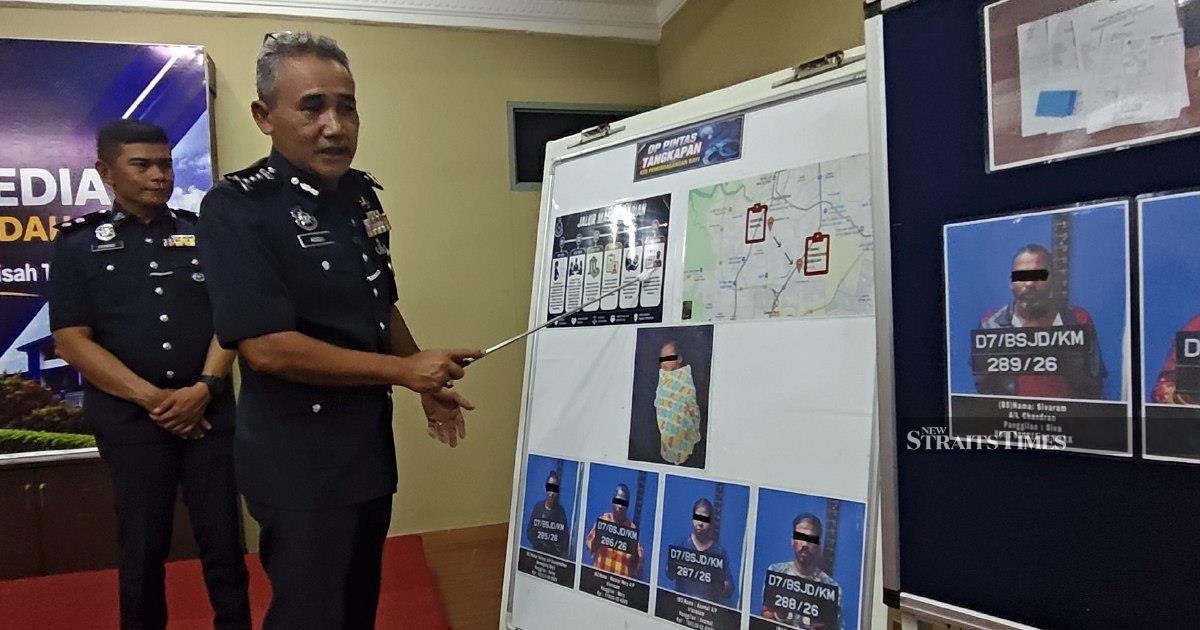
Authorities in Kedah have apprehended six individuals as part of an ongoing investigation into suspected baby trafficking operations centred in the Kuala Muda district. Among those detained is a mother who had given birth merely five days before her arrest, raising questions about the circumstances surrounding her involvement and potential coercion in the alleged scheme.
The arrests mark another significant law enforcement action targeting trafficking networks that exploit vulnerable populations, particularly newborns and infants. Baby trafficking remains a persistent criminal activity across Southeast Asia, with perpetrators often targeting desperate parents, impoverished families, and women in precarious circumstances. The inclusion of a recently postpartum woman in this case suggests traffickers may deliberately target individuals in vulnerable health and financial situations immediately following childbirth.
Investigators in Kedah have not yet disclosed comprehensive details regarding the alleged operation's scope, duration, or the number of infants potentially affected. However, such networks typically operate through a complex system involving recruitment agents, medical personnel, false documentation specialists, and placement facilitators across multiple states. The involvement of someone in the immediate postpartum period hints at potential coordination with healthcare facilities or informal birthing arrangements that bypass official medical oversight.
Baby trafficking in Malaysia represents a multifaceted challenge that combines elements of human trafficking, child exploitation, and organised crime. Criminals leverage several pathways to acquire infants, including targeting women facing economic hardship, those in unstable relationships, migrant workers with limited legal protection, and individuals experiencing postpartum vulnerability. The subsequent placement of trafficked infants occurs through illegal adoption networks, sale to childless couples unable to navigate legitimate adoption channels, or exploitation for labour and other purposes.
The Kuala Muda case underscores how trafficking networks exploit structural gaps in Malaysia's child protection systems. Despite existing regulations governing adoption and child welfare, enforcement inconsistencies, corruption, and coordination failures between agencies create opportunities for criminals to operate. Additionally, the involvement of a postpartum mother raises concerns about whether trafficking occurred through deception, financial coercion, or outright trafficking of the woman herself—situations where the mother becomes both perpetrator and victim.
Malaysia's legal framework addressing trafficking includes the Human Trafficking Act 2015, which carries substantial penalties including imprisonment up to 15 years and fines. However, prosecuting baby trafficking cases presents unique evidentiary challenges, including establishing criminal intent when biological mothers participate, tracing paper trails through falsified documentation, and locating displaced infants. Child welfare authorities must balance criminal investigation priorities with immediate protection needs of rescued infants, including medical assessments and psychological support.
Regional experts highlight how baby trafficking networks frequently operate across state borders and international boundaries, with infants moving between Malaysia, Thailand, Indonesia, and other neighbouring countries. Criminal syndicates exploit bilateral legal differences and enforcement variations to expand operations. The Kedah arrests suggest police coordination may be targeting a node within larger cross-border networks, though authorities have not confirmed interstate or international dimensions of this investigation.
For Malaysian readers, this case reflects broader concerns about child safety amid rapid urbanisation, economic inequality, and limited access to formal social safety nets. The postpartum woman's arrest particularly resonates given debates around maternal support, healthcare access, and economic vulnerability among women in lower-income communities. These conditions inadvertently facilitate trafficking recruitment, as perpetrators specifically target individuals desperate for financial relief or medical care.
Police investigations typically require assistance from multiple agencies including the Department of Social Welfare, Royal Malaysian Police's Criminal Investigation Department, immigration authorities, and sometimes international law enforcement partners. Coordinating across jurisdictions remains challenging, especially when evidence spans multiple states or involves digital coordination through messaging platforms. The Kedah police's success in identifying and apprehending six individuals suggests either significant intelligence development or community reporting that enabled the breakthrough.
The case carries implications for Malaysia's broader anti-trafficking efforts and child protection standards. Successful prosecution requires not only apprehending suspects but also gathering forensic evidence, locating affected infants, ensuring their immediate welfare, and supporting them through lengthy legal proceedings. For the postpartum woman arrested, determining her precise role—whether as trafficker, trafficking victim, or someone coerced through circumstances—will significantly influence her legal outcome and rehabilitation pathway.
Moving forward, addressing baby trafficking requires strengthening multiple intervention points including antenatal and postpartum support services, healthcare worker training to recognise trafficking indicators, community awareness campaigns, and enhanced intelligence sharing among enforcement agencies. Malaysian civil society organisations emphasise that prevention through economic support and maternal healthcare access proves more sustainable than prosecutorial approaches alone, particularly for women whose trafficking involvement stems from desperate circumstances rather than criminal intent.
The Kedah arrests represent important law enforcement action, yet they highlight enduring systemic vulnerabilities that enable trafficking. Comprehensive responses must combine enforcement with preventive social investments, recognising that women and infants at trafficking risk often occupy the intersection of multiple deprivations—poverty, limited healthcare access, social marginalisation, and gender-based vulnerability. Only through addressing these underlying conditions can Malaysia meaningfully reduce baby trafficking alongside criminal prosecution.

