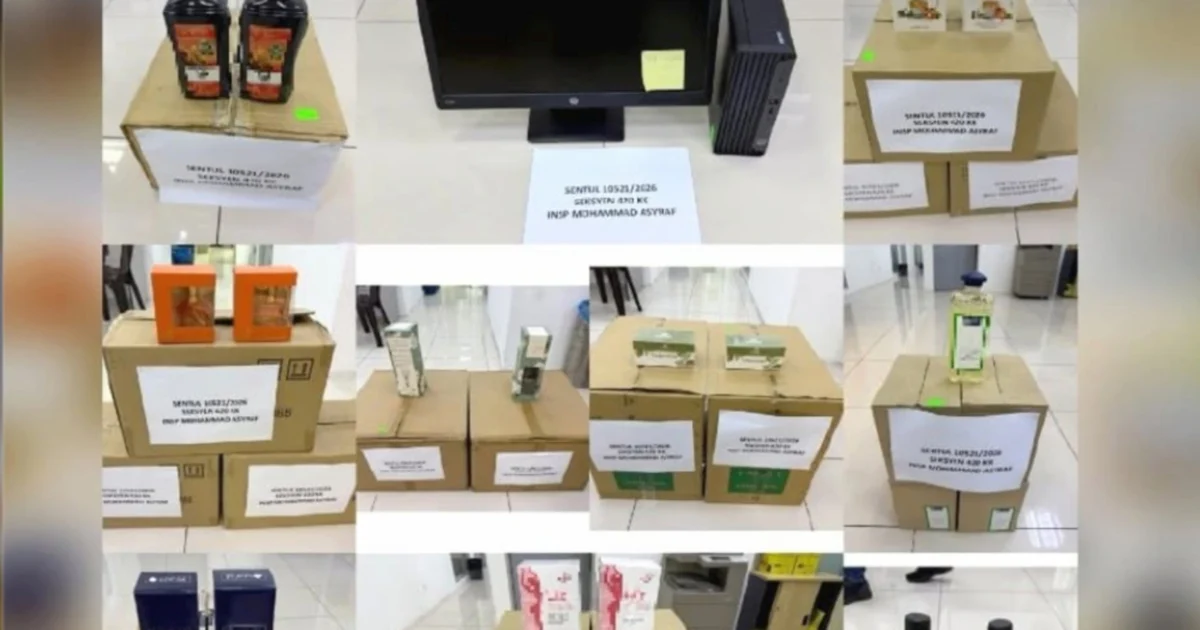
Police in Kuala Lumpur have moved decisively against an investment fraud operation, arresting six individuals in connection with a perfume-based scam centred at a business premises in KL Eco City. The operation, which was conducted on a Wednesday, represents the latest enforcement action against increasingly sophisticated investment fraud schemes targeting the public across the Klang Valley and beyond.
The raid culminated weeks of investigation into the syndicate's activities, with law enforcement officers zeroing in on the commercial unit following complaints from multiple victims who had been deceived into channelling substantial sums into what was presented as a legitimate perfume trading and investment venture. The six detainees are currently assisting police with their inquiries, and investigators are examining the operational structure of the scheme to determine individual roles and responsibilities within the network.
Perfume investment scams have emerged as a concerning trend throughout Malaysia and the region, exploiting public enthusiasm for luxury goods and the promise of attractive returns. Perpetrators typically position themselves as authorised dealers or direct importers of high-end fragrances, inviting the public to purchase inventory at discounted wholesale rates with the guarantee of buyback agreements or resale commissions. The schemes often leverage social media platforms and personal networks to build credibility and attract new participants, creating multiple layers of victims who believe they are entering a legitimate wholesale business opportunity.
What makes these operations particularly insidious is their use of genuine product samples and authentic-appearing business documentation to establish legitimacy. Victims are typically shown impressive showrooms or warehouse facilities, provided with certification documents, and connected with supposed corporate representatives who speak convincingly about supply chains, profit margins, and expansion plans. This veneer of professionalism encourages substantial initial investments, with participants often introducing family members and friends to maximise their earnings potential.
The modus operandi typically escalates as the scheme matures. After initial investments generate modest returns or appear to create paper profits, victims receive increasingly aggressive recruitment pitches and pressure to expand their stakes. Premium packages are marketed with guaranteed returns far exceeding normal market rates, while slow payment of promised commissions creates a false sense of an operation under strain but fundamentally sound. By the time red flags become obvious—delayed payments, unresponsive contacts, or requests for additional capital injections—perpetrators have already disappeared with substantial sums.
Investigators at the KL Eco City premises recovered material evidence including inventory documentation, financial records, and communication devices that may help authorities trace the full extent of the operation and identify additional victims who have not yet come forward. The commercial location itself provides a significant clue, as professional spaces with legitimate-appearing operations are favoured by sophisticated fraud rings seeking to overcome the natural scepticism of potential targets. The prominence of the KL Eco City address may have been deliberately chosen to reinforce perceptions of corporate legitimacy.
The incident underscores the ongoing vulnerability of Malaysian investors to fraud operations that combine psychological manipulation with superficial legitimacy markers. Police have consistently warned the public that genuine investment opportunities, particularly in niche commodities like perfume, do not promise guaranteed high returns or pressure participants to continuously recruit new members. Any scheme exhibiting these characteristics warrants immediate scrutiny and reporting to authorities.
For the broader investment community in Malaysia and Southeast Asia, this case highlights the importance of fundamental due diligence before committing capital to any enterprise. Verification of business registration through Companies Commission of Malaysia, independent confirmation of corporate representatives' identities, and consultation with established banking and investment advisors represent essential protective measures. Victims of investment fraud often face substantial financial losses, yet many remain reluctant to report incidents due to embarrassment or fear of legal consequences for their own involvement in schemes they believed were lawful.
The arrest of the six individuals marks a significant enforcement milestone, yet police acknowledge that dismantling such networks often requires extended investigation to identify money flows, overseas connections, and additional perpetrators operating in coordinated fashion across multiple jurisdictions. The Kuala Lumpur operation is likely linked to broader regional syndicates that shift locations and commodity types—from luxury watches to investment gems to financial instruments—to evade detection and exploit regulatory gaps between countries.
Authorities continue to urge members of the public to report suspicious investment solicitations immediately to the police or the Securities Commission, providing specific details about contact methods, promises made, and documentation provided. Information from victims and witnesses proves invaluable in identifying patterns, locations, and perpetrator networks that might otherwise continue operating undetected. The investigation into this syndicate remains ongoing, with police indicating that additional charges and arrests may be forthcoming as examination of recovered materials proceeds.

