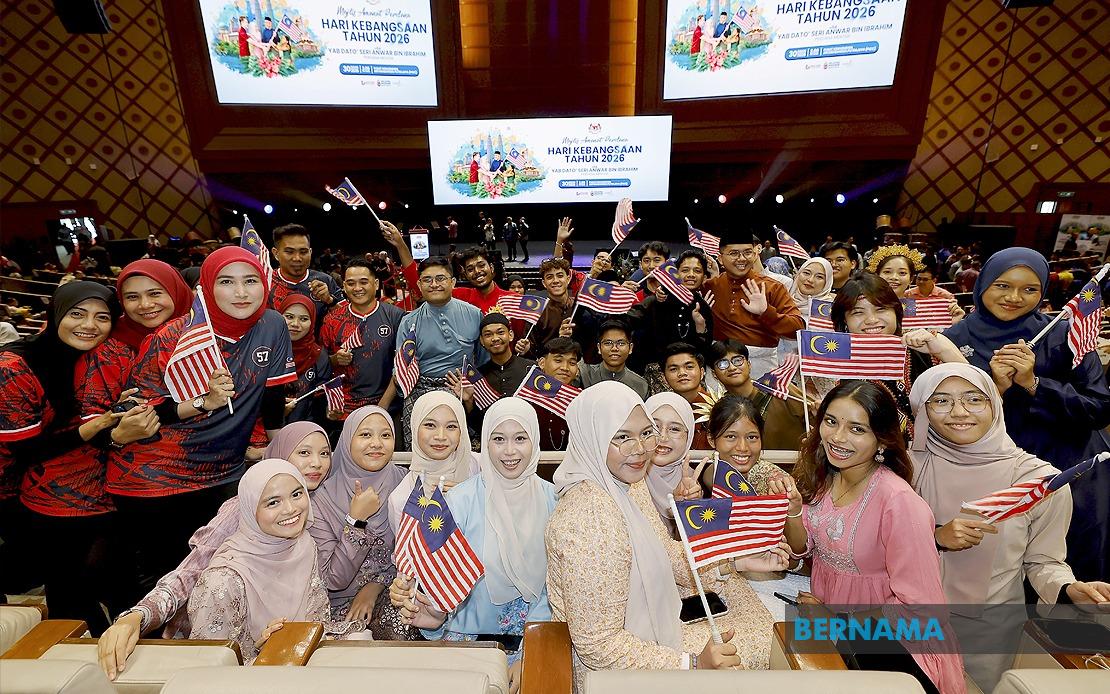
Prime Minister Datuk Seri Anwar Ibrahim used his National Day address in Putrajaya on August 30 to unveil a comprehensive package of six government initiatives aimed at providing relief across different demographic segments and economic strata. The announcements, delivered at the Putrajaya International Convention Centre, have been characterised by observers as a broad-based approach to addressing the concerns of middle-income earners, younger citizens, and entrepreneurs operating at various scales. The initiatives represent a continuation of the government's MADANI framework, which emphasises inclusive development and shared prosperity across all sections of society.
Central to the package is the restoration of fuel subsidy eligibility under the Budi MADANI RON95 programme, a measure that directly impacts millions of Malaysian motorists. The government has increased the monthly petrol allocation from 200 litres to 300 litres per month, addressing a key household expense for workers and small traders who rely heavily on personal transport for their livelihoods. For those dependent on diesel fuel, a separate quota increase from 300 litres to 400 litres per month provides comparable relief. These adjustments acknowledge the transportation costs that burden not only individual commuters but also small-scale traders and delivery operators who depend on efficient fuel access to maintain their economic activities.
Mohd Aliff Rino, a 26-year-old company secretary from the private sector, highlighted the significance of these fuel allocations for everyday life. Speaking at the convention centre, he emphasised that the expanded BUDI95 allowance removes uncertainty from routine vehicle refuelling and permits drivers to meet their daily transport needs without excessive financial strain. The sentiment underscores how such subsidies function as stabilisers for middle-income households, reducing the volatility in monthly household budgets and allowing families to allocate resources towards education, healthcare, and savings rather than exclusively towards fuel expenses.
Beyond traditional welfare provisions, the Prime Minister's address introduced a technology-focused initiative recognising the growing importance of artificial intelligence in contemporary society. The government will provide free three-month subscriptions to three artificial intelligence applications for 100,000 youths between 18 and 30 years old who complete modules under the new AI for the People programme. This intervention targets a cohort navigating a labour market increasingly shaped by digital tools and automation. Nur Liyana, 24, an accounts assistant in the private sector, characterised the AI initiative as timely and valuable, noting that digital literacy and hands-on experience with artificial intelligence platforms have become prerequisites for competitive employment across sectors.
The education sector receives a substantial commitment through a 50 percent increase in school maintenance allocations for 2027, raising funding to RM1.5 billion. This augmentation addresses a longstanding concern about the deteriorating condition of educational infrastructure across Malaysian schools, from urban institutions to rural facilities. Adequate maintenance directly influences learning environments and student wellbeing, and signals government prioritisation of foundational educational quality at a moment when Malaysia confronts both demographic shifts and competition for skilled workers within the regional labour market.
Support for the self-employed and small-enterprise operators is addressed through the RM200 million Geran Sejahtera MADANI, earmarked specifically for hawkers, night market traders, and mothers operating home-based businesses. This segment of the economy, largely informal or semi-formal, has historically received less institutional support despite their aggregate contribution to employment and urban economic vitality. The targeted grant acknowledges this group's vulnerability to economic shocks and their importance to neighbourhood economies and social cohesion.
Microfinance expansion represents another dimension of the support architecture. The government has committed to increasing microfinancing facilities by RM1 billion, bringing total funding for 2026 to RM6 billion. Expanded access to small loans enables entrepreneurs without collateral to initiate or scale business operations, functioning as a bridge between informal economic activity and formalised enterprise. For emerging entrepreneurs and those operating at the margins of the formal economy, such financing mechanisms can be transformative, permitting investment in inventory, equipment, or skills development.
Administrative reforms targeting small and medium enterprises include raising the e-Invoice exemption threshold from RM1 million to RM3 million in annual revenue. This adjustment reduces compliance burdens for smaller operators, freeing resources previously allocated to regulatory adherence for reinvestment in business development or workforce expansion. The measure reflects understanding that administrative overhead disproportionately affects smaller organisations lacking dedicated compliance departments.
Iqbal Hakimi Kaharudin, a 24-year-old procurement professional, identified the fuel allocation increase as particularly beneficial for those whose employment requires extended daily travel. His perspective illuminates how government policy operates at the granular level of individual economic circumstances, where transport costs directly determine take-home income and quality of life for workers in dispersed metropolitan regions or those commuting between multiple locations. The six measures collectively attempt to acknowledge that household financial pressures, occupational demands, and developmental aspirations vary significantly across different population groups and life stages.
The breadth of these initiatives—spanning fuel subsidies, technological access, educational infrastructure, informal-sector support, microfinance, and administrative simplification—suggests a governing approach attentive to multiple pressure points affecting household and business sustainability. From the perspective of households in the M40 income bracket navigating rising living costs, to youth seeking competitive skills in a digitalising economy, to informal traders dependent on daily economic activity, each measure addresses a distinct source of economic vulnerability or opportunity.
For Malaysian policymakers, these announcements also reflect broader regional dynamics. Within Southeast Asia, governments face comparable pressures to support middle-income populations against cost-of-living pressures while investing in technological capability and digital transformation. Malaysia's approach—combining traditional safety nets like fuel subsidies with forward-looking investments in AI literacy—attempts to balance immediate household relief with longer-term economic competitiveness.

