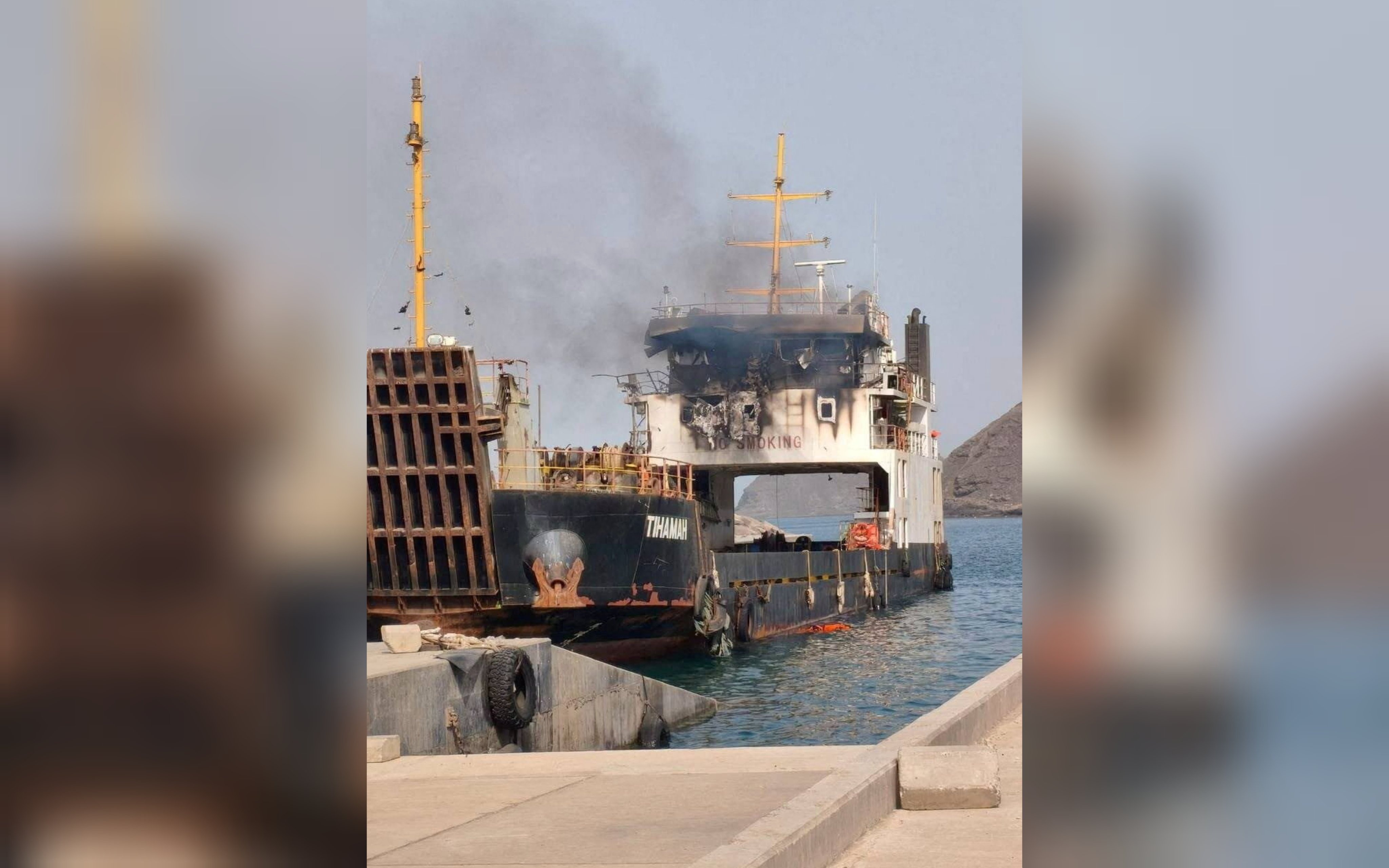
A commercial vessel carrying food supplies came under sustained missile attack in the Bab al-Mandeb Strait on Tuesday, resulting in six deaths and ten injuries according to Yemen's Coast Guard. The attack, attributed to the Houthi movement, struck the Yemeni-flagged ship Tihamah with multiple ballistic missiles, triggering fires and extensive structural damage that forced an emergency rescue operation in one of the world's most strategically important waterways.
The deceased comprised four crew members—three Pakistani nationals and one Indonesian—alongside two personnel from Yemen's armed forces 2nd Naval Brigade. The wounded included seven additional crew members, two coast guard officials, and another member of the naval brigade. A successful rescue effort recovered eleven seafarers of Pakistani and Indonesian nationality, though the Coast Guard statement indicated that a fourth missile was launched as rescue teams attempted to reach survivors, apparently designed to obstruct relief operations and inflict maximum casualties.
Yemen's Transportation Ministry characterised the incident as a deliberate act of terrorism, underscoring that targeting a vessel engaged in humanitarian food supply operations represents a dramatic escalation of hostile actions in the region. The attack follows a documented pattern of Houthi aggression directed at civilian maritime traffic, port facilities, and infrastructure serving government-controlled territories. By striking a supply vessel, the group has demonstrated willingness to directly threaten the fragile humanitarian corridors sustaining millions of Yemenis across contested zones.
The Bab al-Mandeb Strait occupies exceptional geopolitical significance as the primary passage connecting the Red Sea to the Indian Ocean and global markets beyond. Roughly opposite the Strait of Hormuz on the Arabian Peninsula's eastern flank, it channels approximately 12 per cent of worldwide maritime commerce and represents an indispensable route for energy shipments, manufactured goods, and essential supplies. Any sustained disruption to shipping through this corridor carries immediate ramifications for regional economies and international trade patterns.
For Southeast Asian nations including Malaysia, the security implications are substantial. The region's maritime trading networks depend heavily on unobstructed passage through Middle Eastern straits and Red Sea routes. Houthi attacks targeting commercial vessels raise insurance costs, extend voyage times, and create supply chain vulnerabilities that ultimately affect prices and availability of imported goods throughout Southeast Asia. Shipping companies increasingly face decisions about whether to maintain traditional Red Sea routes or undertake longer, costlier detours around the African continent.
The Transportation Ministry emphasised that the Tihamah was explicitly engaged in delivering food supplies to civilian populations, highlighting the humanitarian dimensions of the attack. This targeting of vessels provisioning government-controlled areas creates particular hardship for populations already facing severe shortages. Yet the strike also threatens communities in Houthi-held territory, since disruption of maritime trade ultimately reduces overall food availability across Yemen and pushes prices upward for vulnerable populations regardless of territorial control.
The deliberate effort to impede rescue operations—through the fourth missile strike—suggests tactical intent to maximise human casualties beyond the initial strike. Such tactics underscore the Houthis' willingness to adopt methods that international humanitarian law typically constrains. The apparent disregard for rescue personnel attempting to save lives indicates an escalation in the group's operational approach and signifies worsening humanitarian conditions for maritime workers transiting these waters.
The Houthi movement has not yet issued formal statement regarding the attack, though the group has previously justified maritime operations as responses to Saudi-led coalition activities and Israeli actions. The silence following this incident may reflect tactical calculation or internal deliberations about framing the strike within broader strategic narratives. Regardless, the absence of immediate justification underscores the fundamentally indiscriminate nature of targeting commercial vessels carrying essential supplies.
Yemen's ongoing civil conflict has transformed the Bab al-Mandeb into an increasingly hazardous maritime zone where commercial shipping faces threats from multiple armed actors. The convergence of Houthi capabilities, regional tensions, and geopolitical competition creates persistent instability affecting global shipping lanes. International maritime authorities have issued repeated warnings about transit risks, yet commercial necessity compels vessels to navigate these waters despite enhanced dangers.
The attack carries broader implications for international maritime law and freedom of navigation principles. When non-state actors systematically target commercial shipping in international waters, they challenge the foundational assumptions underlying global trade and challenge international community responses. The incident may prompt renewed discussions within regional organisations and maritime bodies about establishing protected corridors or enhanced security protocols for humanitarian shipments.
For Malaysia and ASEAN nations dependent on secure maritime passage, incidents like this underscore the strategic importance of regional stability and the costs when conflicts in distant regions destabilise critical international shipping lanes. The incident reinforces arguments for enhanced coordination between regional states on maritime security and for supporting international efforts to resolve the underlying Yemeni conflict that perpetuates such violence.

