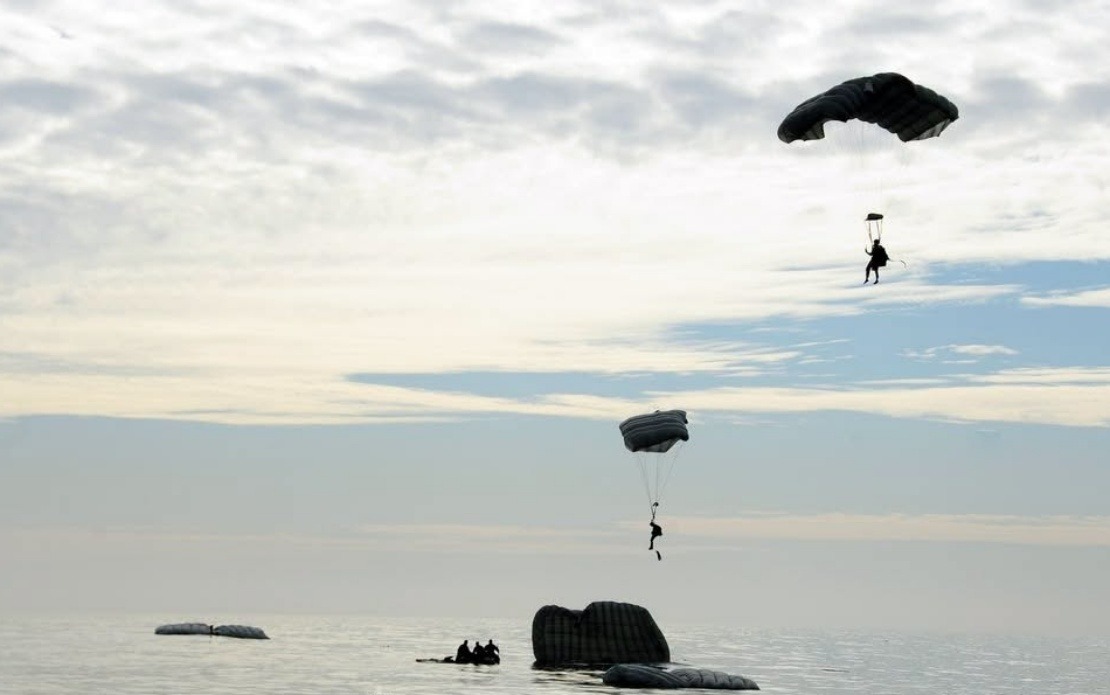
Six highly trained members of Malaysia's Naval Special Warfare Forces, known as PASKAL, have been safely recovered after an unplanned drift at sea during a free-fall parachuting exercise conducted in the South China Sea. The personnel, who became separated from their intended landing site, were located and picked up by a Royal Malaysian Navy vessel following the incident on Tuesday. All six commandos were found floating in the water and are reported to be in good condition following their rescue.
The Royal Malaysian Navy attributed the mishap to sudden and severe deterioration in weather conditions that dramatically reduced visibility during the operation. These unpredictable atmospheric changes prevented the parachutists from maintaining visual orientation toward their designated touchdown area, forcing them to land in an unplanned location. Despite the deviation from the exercise plan, the rapid response and coordination between the training unit and naval assets ensured that all personnel were located and retrieved without incident.
The incident, while not resulting in any casualties or serious injuries, underscores the inherent risks involved in military special operations training. Free-fall parachuting exercises require precise atmospheric conditions and visibility to ensure personnel land safely at predetermined coordinates. When such conditions deteriorate suddenly, as occurred in this case, even experienced operatives can find themselves in challenging situations. The South China Sea, an area of significant strategic importance to Malaysia, presents additional complexities for maritime and airborne operations due to its weather patterns and vast expanse.
Rather than characterizing the event as a training failure, the Royal Malaysian Navy reframed the occurrence as a demonstration of PASKAL's preparedness and the robustness of its training regimen. Officials emphasized that the personnel's ability to remain calm and survive while adrift at sea reflected the intensive preparation they undergo. The organization highlighted that beyond tactical combat proficiency, PASKAL training deliberately cultivates psychological resilience, disciplinary standards, and survival capabilities designed to enable personnel to manage unexpected adversity. This philosophical approach treats realistic training scenarios, including those that go awry, as valuable learning experiences that better prepare elite forces for genuine operational demands.
PASKAL, Malaysia's premier maritime special operations unit, maintains one of Southeast Asia's most demanding training standards. Personnel undergo months of preparation that combines advanced tactical instruction with survival techniques, mental fortitude conditioning, and maritime expertise. Exercises such as the parachute operation that resulted in this incident are deliberately designed to test the limits of these capabilities and identify areas requiring refinement. The unit's motto, "Sentiasa yang Terbaik" or "Always the Best," encapsulates the organizational culture that drives continuous improvement and excellence.
The recovery operation itself demonstrated the coordination capabilities within Malaysia's naval establishment. The presence of support vessels capable of rapid response to personnel in distress is integral to any meaningful special operations training program. The ability to locate and retrieve six personnel scattered across open water within what appears to be a reasonable timeframe reflects both effective planning and disciplined execution of contingency protocols. This aspect of the operation likely received scrutiny from training command to ensure procedures were followed correctly.
For Malaysian defense observers, the incident provides perspective on the real-world challenges facing elite military units operating in the country's maritime domain. The South China Sea remains a focal point of strategic interest and operational activity for the Royal Malaysian Navy. Training exercises conducted in these waters prepare personnel for the complex environment they may encounter during actual security operations. Weather unpredictability, vast distances, and the need for rapid response mechanisms are all factors that operators must manage competently.
The Royal Malaysian Navy's commitment to balancing operational readiness with personnel safety represents a mature approach to military training management. Pushing capabilities to realistic limits must occur within frameworks that prevent unnecessary loss of life or permanent harm. The successful resolution of this incident, where unexpected circumstances were managed without tragedy, demonstrates that such balance is achievable. The organization's emphasis on this dual commitment suggests confidence in both its personnel and its safety systems.
Looking ahead, the incident will likely prompt a review of weather monitoring protocols and decision-making procedures for parachute operations in the region. Training commands internationally routinely analyze such incidents to refine procedures and identify any gaps in planning or execution. In the Malaysian context, this may include adjustments to weather forecasting integration, abort criteria, or post-exercise protocols. Such refinements, derived from real operational experience, contribute to the gradual professionalization and optimization of special operations training.
The broader significance of this incident for Southeast Asian security lies in the demonstrated capability and commitment of Malaysia's special operations community. A nation's ability to conduct complex, realistic training with appropriate safety nets reflects institutional maturity and resource allocation toward genuine military capability. PASKAL's continued development and operational readiness contribute to Malaysia's capacity to secure its maritime interests and support regional stability. Events like this parachute exercise, despite their unplanned complications, reinforce the foundation upon which such capabilities rest.

