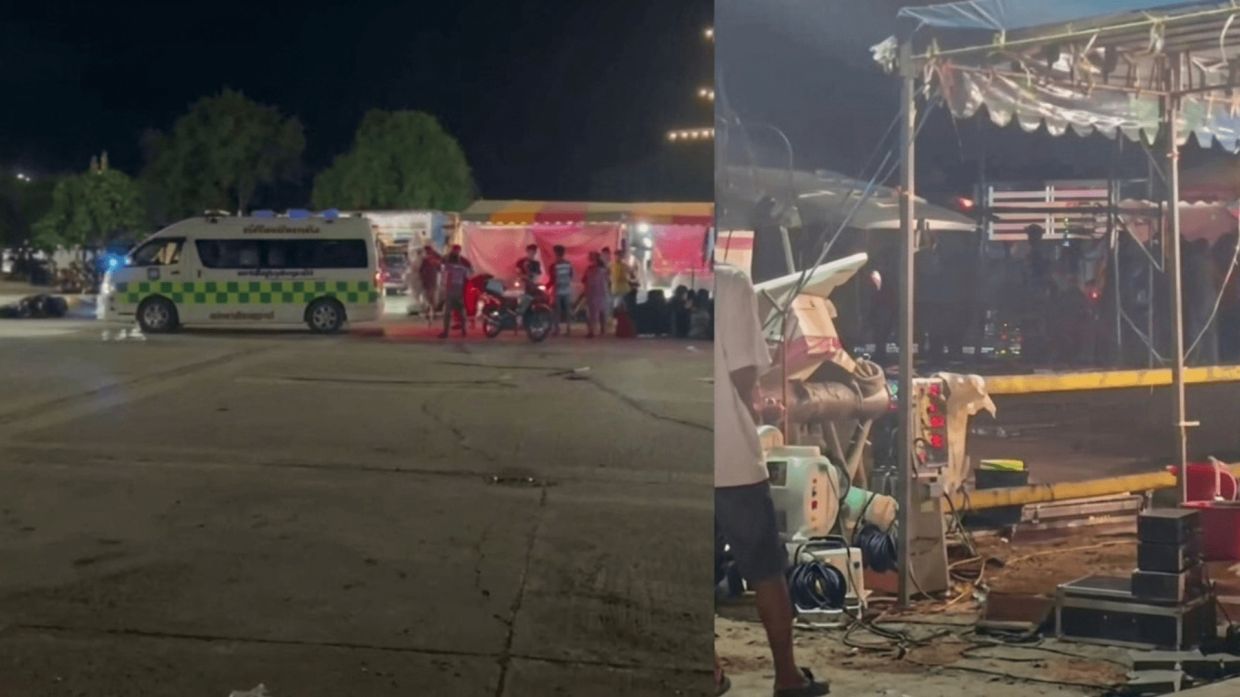
A violent incident at a shopping fair in Dan Khun Thot district, Nakhon Ratchasima province, left six people wounded when an attacker opened fire and wielded knives against unsuspecting visitors and vendors during the evening of Wednesday, August 12. The assault occurred around 10.30pm as the "Chim Shop Chai" fair was entering its final hours, with many traders preparing to close their stalls and leave the premises. The timing of the attack—during a period when the event's activity was naturally diminishing—suggests the perpetrators may have deliberately waited for crowds to thin, making their targets more vulnerable and the scene potentially less chaotic than earlier in the evening.
According to Prakob Patin, the organiser of the fair, the incident unfolded with the assailants deploying both conventional weapons and improvised firearms against their victims. All six injured individuals were initially transported to Luang Pho Koon Parisuttho Dan Khun Thot Hospital for emergency treatment. However, the severity of injuries sustained by two of the victims necessitated their transfer to the larger Maharat Nakhon Ratchasima Hospital, a regional medical facility better equipped to handle critical cases. One of these severely injured patients remains hospitalised in a comatose state, highlighting the serious nature of the injuries inflicted during the assault.
Investigators led by Dan Khun Thot Police Station Deputy Investigation Inspector Pol Lt Col Akom Chutkhunthot moved swiftly to apprehend a 32-year-old male suspect and confiscated a homemade firearm from the scene. The recovered weapon was described as improvised rather than commercially manufactured, suggesting the attackers had crafted their own arms—a matter of concern given Thailand's ongoing struggles with unregistered and illegally produced weapons circulating beyond law enforcement's oversight.
The preliminary investigation has uncovered a triggering event that may explain the violence. The suspect allegedly attempted to steal a parked motorcycle belonging to someone attending the fair. When the motorcycle's owner discovered the theft attempt and confronted the would-be thief, tensions escalated. Rather than submit to capture, the suspect reportedly fled the scene, an action that might have simply ended the matter. Instead, he returned with additional accomplices who were armed with knives and firearms, suggesting a deliberate escalation from attempted theft to premeditated violence.
This escalation represents a troubling pattern where an initial crime spirals into far more serious assault. The decision to return with reinforcements and weapons indicates the altercation was not a spontaneous fight but rather a calculated response to being thwarted. Police have stated that the suspect will face charges of jointly attempting to murder multiple people using a firearm, underscoring the severity with which authorities view the incident. The investigation remains ongoing as authorities continue to pursue the remaining suspects who participated in the attack, several of whom remain at large.
The timing of this incident within Thailand's broader security landscape is particularly significant. This shooting represents the third violent firearms incident to occur within a single week in the kingdom. On August 7, Debsirin Nonthaburi School in the central region became the site of a mass shooting that claimed nine lives, sending shockwaves through the nation and reigniting urgent discussions about gun violence in schools and public spaces. Additionally, on Monday of the same week, the president of the Nonthaburi Provincial Administrative Organisation (PAO) was shot, allegedly by a former Thai lawmaker, adding to the growing catalogue of firearms violence during this period.
For Malaysian observers and regional security analysts, the clustering of such incidents within Thailand raises questions about enforcement of firearms regulations and the proliferation of homemade weapons. Thailand has grappled for years with illegal weapons trafficking from neighbouring countries and with locally manufactured arms proliferating in criminal hands. The fact that the Dan Khun Thot suspect employed a homemade firearm rather than a stolen commercial weapon underscores how Thailand's underground armourers continue operating despite police efforts to dismantle such networks.
The Dan Khun Thot incident also illustrates how public events and gathering spaces remain vulnerable to sudden violence in Southeast Asia. Shopping fairs, markets, and community events typically operate with minimal security presence, making them soft targets for individuals prone to violence or acting in concert with organised criminal elements. Vendors and visitors alike have little protection against attackers with weapons, a reality that has prompted some municipalities across the region to enhance security protocols at such gatherings.
The involvement of multiple attackers and the apparent coordination of their response—fleeing and returning with reinforcements—suggests organised activity rather than a spontaneous brawl. This dimension raises concerns about potential gang involvement or organised crime connections, though police have not yet confirmed such links. The ongoing manhunt for the remaining suspects will be crucial to determining whether this represents an isolated incident or is part of broader criminal activities operating in the region.
As investigators continue their work, the incident adds to mounting pressure on Thai police to address gun violence and to stem the flow of illegal weapons through communities. For Malaysian authorities and regional governments, the case serves as a reminder of the persistent challenges posed by inadequately secured firearms and the rapid escalation possible when armed individuals encounter confrontation in public spaces.

