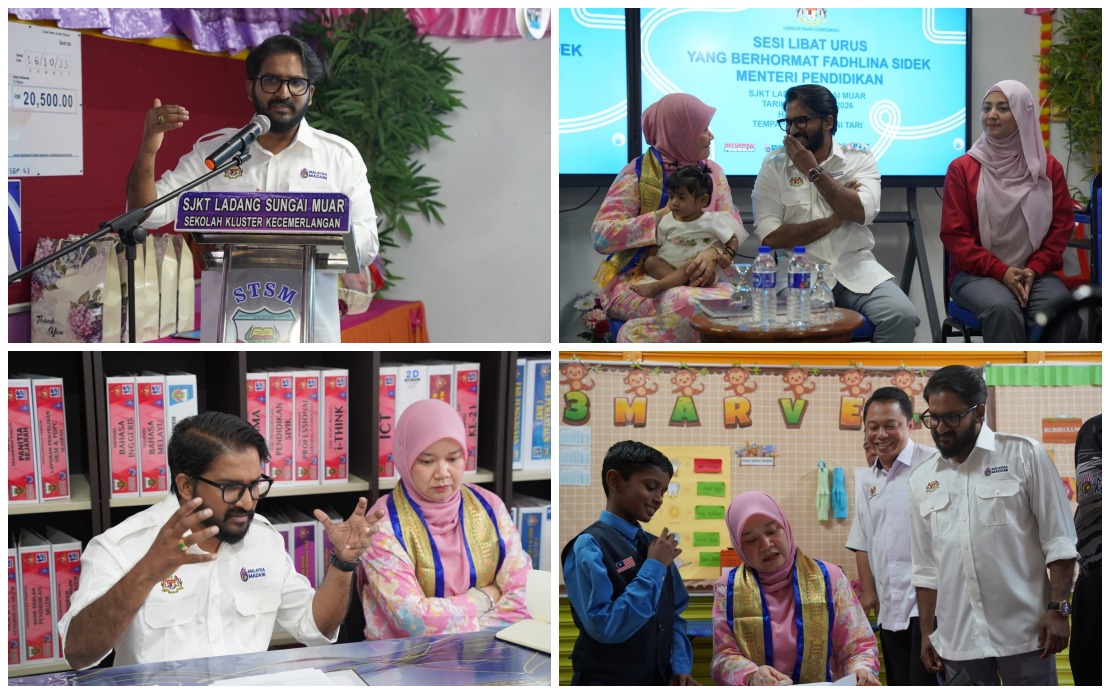
Plans to relocate SJKT Ladang Sungai Muar in Segamat have moved into a critical phase, with land ownership now being formally processed through the Segamat Land and Mines Office. The progression marks tangible momentum on a relocation initiative that has been advocated consistently by Segamat Member of Parliament R. Yuneswaran since his election in 2022. An engagement session held in Segamat brought together school leadership, the MP, and Education Minister Fadhlina Sidek, underscoring the federal government's commitment to advancing the project.
The relocation effort addresses longstanding concerns about the current school premises. Safety considerations have featured prominently in discussions around the existing campus, alongside complaints about its distance from the core Segamat community and inadequate supporting infrastructure. These factors have compelled local representatives and education stakeholders to prioritise moving the institution to a location better equipped to serve the Tamil-language learning community. For a school serving a significant population in Johor's Segamat district, these environmental factors carry substantial weight in determining educational outcomes and student wellbeing.
Yuneswaran articulated appreciation for the Ministry of Education's active engagement, noting that the Minister's participation in the engagement session demonstrated the seriousness with which federal authorities regard the matter. This political backing has proved instrumental in translating years of local advocacy into bureaucratic action. The involvement of the Education Ministry signals that the relocation has been embedded within broader national educational development frameworks, moving it beyond purely constituency-level politics into a more institutionalised process with dedicated ministerial oversight.
The land ownership stage represents a crucial procedural hurdle that must be cleared before construction or facility planning can commence. Working through the Segamat Land and Mines Office places the relocation within formal administrative channels where property rights, surveying, and regulatory compliance are systematically addressed. This deliberate procedural approach, while potentially time-consuming, ensures that the eventual relocated facility will have unencumbered land tenure and full regulatory approval—critical foundations for a permanent educational institution.
For Tamil-language education in Malaysia, the relocation carries broader significance beyond Segamat's immediate context. The national education system includes distinct vernacular streams serving different linguistic communities, and investments in upgrading facilities within these streams reflect government commitment to educational equity across demographic lines. A successful relocation in Segamat could serve as a model for similar projects elsewhere where Tamil-medium schools operate from suboptimal campuses.
Yuneswaran has positioned himself as a consistent advocate for this initiative, framing it as integral to the MADANI Government's stated educational priorities. His emphasis on continued monitoring and follow-up suggests recognition that land acquisition processes in Malaysia often require sustained political attention and administrative coordination to progress smoothly. The MP's pledge to maintain oversight provides some assurance that momentum will not dissipate once immediate media attention fades.
The safety concerns motivating the relocation reflect legitimate anxieties about school environments. Beyond the specific Segamat case, Malaysian educators and parents have increasingly scrutinised campus security, accessibility, and environmental suitability. A rural or peripherally-located school may face challenges in attracting quality staff, facilitating parental involvement, or maintaining modern amenities that students in more centrally-located institutions take for granted. These structural disadvantages compound, potentially affecting educational quality and student outcomes over time.
Education Minister Fadhlina Sidek's participation in the engagement session represents ministerial-level commitment to vernacular education expansion and infrastructure improvement. Her direct involvement suggests that the relocation aligns with ministry priorities around educational access and facility modernisation. Such ministerial backing can accelerate bureaucratic processes that might otherwise move incrementally, though actual land acquisition timelines will ultimately depend on factors including land availability, willing sellers, cost negotiations, and any environmental or planning clearances required.
The timeline for completing the land acquisition phase remains unspecified, creating uncertainty for school management and families currently enrolled. Relocation projects of this nature typically span several years from initial planning through to physical relocation, meaning students currently attending SJKT Ladang Sungai Muar may graduate before moving into new premises. This extended timeline underscores the importance of maintaining political and administrative attention throughout the process to prevent the initiative from becoming deferred or deprioritised.
For Malaysian policymakers, the Segamat relocation reflects a broader need to evaluate and upgrade older or inappropriately-sited educational facilities across the country's vernacular systems. Tamil and Chinese-medium schools sometimes operate in inherited structures that predate modern educational standards, lacking adequate facilities for contemporary teaching methodologies. Systematic facility renewal programmes could substantially improve the learning environment across these communities, though they require sustained funding and coordinated interagency cooperation.
The engagement session format itself merits attention as an approach to stakeholder governance. By bringing together school administrators, political representatives, and education ministry officials for direct dialogue, the government created a forum for addressing concerns, aligning expectations, and demonstrating responsiveness to community needs. Such sessions, if conducted regularly and with genuine commitment to acting on findings, can help rebuild confidence in governmental capacity to deliver on educational promises.

