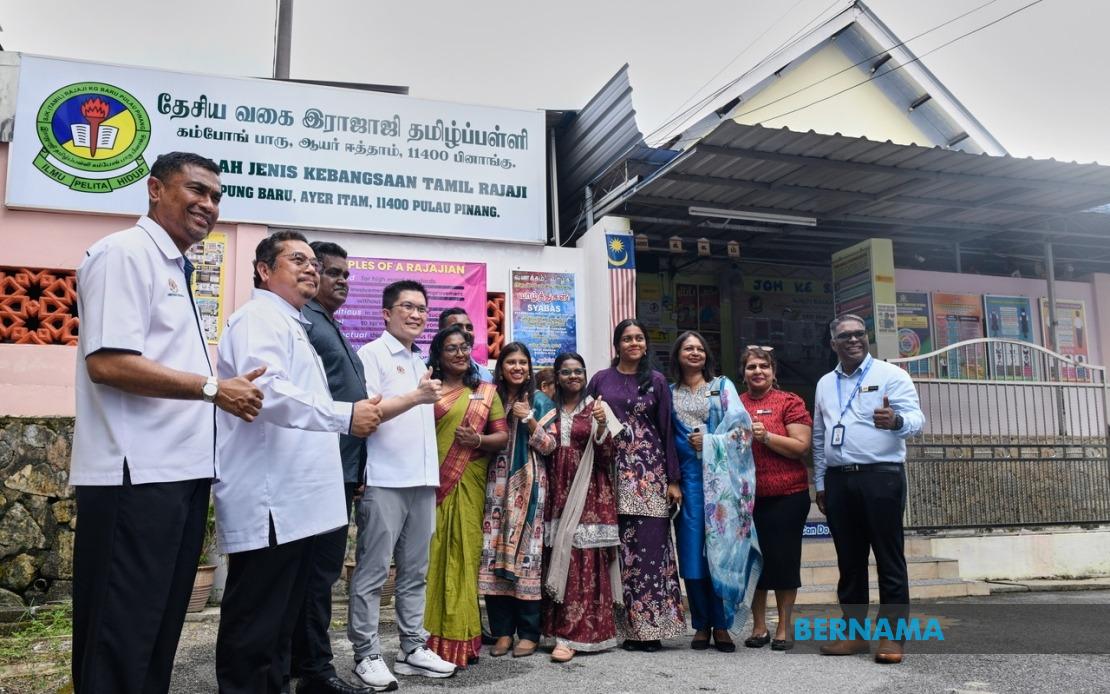
The Education Ministry has green-lit a RM8 million construction project for SJKT Rajaji in George Town, marking a turning point for the institution that has operated under increasingly difficult spatial constraints for nearly eight decades. Deputy Education Minister Wong Kah Woh announced the approval on June 15, confirming that the relocated school will occupy a 2.3-acre site in Farlim, roughly 500 metres from its current location in Bandar Baru Ayer Itam. The move addresses longstanding concerns about the school's ability to serve its student population effectively in its present cramped setting.
Since its establishment, SJKT Rajaji has become an important educational anchor for the Tamil-speaking community in Penang's northern corridor. However, with approximately 100 pupils enrolled, the institution has struggled to maintain adequate facilities and learning spaces within its existing premises. Wong described the project as offering the venerable school a genuine fresh start, enabling it to expand its operational capacity and provide a more conducive environment for academic pursuits. The relocation represents not merely a change of address but a fundamental improvement in the quality of facilities available to students and teachers.
Construction timelines are critical for any school relocation project, as extended periods of disruption can affect continuity of education. According to Wong's announcement, the development phase is projected to take 18 months from commencement, with the school expected to commence teaching at its new premises by the 2029 academic year at the latest. This extended window provides adequate time for the contractor to complete structural work, install educational infrastructure, and conduct safety certifications before students and staff transition to the facility. The staggered timeline also allows the school management to plan the logistical aspects of relocation methodically.
What distinguishes this project significantly is its funding mechanism. Rather than drawing upon government resources already stretched across numerous educational initiatives nationwide, the construction will be underwritten entirely by a private sector developer as part of its corporate social responsibility portfolio. Wong highlighted this partnership model as exemplifying productive collaboration between public institutions and commercial entities in advancing educational development. Such arrangements have become increasingly common in Malaysia, allowing schools to access improvements without imposing additional burdens on state budgets, though they also raise questions about the appropriate balance between public and private provision of essential services.
The backstory of the relocation spans several years of coordination between multiple stakeholders. The Penang state government identified and approved the Farlim site in 2022, demonstrating its commitment to facilitating the school's expansion plans. Subsequently, SJKT Rajaji's board of governors formally applied for ministry approval, a process that involved resolving various regulatory and administrative requirements with local authorities. Only after these groundwork matters were settled did the Education Ministry formally endorse the project, signalling that all technical, legal, and institutional prerequisites had been satisfied.
State Housing and Environment Committee chairman Datuk Seri S. Sundarajoo, who also chairs the Penang Tamil Schools Special Committee, contextualized SJKT Rajaji's development within the broader landscape of Tamil-medium education in Penang. The state currently operates 28 Tamil national-type schools, several of which are themselves undergoing developmental initiatives. Sundarajoo noted that the state government intends to hold groundbreaking ceremonies for at least three SJKT projects in the same calendar year, indicating a concentrated push to modernize Tamil educational infrastructure across Penang. Additionally, previously stalled initiatives at institutions such as SJKT Sungai Bakap and SJKT Juru are being revived, suggesting renewed political and bureaucratic commitment to the sector.
For Malaysian readers familiar with the constraints facing vernacular schools, SJKT Rajaji's situation represents a microcosm of broader challenges in the Tamil education landscape. Vernacular schools—whether Tamil, Chinese, or other languages—have historically operated with less financial support and infrastructure investment compared to Bahasa Malaysia national schools. Tamil schools in particular have faced demographic pressures, with student enrollment declining over decades as linguistic preferences shift among younger generations of Indian Malaysians. That a 76-year-old institution continues to serve approximately 100 students demonstrates both resilience and the persistent demand for Tamil-medium education among certain communities.
Sundarajoo's comment that these developments would not impose financial burdens on state coffers carries weight in the context of Penang's fiscal landscape. As a state with significant tourism and industrial sectors but also substantial welfare obligations, Penang must balance educational investment across all communities and school types. By securing private-sector funding for SJKT Rajaji and other Tamil schools, the state government creates space in its budget for other pressing demands while simultaneously demonstrating equitable commitment to educational access for all ethnic groups. This approach, if replicated thoughtfully, could become a model for other states managing similar pressures.
The timeline extending to 2029 reflects realistic expectations about construction challenges in Malaysia's building sector. Permit processing, material procurement, site preparation, and skilled labor availability all influence project duration. For the school community, the delay between approval and opening means that current students will likely graduate before the new facility opens, yet they will have contributed to securing benefits for future cohorts. This intergenerational aspect is often overlooked in education infrastructure narratives but carries real significance for school pride and continuity.
Regionally, developments in Tamil educational infrastructure in Penang may influence policy discussions in other states where Tamil schools operate. If the SJKT Rajaji project succeeds in delivering improved facilities within promised timescales and at projected costs, it could encourage other state governments and private entities to pursue similar partnerships. Conversely, any delays or funding complications could dampen enthusiasm for this collaboration model. Malaysian policymakers and education planners will likely monitor this project closely as a test case for blended public-private approaches to vernacular school development.
Looking forward, the successful completion of SJKT Rajaji's new building would represent meaningful progress in addressing historical inequities in educational infrastructure. Tamil schools have historically received proportionally less investment than national schools, reflecting both demographic shifts and allocation priorities. Projects like this one, even when funded by private partners, signal that Tamil education retains institutional and community value worth substantial investment. For SJKT Rajaji's 100 pupils and their families, the new campus will translate abstract commitments to educational equity into tangible classrooms, laboratories, and learning spaces where the next generation can develop their talents and aspirations.