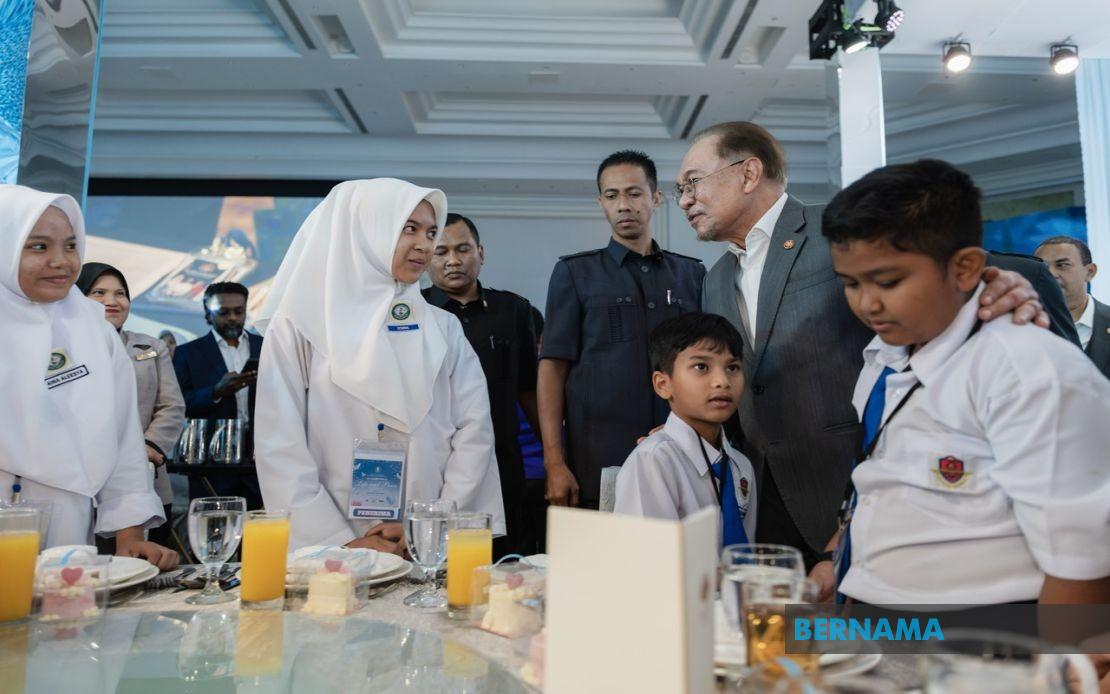
Prime Minister Datuk Seri Anwar Ibrahim has drawn a stark distinction between intellectual achievement and personal character, cautioning that scholastic success divorced from ethical foundation carries little real value. Speaking to 700 pupils from 47 schools across Kuala Lumpur and Putrajaya at a celebration event, he challenged young Malaysians to consider the deeper purpose of their education, moving beyond mere grades and test scores to embrace the development of virtuous citizenship.
Anwar's message struck at the heart of a persistent tension in Malaysian education. While the nation's schools compete fiercely on academic metrics and examination results, the Prime Minister underscored that intelligence without compassion becomes a tool for harm rather than social benefit. His remarks came during the "Celebration of Life and Peace" event organised by ERM Foundation, an occasion designed to honour the birthdays of participating schoolchildren while fostering a culture of mutual respect and community care. The venue provided an intimate setting for these reflections, far removed from political podiums, allowing the Prime Minister to speak directly to the young people who will shape Malaysia's future.
The timing of Anwar's intervention proves significant given mounting concerns about bullying within Malaysian educational institutions. School-based harassment—both physical and psychological—has become an increasingly documented phenomenon, with cases occasionally escalating to tragic outcomes. By positioning anti-bullying attitudes as a cornerstone of individual character rather than merely a disciplinary matter, the Prime Minister attempted to reframe the issue as one of personal integrity. His direct appeal to the assembled children, cast in the informal language of a grandfather figure, aimed to make such concepts emotionally resonant rather than abstractly moral.
Anwar's call for respect towards teachers and parental devotion addresses what educational researchers identify as crucial protective factors in child development. These vertical relationships—between students and authority figures, and between younger and older generations—form the scaffolding upon which prosocial behaviour develops. By explicitly requesting children's commitment to honouring these bonds, the Prime Minister invoked a framework consistent with Malaysian cultural values while simultaneously grounding such respect in the practical benefits of school environments conducive to learning and growth.
The involvement of Anwar's wife, Datuk Seri Dr Wan Azizah Wan Ismail, and his political secretary, Datuk Azman Abidin, signalled that this was not a casual appearance but rather an initiative receiving high-level institutional support. Such participation suggests that character development and anti-bullying efforts may be gaining traction within government circles as policy priorities, potentially paving the way for more comprehensive institutional responses to school-based harassment beyond punitive measures.
ERM Foundation founder Xin'er's contribution to the discourse introduced another dimension: the importance of celebrating childhood and ensuring all young people experience dignity and care. Her observation that many children face barriers to normal developmental experiences—whether through illness, poverty, or circumstance—contextualised the gathered pupils' relative privilege while simultaneously advancing an inclusive vision of childhood flourishing. This compassionate framing complemented Anwar's emphasis on kindness, demonstrating that moral education flourishes best when institutions actively model the values they espouse.
The material support provided to each child—RM500 in cash assistance alongside meals and entertainment—represented a tangible commitment to the values being articulated. Rather than treating moral instruction as a costless exercise in rhetoric, the organisers invested resources directly in the young people's wellbeing, a gesture that likely carried more persuasive weight than words alone could achieve. This combination of financial assistance, celebratory atmosphere, and direct engagement from national leadership conveyed that society genuinely values the healthy development of its youth.
For Malaysian policymakers and educators, Anwar's remarks suggest a potential shift in how character education receives framing at the highest levels of government. Rather than treating moral development as peripheral to academic missions or as something best left to families and religious institutions, his intervention places it squarely within the Prime Minister's portfolio of national concerns. This positioning could encourage schools to allocate resources and institutional attention to fostering ethical citizenship alongside traditional academic subjects.
The challenge ahead lies in translating such sentiments into sustained institutional change. School environments shaped by competitive examination pressures, resource constraints, and the normalisation of status hierarchies often work against the collaborative, empathetic mindsets that Anwar advocated. Teachers and parents require not only moral exhortations but also concrete support—professional development in restorative practices, mental health resources, and systemic reforms that reduce the academic anxiety driving much of the social dysfunction in schools.
Anwar's appeal also implicitly recognises that young people respond to authentic engagement from adults in positions of authority. His willingness to address schoolchildren directly, to pose genuine questions about purpose and meaning, and to model the respect he requested from them, demonstrated that character formation cannot be delegated entirely to written codes or institutional protocols. It requires ongoing dialogue and demonstrated commitment from those wielding influence, whether in government, education, or family contexts.
The broader Southeast Asian context adds salience to these interventions. Across the region, rapid economic development has intensified academic competition while traditional social structures have been destabilised by urbanisation and technological change. Countries from Singapore to Thailand to Indonesia grapple with rising mental health challenges among youth, increased social fragmentation, and questions about how to maintain cohesion while pursuing modernisation. Malaysia's approach to these challenges—whether it privileges competitive excellence or inclusive character development—will influence regional trends and offer lessons for neighbours facing similar pressures.
Moving forward, the sustainability of such initiatives will depend on whether they remain one-off ceremonial occasions or develop into systematic educational reform. If Anwar's vision translates into curriculum adjustments, teacher training programmes, and institutional accountability for fostering kindness alongside achievement, it could represent a meaningful recalibration of Malaysian educational priorities. Conversely, if the "Celebration of Life and Peace" remains isolated from day-to-day school operations, its inspirational impact may fade rapidly once children return to environments still structured primarily around examination rankings and competitive stratification.

