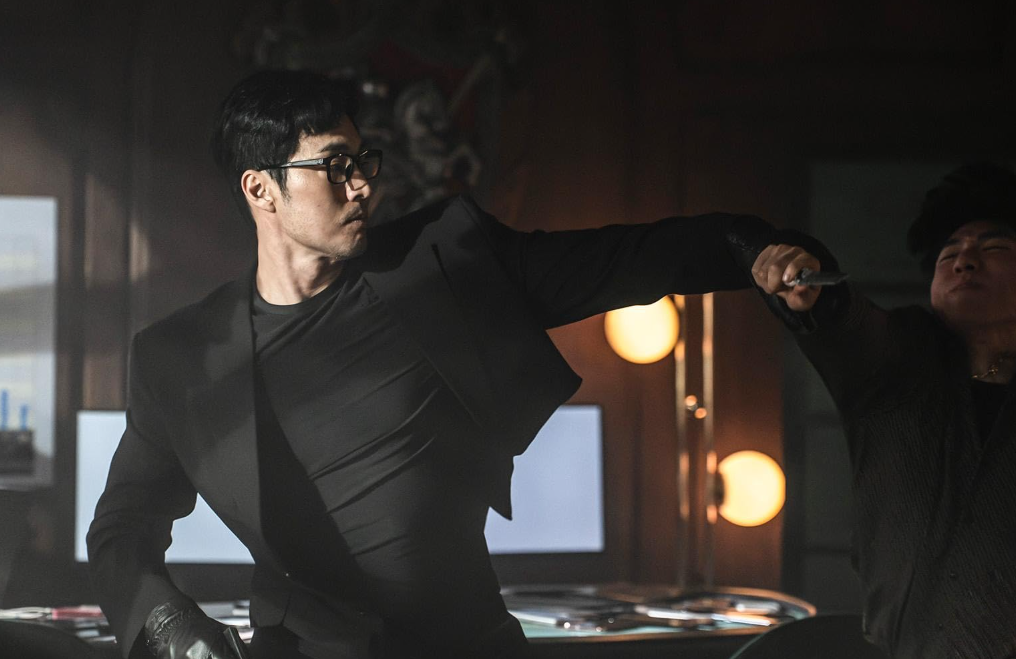
South Korean screen veteran So Ji-sub is stepping back into the high-octane world of action drama with his latest television venture, a series that immediately calls to mind the gritty, personal vengeance narrative that made Liam Neeson's 2008 film Taken a global phenomenon. Yet despite the surface-level similarities, director Lee Seung-young insists the new project charts considerably different dramatic territory, offering viewers an extended character study rather than a breakneck pursuit story compressed into two hours.
The narrative follows Manager Kim, an ostensibly ordinary bank employee navigating fatherhood as a single parent to his daughter Min-ji. His outward existence as a workaday salaryman conceals a far more dangerous former identity. The catalyst arrives when Min-ji vanishes, propelling Kim to abandon his carefully constructed civilian life and deploy the extensive skill set he has spent years attempting to bury. What begins as a father's frantic search becomes a collision between his past and present selves, forcing reconciliation between the man he has become and the operative he once was.
During a recent Seoul press conference, director Lee acknowledged the inevitable Taken comparison with characteristic candour. Rather than dismiss the parallel, he framed it as a natural starting point before explaining how the drama distinguishes itself through expanded scope and emotional complexity. Where Taken operates as a compressed real-time pursuit, the television format grants the production breathing room across ten episodes to develop layered relationships and psychological dimensions alongside its action sequences. This structural difference permits character development that cinema rarely affords, allowing viewers to inhabit Kim's internal conflicts and paternal anxieties rather than simply observing external heroics.
Lee characterised the series as retaining the core emotional stakes that made Taken compelling—a parent's desperate fight to recover a child—while simultaneously constructing entertainment value independent of the protagonist's direct involvement. This represents an intentional production choice reflecting contemporary television storytelling, where ensemble dynamics and subplot intricacy prevent narratives from collapsing whenever the lead character exits the frame. The expanded format encourages narrative complexity that single-protagonist films necessarily sacrifice.
The project marks a notable strategic reorientation for its network, which has traditionally specialised in different programming formats and thematic content. By greenlit this action-centric thriller, the broadcaster is visibly attempting to capture audiences drawn to the espionage and revenge-thriller genres that have flourished across both Korean and international streaming platforms. This represents calculated programming diversification aimed at broadening viewership demographics beyond the network's established audience bases.
For So himself, the return to action material carries particular significance given his extensive pedigree in the genre. His career has encompassed landmark Korean action productions that established certain conventions within the field, yet Agent Kim Reactivated prompted renewed consideration of what drives his artistic choices. During discussions of the project, So revealed that while the action elements initially captured his attention, the emotional architecture ultimately proved decisive. The character of Kim—a solitary father wrestling with abandonment anxieties and the weight of parental responsibility—presented acting challenges that transcended conventional action-hero requirements.
So articulated his reasoning with deliberate thoughtfulness, explaining that Kim's narrative appeal derived precisely from the intersection of paternal devotion and operative skill. The emotional authenticity demanded by portraying a father confronting his daughter's disappearance required dramatic range beyond stylised combat sequences. This dual focus—reconciling the physical demands of action performance with psychological depth—attracted an actor conscious of career trajectory and the imperative to avoid formulaic repetition within a genre where familiar patterns risk creative stagnation.
When discussing how this project's action choreography differs from his previous work, So indicated fundamental distinctions in dramatic motivation and character psychology. In conventional action narratives, protagonists frequently engage in combat situations where survival remains uncertain, where warriors accept potential death as an occupational hazard. Agent Kim Reactivated inverts this framework by establishing that its central character fights with concrete personal stakes binding him to continued existence. Kim cannot afford the luxury of nihilistic self-sacrifice because his daughter's recovery depends upon his success and survival. This psychological distinction fundamentally alters how action sequences operate narratively and thematically.
This distinction proves crucial for understanding how the series positions itself within the broader Korean action-drama ecosystem. Rather than celebrating combat prowess as an end in itself, the production weaponises action as an expression of paternal desperation. Each confrontation becomes legible as an extension of Kim's emotional state rather than abstract displays of martial proficiency. This approach potentially elevates action sequences beyond their conventional function as entertainment spectacle, rendering them psychologically coherent within the emotional arc of a father's crisis.
The casting of So Ji-sub specifically reinvigorates conversation regarding Korean action cinema and its evolution toward integrating psychological complexity with physical performance. As an actor with decades of experience across multiple genres, So brings maturity and credibility to the paternal role that might feel hollow if assigned to a younger performer without equivalent dramatic accomplishment. His presence signals that the production views the emotional stakes seriously, positioning this as prestige drama rather than action-thriller ephemera designed for momentary engagement and rapid obsolescence.
The project's development timing intersects with broader industry trends favouring darker, more psychologically complicated narratives across Korean television. Audiences increasingly resist simplistic good-versus-evil frameworks, instead gravitating toward stories exploring moral complexity and the psychological costs of violence. Agent Kim Reactivated appears calibrated to this emerging taste, offering action spectacle embedded within genuinely felt emotional narrative—a formula that, if executed with sufficient craft, could redefine expectations for the action-drama genre within Korean television production.

