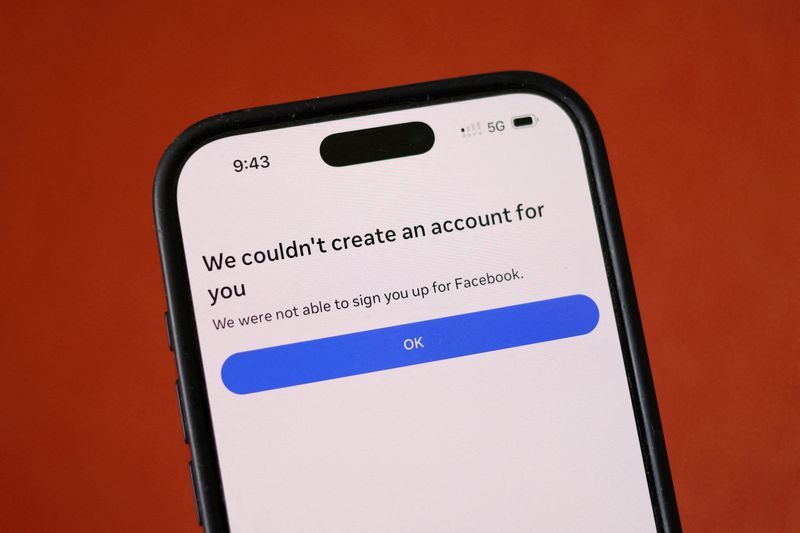
Australia's landmark ban on social media access for children under 16 has created mounting tension between technology companies and government regulators, with leading platforms appearing before a Senate inquiry to defend their compliance efforts amid evidence that most minors continue accessing their services months after the December launch. The hearing revealed a fundamental disagreement over whether the law is achieving its intended purpose, even as lawmakers contemplate substantially tougher enforcement mechanisms including doubled financial penalties and expanded investigative authority.
The four major platforms—Google's YouTube, Meta's Facebook and Instagram, Snapchat, and TikTok—sent senior Australian representatives to address the Senate committee as mounting pressure builds on their enforcement performance. Studies from Australia's eSafety Commissioner and other research bodies have documented that approximately 80 per cent of minors remain active on social media platforms despite the ban's implementation, a statistic that has fuelled parliamentary concerns about the law's effectiveness and prompted scrutiny of the companies' compliance measures.
YouTube's government relations head Rachel Lord sought to temper expectations about the ban's early results, emphasising that compliance assessments based on limited data spanning just a few months represent premature conclusions about the law's trajectory. She highlighted that the government's most recent published compliance figures dated from March, meaning the Senate committee was working with outdated information that failed to capture more recent enforcement improvements. Her testimony suggested that technology companies require more time to implement robust age verification systems and refine their detection mechanisms.
The technical challenge of accurately identifying and excluding users at the 16-year-old threshold represents a significant complication for platform operators. Age assurance technology has historically been designed around the standard 18-year cutoff adopted across many jurisdictions as the legal boundary between minors and adults. Lord explained that evolving the detection systems to identify and block users at a lower age threshold involves developing and deploying new technological solutions that are still under development and refinement across the industry.
Meta's public policy representative Mia Garlick introduced another layer of complexity by distinguishing between account ownership and actual platform usage, suggesting that survey-based compliance data may conflate these separate categories. She argued that research methodologies relying on self-reported usage patterns often diverge from objective account metrics, creating misleading impressions about whether underage individuals maintain active accounts versus occasionally accessing platforms through shared devices or borrowed credentials. This distinction proved particularly contentious, as regulators questioned whether the platforms were effectively preventing account creation by minors rather than merely reducing their usage frequency.
The companies produced account deactivation statistics to demonstrate their enforcement commitment. Meta disclosed that it had removed approximately 756,000 Instagram and Facebook accounts suspected of belonging to children, representing a significant increase from the 500,000 accounts deactivated in March. YouTube reported preventing around 740,000 Google account holders from accessing its video platform, while TikTok acknowledged removing 550,000 accounts upon the ban's implementation and subsequently deleting roughly 24,000 accounts monthly throughout the compliance period.
These figures complicated the regulatory narrative, as the platforms claimed they were actively enforcing the ban through continuous account monitoring and removal processes. However, the sheer scale of continued violations—with thousands of underage accounts being removed monthly—raised questions about whether the platforms had implemented sufficiently robust age verification systems at the point of account registration rather than relying on post-hoc enforcement actions against suspected violations. This reactive approach contrasted with the preventative mechanisms that regulators had presumably envisioned when supporting the legislation.
TikTok's Australian policy head Jessica Loftstedt characterised the company's approach as an evolving compliance process, suggesting that platform operators were adopting increasingly sophisticated detection and enforcement strategies over time. The company's disclosure of monthly account removals indicated ongoing identification of violations, though critics interpreted this as evidence that initial safeguards remained insufficient to prevent underage registration in the first instance.
The broader context shaping this parliamentary inquiry involves the eSafety Commissioner's consideration of legal action against platforms allegedly engaging in deliberate non-compliance designed to discourage other jurisdictions from enacting similar legislation. This strategic calculus—where platforms might consciously limit compliance efforts to avoid setting precedent that other countries could mandate—represents a particularly fraught dimension of the regulatory challenge. If technology companies determine that full compliance in Australia would expose them to similar restrictions across multiple markets, they face competing incentives that may favour partial compliance over aggressive enforcement.
The proposed legislative amendments under consideration would substantially increase the regulatory pressure on platforms through dual mechanisms. Maximum penalties would double to A$99 million (approximately $64 million), creating substantially higher financial consequences for non-compliance. Simultaneously, the eSafety Commissioner's investigative powers would expand to compel production of information and documents from platforms and their third-party age assurance technology partners, eliminating the current opacity surrounding backend compliance mechanisms and vendor performance.
For Malaysia and broader Southeast Asia, Australia's legislative experiment carries significant implications. As the region's most digitally mature economy with substantial regulatory capacity, Australia's experience will likely influence how other governments approach age restriction policies. The tension revealed in this inquiry—between ambitious legislation and practical implementation challenges—suggests that effective enforcement of such bans requires far more sophisticated technical infrastructure and international cooperation than many policymakers initially appreciate. Malaysia, which has similarly grappled with protecting young people from social media harms, can observe both the regulatory determination demonstrated by Australia's approach and the persistent compliance challenges that even well-resourced technology companies encounter.
The eSafety Commissioner was scheduled to provide testimony later in the Senate inquiry, offering regulators an opportunity to directly counter the platforms' arguments and present evidence supporting the case for enhanced enforcement powers. This forthcoming testimony would shape whether parliament proceeds with the penalty increases and expanded investigative authority, setting the template for how aggressive democratic governments prove willing to be in constraining technology companies' commercial operations in pursuit of child safety objectives.

