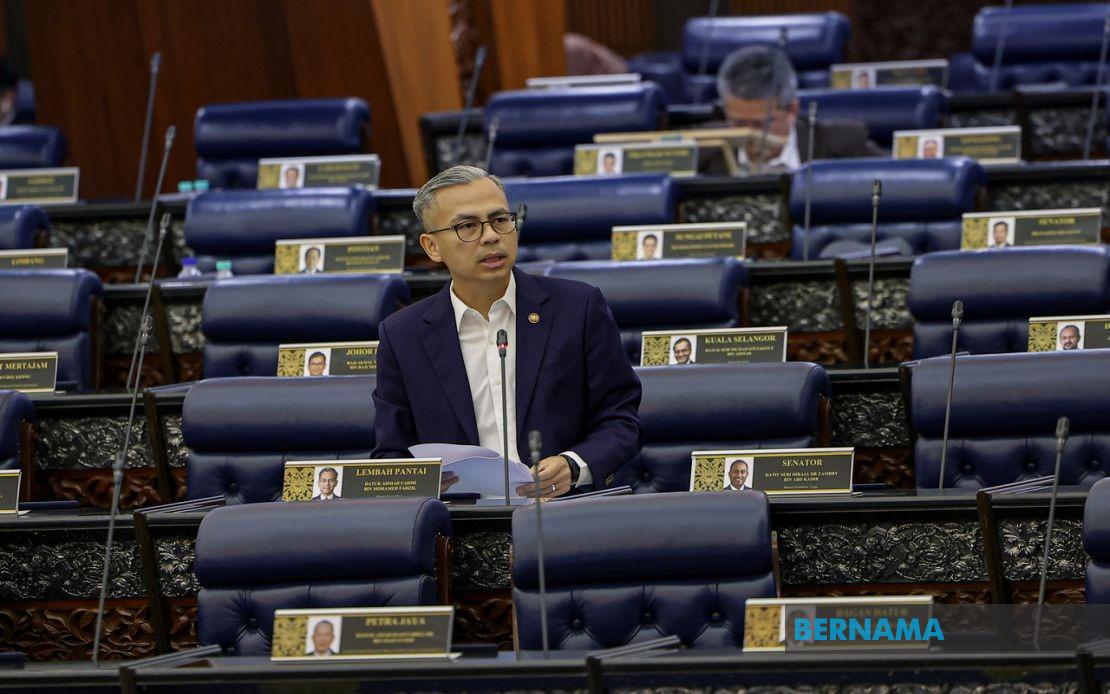
Social media platforms operating in Malaysia now face substantial financial consequences if they neglect to implement age-verification mechanisms mandated under the Online Safety Act 2025, Communications Minister Datuk Fahmi Fadzil confirmed during parliamentary proceedings on June 24. The maximum penalty for non-compliance with the legislation's Part III provisions reaches RM10 million, representing a significant enforcement tool for regulators seeking to protect younger users online. This announcement came in response to a parliamentary query about government measures to ensure social media companies adhere to the new age-verification framework and the consequences for platforms that resist implementation.
The Malaysian Communications and Multimedia Commission (MCMC) has been designated as the enforcement authority under the legislation, with explicit powers to issue non-compliance notices to application service providers breaching their obligations. Licensed social media operators receiving such formal notices must decide whether to pay the prescribed penalty or submit representations to MCMC requesting a review of the enforcement action. This dual-pathway approach provides platforms with procedural safeguards while maintaining regulatory pressure to comply. The framework reflects a deliberate policy choice to create financial incentives for voluntary compliance before resorting to maximum penalties.
Beyond the RM10 million ceiling for Part III violations, the legislation establishes additional enforcement layers that compound the consequences of non-compliance. Section 30 of the Act grants MCMC authority to issue written directives to licensed service providers regarding their adherence to any provision within the legislation. Failing to comply with such directives constitutes a specific criminal offence, and upon conviction, operators face fines up to RM1 million. Additionally, courts may impose daily penalties of RM100,000 for each day the violation persists after the initial conviction, creating exponential financial exposure for prolonged non-compliance. This tiered penalty structure transforms the regulatory framework from a simple one-time fine into a mechanism capable of generating substantial ongoing costs for recalcitrant platforms.
Fahmi's statement emphasised that Malaysia's age-verification initiative aligns with global regulatory trends. More than 25 countries worldwide have already adopted similar requirements, positioning Malaysia within a broader international movement toward stricter digital safety standards for minors. This global context matters significantly for multinational social media companies, as platforms implementing regional age-verification systems can often adapt their existing compliance infrastructure across multiple jurisdictions. The convergence of regulatory approaches reduces the technical and operational complexity that platforms might otherwise cite as justification for delayed implementation.
Government engagement with major social media companies commenced in January through an innovative regulatory sandbox framework designed to facilitate dialogue before formal enforcement began. Across more than 30 engagement sessions conducted either collectively or with individual platforms, Malaysian regulators discussed implementation strategies and technical approaches to age verification. This consultative process acknowledged that different platforms operate under distinct business models and technical architectures, requiring customised solutions rather than one-size-fits-all mandates. The prolonged engagement period essentially provided a grace period for voluntary compliance while building industry understanding of regulatory expectations.
The diversity of platform challenges and business objectives means that age-verification implementation involves more than technical capability questions. Some platforms rely heavily on user data monetisation through targeted advertising, which age verification potentially complicates. Others maintain younger user bases with established engagement patterns, creating business model pressures against stricter age-based access controls. However, Fahmi's reiteration that implementation would proceed regardless indicates that government weighs child protection imperatives more heavily than industry concerns about operational burden or revenue impact. This positioning reflects evolving political sentiment across multiple democracies that digital safety for minors overrides platform business convenience.
For Malaysian users and parents, the regulatory framework addresses legitimate concerns about inappropriate content exposure and predatory behaviour targeting minors online. Age verification mechanisms theoretically prevent underage individuals from accessing platforms designating restricted user populations, though significant implementation challenges remain. Verification systems relying on government identity documents face practical obstacles in Malaysia's diverse population, where some groups lack formal documentation. Alternative verification methods using payment cards or phone numbers raise privacy concerns, while AI-based age estimation technology exhibits reliability questions, particularly across different demographic groups. The months ahead will reveal whether MCMC and platforms can develop verification approaches that meaningfully enhance protection while maintaining accessibility for legitimate underage users whose parents consent to platform use.
The broader regulatory context reflects Malaysia's positioning within global digital governance trends. While some jurisdictions have emphasised platform content moderation, Malaysia prioritises user verification and identity-based access controls. This approach differs from European models emphasising algorithmic transparency and content removal rights, suggesting distinct policy philosophies about digital safety priorities. Southeast Asian regulators increasingly recognise that platform accountability requires enforcement mechanisms with sufficient financial severity to overcome corporate resistance, explaining the steep penalty structure. The RM10 million maximum penalty approaches the potential financial impact on platform operations in a market of Malaysia's scale, indicating seriousness about compliance expectations.
Compliance timelines remain unclear, as Fahmi's statement provided penalties without explicit deadlines. The regulatory sandbox engagement extending through January suggests platforms may have informal expectations regarding implementation schedules, but formal statutory deadlines appear absent from the communications released. This ambiguity potentially allows extended transition periods accommodating technical development but risks platforms interpreting vague timelines as negotiable. Subsequent regulatory guidance from MCMC will likely clarify expected compliance windows and detailed implementation specifications for age verification. Malaysian technology companies and civil society organisations should monitor regulatory guidance carefully to understand compliance requirements and implementation timelines affecting platform operations.
The enforcement architecture ultimately depends on MCMC's capacity to investigate non-compliance, issue directives, and prosecute violations. The regulator has established a social media compliance division in recent years, but the computational and investigative resources required to monitor age-verification implementation across dozens of platforms remain substantial. Enforcement against multinational corporations with significant legal resources presents challenges, particularly regarding jurisdictional claims and transnational coordination. However, the financial penalties available to MCMC provide negotiating leverage that sometimes encourages settlement and compliance commitment without full enforcement proceedings. The regulatory framework thus functions partly through explicit penalties and partly through implicit credible threats of enforcement that platforms risk underestimating.
Looking forward, Malaysia's age-verification requirements represent a test case for Southeast Asian digital regulation, potentially influencing neighbouring countries' policy decisions. If Malaysian implementation demonstrates effective child protection outcomes without severely disrupting platform operations or digital access, regional peers may adopt similar approaches. Conversely, if verification systems prove ineffective, invasive, or technically unworkable, regional scepticism toward this regulatory strategy would increase. The RM10 million penalty structure signals government commitment to implementation, but actual outcomes will depend on platform cooperation levels, technical feasibility, and enforcement agency capacity over the coming years.